
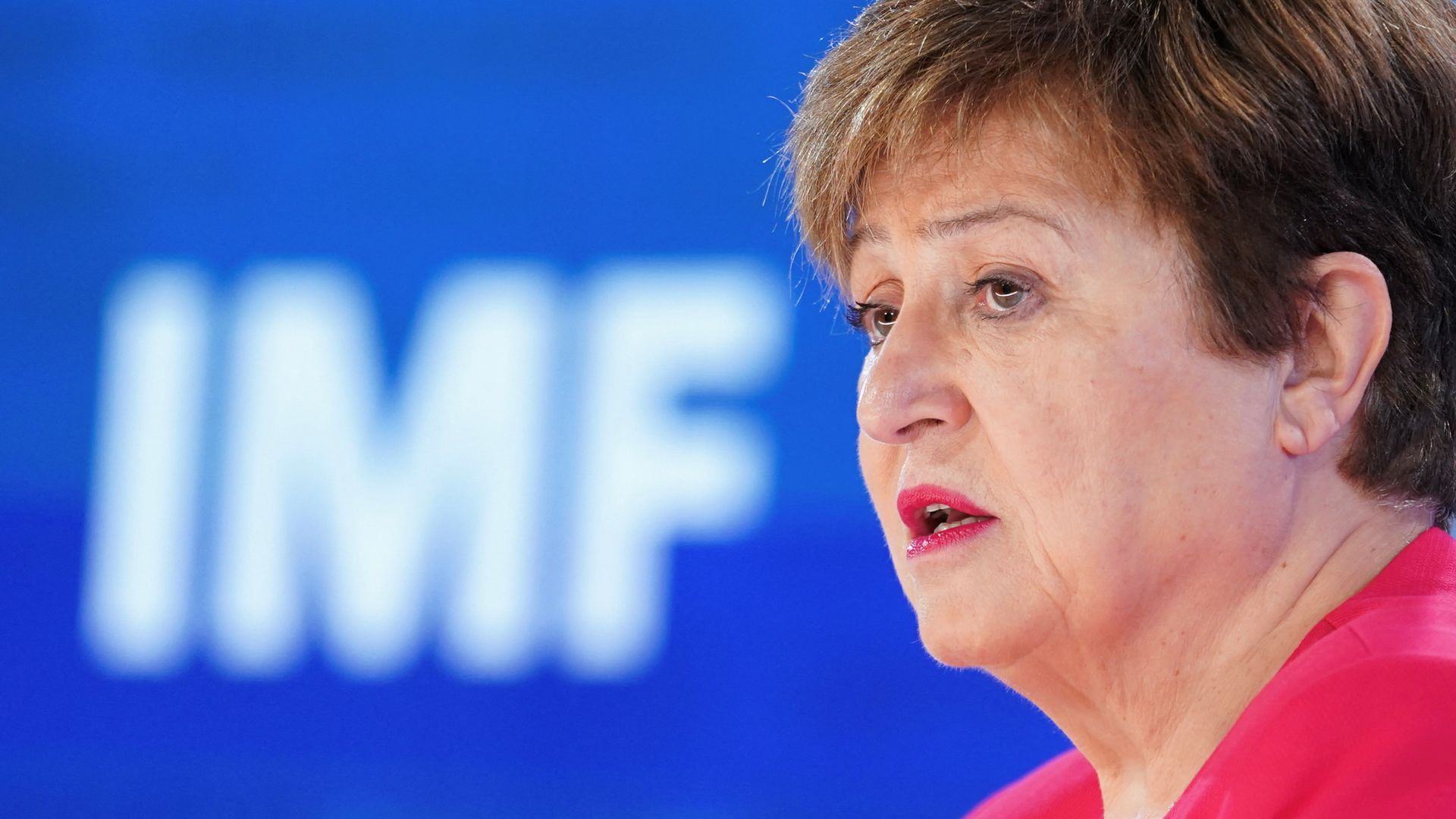
The global economy is facing a darkening outlook as the ongoing war in Iran continues to trigger severe disruptions across international markets, according to the International Monetary Fund (IMF). Speaking at a news conference in Washington on Thursday, April 9, 2026, IMF Managing Director Kristalina Georgieva warned that the conflict is likely to slow global economic growth and leave lasting “scarring effects” on the world’s financial stability.
The crisis, which began with U.S. And Israeli strikes against Iran on February 28, has evolved into a global, albeit asymmetric, shock reported by the IMF. Georgieva, speaking ahead of the World Bank/IMF Spring Meetings, emphasized that even under a “most hopeful scenario,” the combination of infrastructure damage, supply chain disruptions, and spiraling energy costs means the world will not observe a “neat and clean return to the status quo ante.”
The conflict has placed immense pressure on energy corridors, specifically the Strait of Hormuz. The virtual blockage of this narrow waterway by Tehran has resulted in what the IMF describes as the largest disruption to the global oil market in history. This volatility is driven by the fact that normally 25% to 30% of global oil and 20% of liquefied natural gas (LNG) pass through the strait according to the International Energy Agency (IEA).
Historic Oil Market Shock and Energy Volatility
The closure of the Strait of Hormuz and subsequent damage to regional infrastructure have sent shockwaves through energy markets, leading to record monthly rises in oil prices. To mitigate these spikes, the 32 members of the International Energy Agency agreed earlier this month to release a record 400 million barrels of oil from strategic stockpiles as reported by Reuters.

Finance leaders from the Group of Seven (G7) have signaled their readiness to capture “all necessary measures” to safeguard the stability of energy markets and limit the broader economic spillovers resulting from this volatility. However, the IMF warns that the ultimate impact on the global economy will depend heavily on the duration of the war, the extent of its spread, and the total damage inflicted on critical supply chains.
Financial Strain and Food Insecurity
Beyond the energy sector, the war is exacerbating vulnerabilities in low-income and frontline nations. The IMF anticipates a surge in demand for balance-of-payments support to help these countries manage the shock. Managing Director Kristalina Georgieva stated that the fund expects to provide between $20 billion and $50 billion in immediate financial assistance, with the lower end of that range prevailing if a fragile ceasefire holds according to the IMF.
The human cost of the economic disruption is similarly becoming evident. The IMF warns that food insecurity is set to affect at least 45 million people as a direct result of the conflict’s spillovers per the fund’s estimates. This combination of tighter financial conditions and disrupted trade is dimming the outlook for many economies that had only recently begun to recover from previous global crises.
Key Economic Impacts of the Iran War
| Metric | Impact/Detail | Source |
|---|---|---|
| Oil Market Volume | 25%-30% of global oil flows through Strait of Hormuz | IEA |
| LNG Volume | 20% of global LNG flows through Strait of Hormuz | IEA |
| Financial Aid | $20 billion to $50 billion in IMF support expected | IMF |
| Food Security | At least 45 million people affected | IMF |
| Strategic Reserves | 400 million barrels of oil released | IEA |
Prospects for Peace and Recovery
Although a fragile ceasefire is currently in place, the situation remains precarious. Both Washington and Tehran have traded accusations regarding violations of the ceasefire terms, complicating efforts to reach a permanent resolution. Despite these tensions, diplomatic efforts continue, with talks aimed at securing a more durable peace slated to take place this Saturday according to news reports.
The IMF continues to support member countries with policy advice and financial assistance in coordination with the international community. However, the fund’s insistence on lowering global growth forecasts highlights the severity of the current disruption. The “asymmetric shock” means that while some nations may feel the impact primarily through energy prices, others face existential threats to food security and national solvency.
The next critical checkpoint for the region will be the results of the peace talks scheduled for Saturday, which may determine whether the IMF’s “most hopeful scenario” becomes a reality or if the global economy faces a prolonged period of instability.
World Today Journal encourages readers to share this report and leave their comments below on how energy volatility is affecting your region.