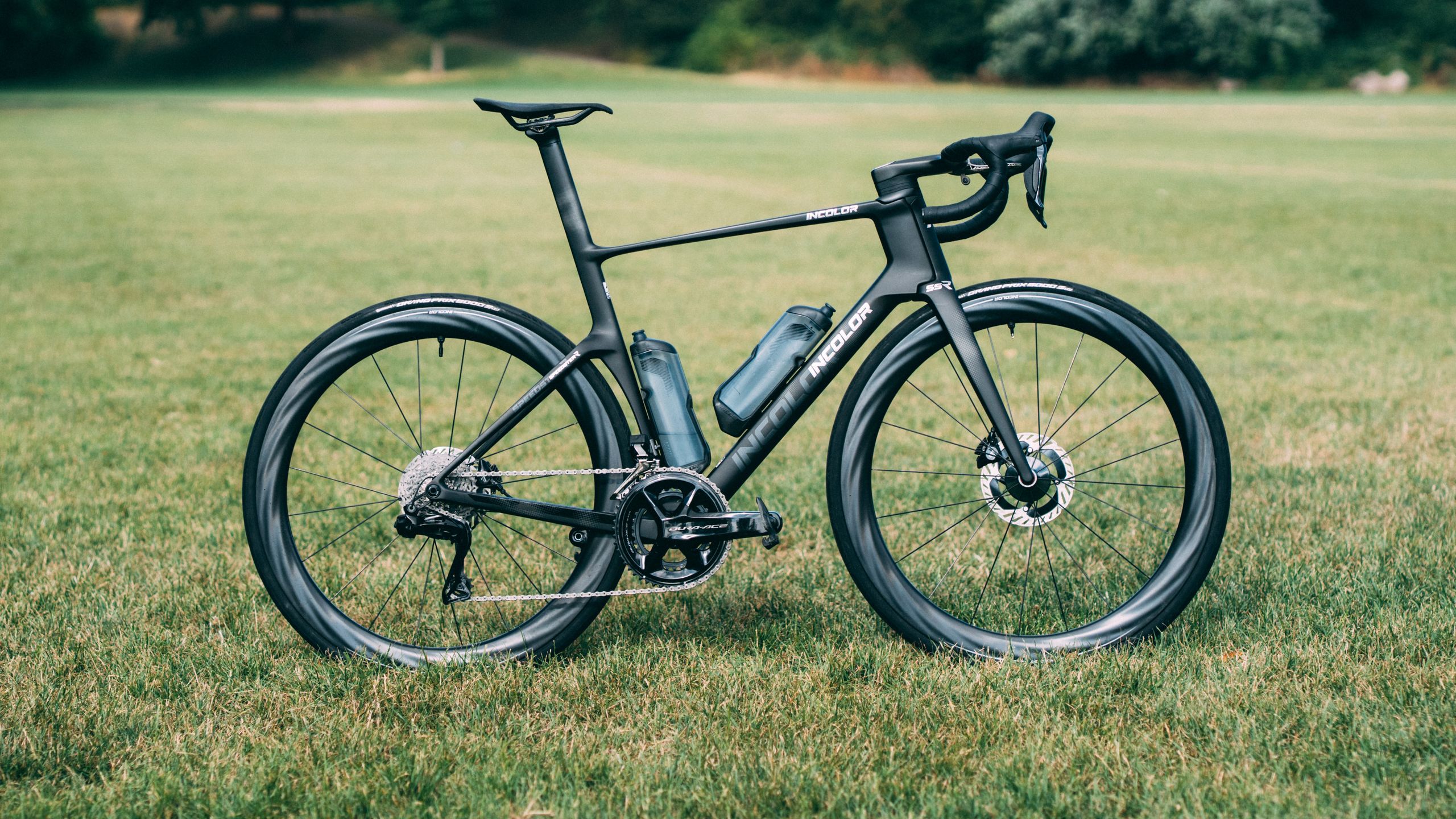
The Incolour SSR road bike enters the high-performance market boasting an aggressively light frame weight of 7.05kg (15.54lbs) for a size 56 and aerodynamic claims that rival established industry benchmarks, according to product specifications. Priced between $4,399 and $5,299 for the frameset only, the machine pairs modern 3D-printed titanium hardware and aerodynamic styling with notable stiffness metrics. However, extensive testing reveals a strikingly unforgiving ride quality characterized by an exceptionally rigid integrated seat mast that significantly impacts long-term comfort and handling compliance on imperfect road surfaces.
Will Jones brings technical equipment analysis to this evaluation, drawing on structural data and rigorous road testing protocols to assess how high-end paper specifications translate into real-world performance.
Design, Aesthetics, and Modern Engineering
Visually, the Incolour SSR presents a striking aesthetic profile that fuses several contemporary aerodynamic design cues. The frame features a slender construction that stands in contrast to the more muscular silhouettes of competitors like the Cervélo S5 or the Factor ONE. Observers will note compact frame lines reminiscent of a Giant TCR, paired with a scalloped rear wheel cutout echoing the Canyon Aeroad and a deep, blade-like bayonet fork at the head tube.
Modern integrations define the build. The machine accommodates up to a 32c tyre with a traditional 2x setup, or expands to a 36c tyre when utilizing a 1x drivetrain configuration. The test model arrived equipped with a narrow 120×35.5cm cockpit designed to minimize frontal area. Furthermore, Incolour incorporates various 3D-printed titanium components, including a custom computer mount and brake hardware.
Buyers must cut the integrated seat mast to size during assembly. Rather than offering traditional height adjustment wiggle room via a seat topper, the manufacturer provides micro-adjustments through a selection of alternative 3D-printed saddle cradles. Additionally, the brand offers an optional custom geometry upcharge of $600 across its seven available sizes (ranging from 45 to 60), allowing riders to select more aggressive or relaxed stack-and-reach variations while maintaining a consistent saddle height range.
Aerodynamic Claims and Laboratory Metrics
On paper, Incolour positions the SSR as a formidable aerodynamic challenger. The manufacturer quotes a frontal area measuring 60.37 square centimeters smaller than that of a Cervélo S5, translating to a claimed 3.99-watt efficiency benefit when measured at a speed of 45 kilometers per hour across wind yaw angles sweeping from -20 to +20 degrees.
Stiffness figures provided by the manufacturer also place the SSR ahead of several market benchmarks. The frame claims superior pedalling stiffness at the bottom bracket compared to specialized models like the Tarmac SL7 and SL8, the Giant TCR, the Van Rysel RCR, and the Cannondale SuperSix. Additionally, the head tube stiffness ratings and lateral fork rigidity test out higher than many standard race frames in its class.
However, technical inspections during assembly highlighted practical construction flaws. The machined top cap featured insufficient clearance for the top cap bolt, causing the hardware to bind within the countersunk hole and preventing proper headset tensioning during the review period.
On-Road Performance and Comfort Trade-Offs
Despite impressive laboratory figures and a competitive weight of 7.05kg with pedals, aero bottle cages, and titanium hardware included, real-world road testing exposes severe limitations in ride compliance. The primary source of discomfort stems from the integrated seat mast, which offers virtually zero vertical give. Testing across varying durations indicates that ride quality degrades rapidly over time: one-hour sessions remain manageable, two-hour rides are tolerable, three hours become unpleasant, and any distance extending past four hours results in severe physical fatigue.
During steep climbs, the frame’s extreme lateral and vertical stiffness causes the rider to bounce jarringly if cadence increases, distracting from sustained efforts. On flat roads, the narrow 355mm cockpit facilitates an efficient aerodynamic posture, allowing the bike to maintain high speeds smoothly. Yet, the extreme vertical rigidity of both the front and rear ends causes the chassis to skip and judder over rough pavement rather than absorbing road imperfections with composure.
Attempting to mitigate the harsh ride quality by swapping the stock Incolour Aerowav wheels and 28mm tyres for an alternative wheelset featuring 32mm Hutchinson Blackbird Race tyres yielded only marginal improvements. The overall experience remained exceptionally punishing over long distances, leaving testers physically fatigued.
Market Positioning and Value
With a baseline frameset price starting at $4,399—rising to $5,299 for custom geometry options—the Incolour SSR sits below top-tier offerings from brands like Specialized, yet approaches the price point of industry leaders once the $419 proprietary cockpit is added. While the engineering showcases modern additive manufacturing and wind-tunnel-optimized metrics, the lack of vertical compliance and assembly quirks limit its appeal primarily to short-format races and specialized racing applications rather than high-volume daily training.
Share your thoughts on this equipment review in the comments below, or join the discussion on our social media channels.
Worth a look