The Weaponization of Water in South Asia: A looming Threat to Regional Stability
South Asia, a region already grappling with complex geopolitical challenges, is facing a new and increasingly hazardous threat: the weaponization of water. Recent actions by India, especially concerning its management of transboundary rivers and its suspension of the Indus Waters Treaty with Pakistan, are not merely disputes over resource allocation.They represent a fundamental shift towards hydrological coercion, undermining international law, escalating regional tensions, and jeopardizing the livelihoods of millions. this article will delve into the specifics of these actions, analyze their legal implications, and assess the broader geopolitical ramifications, highlighting the urgent need for a renewed commitment to equitable water sharing and multilateral cooperation.
A Shift in Power Dynamics: The Case of Bangladesh
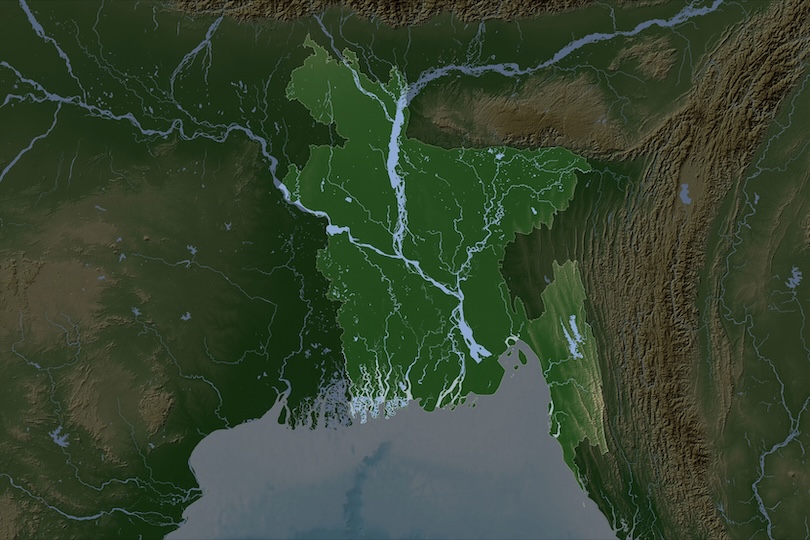
The political landscape in Bangladesh underwent a notable change in early 2024, with the fall of the Hasina regime. This transition coincided with a period of escalating tensions with India, fueled by accusations of purposeful water mismanagement. In August 2024, devastating floods swept through southeastern Bangladesh, impacting over 5.8 million people across 11 districts. The scale and suddenness of the flooding were particularly alarming, resulting in 71 confirmed deaths, including a disproportionate number of children.
Crucially, the Bangladeshi government, both the interim governance and the broader political establishment, directly blamed India for exacerbating the disaster. The accusation centers on the alleged unilateral opening of dam floodgates without prior warning,a claim that sparked widespread public outrage. Student protests erupted on university campuses,with demonstrators voicing strong anti-India sentiments.While India has denied direct responsibility, the incident underscores a growing lack of trust and a perception of disregard for downstream nations. This situation is further complicated by the historical context of long-standing water disputes and Bangladesh’s increasing reliance on climate resilience initiatives.
Violating international Water Law: A Dangerous Precedent
The core principles governing international water law for transboundary resources are well-established. These include:
* Equitable and Reasonable Utilization: Ensuring all riparian states have fair access to shared water resources.
* Obligation Not to Cause Significant Harm: Preventing actions that could substantially damage co-riparian states.
* Prior Notification: Informing and consulting with downstream nations regarding projects that may impact shared waters.
India’s recent actions, both in the context of the Bangladesh floods and its broader approach to water management, represent a clear violation of these principles. The unilateral suspension of the Indus Waters Treaty with Pakistan, a landmark agreement brokered by the World Bank in 1960, is particularly concerning. Treating a binding international agreement as a political tool undermines the foundation of stability and good faith cooperation.
The allegations surrounding the Bangladesh floods – whether deliberate releases during the monsoon season or a failure to provide adequate warning – directly breach the obligation not to cause significant harm. Controlling upstream infrastructure to dictate water availability transforms shared rivers into instruments of power, creating a cycle of scarcity and flooding. The absence of prior notification demonstrates a blatant disregard for legal duties and the safety of downstream populations.
Geopolitical Ramifications and the Risk of Conflict
India’s actions mark a critical turning point in South Asian geopolitics. The weaponization of water shifts the region from a precarious state of cooperation to overt hydrological coercion. This has far-reaching consequences:
* Increased Regional Instability: Escalating tensions over water resources exacerbate existing geopolitical rivalries and create new flashpoints for conflict.
* Humanitarian Crisis: Manipulating water flows directly impacts the livelihoods and well-being of millions, potentially leading to mass displacement and humanitarian crises.
* Erosion of International Law: Disregarding established principles of international water law weakens the global framework for managing shared resources and sets a dangerous precedent for other regions.
* Potential for resource-Driven Conflict: As water scarcity intensifies due to climate change and population growth, the weaponization of water substantially increases the risk of resource-driven conflict.
The situation demands urgent attention from the international community. Ignoring the unfolding crisis in South Asia is not an option. Without a renewed commitment to equitable sharing,transparency,and binding multilateralism,the region’s already volatile political landscape risks being overwhelmed by a tide of resource-driven conflict.
Related reading