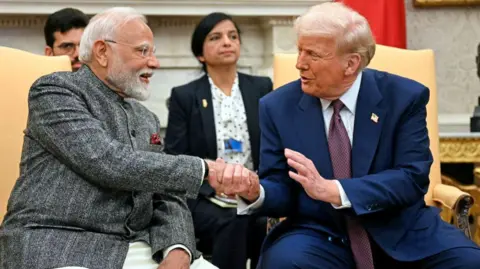
Former U.S. President Donald Trump has drawn sharp criticism from Indian officials after sharing social media posts that referred to India as a “hellhole,” reigniting tensions over immigration rhetoric and birthright citizenship debates. The remarks, which Trump reposted from a conservative commentator, were swiftly condemned by India’s Ministry of External Affairs as ill-informed, inappropriate, and in poor taste. The incident underscores the sensitivity surrounding discussions of immigration policy and national identity, particularly when voiced by prominent political figures with global followings.
The controversy began when Trump shared a post on his Truth Social platform that included derogatory remarks about immigrants from India and China, specifically targeting those benefiting from U.S. Birthright citizenship laws. The original post, attributed to a far-right activist, claimed that children born in the U.S. To immigrant parents were exploiting the system and described their countries of origin in disparaging terms. Indian government officials responded within hours, calling the characterization baseless and offensive, and emphasized that such statements damage bilateral relations and perpetuate harmful stereotypes.
According to verified reports from Reuters and The Guardian, India’s official response highlighted that Trump’s sharing of the content demonstrated a lack of understanding about both Indian society and the legal framework of U.S. Citizenship. The Ministry of External Affairs issued a statement noting that while freedom of expression is respected, public figures have a responsibility to avoid spreading misinformation that could fuel xenophobia. Officials similarly pointed out that India remains one of the largest sources of skilled legal immigrants to the United States, contributing significantly to sectors such as technology, healthcare, and academia.
The incident echoes previous controversies involving Trump’s rhetoric on immigration, including his 2017 remarks referring to certain African nations and Haiti as “shithole countries,” which also drew international condemnation. Analysts note that the resurgence of such language coincides with renewed political debates in the U.S. Over ending birthright citizenship, a policy Trump has repeatedly criticized despite its constitutional basis under the 14th Amendment. Legal experts affirm that any attempt to end birthright citizenship via executive order would face immediate judicial challenges, as the principle is firmly established in constitutional law.
India’s reaction reflects broader concerns about how immigration discourse in the U.S. Impacts perceptions of Indian nationals abroad. With over 4.5 million people of Indian origin residing in the United States according to the latest U.S. Census data, the community plays a vital role in economic, cultural, and academic life. Leaders from the Indian diaspora have urged restraint and factual accuracy in public discourse, warning that inflammatory language can lead to real-world discrimination and harassment.
While Trump has not issued a direct response to India’s rebuke, his continued sharing of similar content suggests the remarks align with his long-standing stance on immigration reform. Observers note that such posts often surge during election cycles or periods of heightened political polarization, serving to energize his base while drawing criticism from civil rights groups and foreign governments alike. The episode adds to a pattern of diplomatic friction arising from Trump’s social media activity, even as he remains outside formal office.
As of now, We find no scheduled bilateral meetings or official statements planned to address the incident directly. Both nations continue to engage on strategic partnerships in defense, trade, and technology, though cultural and people-to-people exchanges remain sensitive to rhetoric that undermines mutual respect. Officials from both sides have previously emphasized that strong interpersonal ties between citizens form a bedrock of the U.S.-India relationship, making respectful public discourse essential.
For readers seeking to understand the legal context of birthright citizenship in the United States, the 14th Amendment states that “all persons born or naturalized in the United States, and subject to the jurisdiction thereof, are citizens of the United States and of the State wherein they reside.” This provision has been upheld by the Supreme Court in landmark cases such as United States v. Wong Kim Ark (1898), which affirmed citizenship for children born in the U.S. To non-citizen parents. Any change to this interpretation would require either a constitutional amendment or a Supreme Court reversal—both considered highly improbable under current legal standards.
Moving forward, the focus remains on how political rhetoric influences international perceptions and domestic social cohesion. As global migration patterns continue to evolve, the language used by public figures carries significant weight in shaping attitudes toward immigrant communities. India’s measured but firm response serves as a reminder that even unofficial comments from former leaders can have tangible diplomatic consequences, particularly when they touch on issues of national dignity and identity.
We invite our readers to share thoughtful perspectives on how nations can navigate sensitive political rhetoric while upholding mutual respect. What role should former leaders play in international discourse, and how can countries respond constructively to offensive remarks without escalating tensions? Join the conversation in the comments below and help foster a global dialogue grounded in facts and empathy.