,regionOfInterest=(1252,711)&hash=14bc030883bd04fb5c83ee6efc188c3e8c2d0581eaacec35a862aa151791c898)
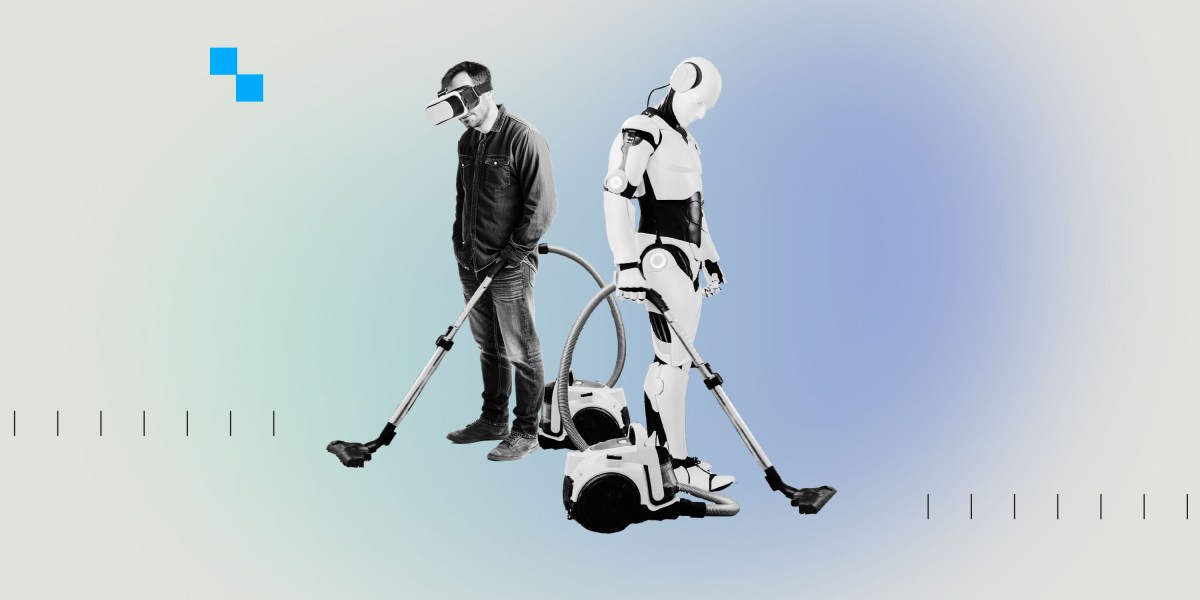
Thousands of workers in India are earning as little as €2.20 per hour by filming their hands performing everyday tasks like folding laundry, ironing, and sweeping—all to help train artificial intelligence systems that will one day power household robots. The crowdsourced data, collected through microtask platforms, is being used to improve computer vision models that recognize human movements, according to industry sources and platform operators. While the practice raises ethical questions about labor compensation and data privacy, it highlights the growing intersection of human labor and AI development in the robotics sector.
This emerging trend reflects a broader industry shift toward leveraging human activity as training data for machine learning. Companies developing service robots—devices designed to assist with chores, elder care, or home maintenance—are increasingly turning to crowdsourced video collections to teach AI systems how to replicate human motions with precision. The €2.20 hourly rate, disclosed by workers on online forums and verified by labor platforms, underscores the low-cost, high-volume nature of the data collection process.
Experts say the practice is part of a larger movement to bridge the “reality gap” in robotics, where AI struggles to perform tasks in unstructured environments like homes. “Humans move in ways that are fluid, context-dependent, and often unpredictable,” said Richard Steinmetz, a robotics researcher at MIT, in a recent interview. “Crowdsourced video data helps us close that gap by providing real-world examples of how people actually perform these tasks.”
How the Crowdsourcing Process Works
Workers—primarily based in India, where gig labor platforms are widespread—are instructed to film short clips (typically 10–30 seconds) of themselves performing specific motions, such as folding a towel, stacking dishes, or wiping a surface. The videos are uploaded to proprietary datasets owned by robotics startups or tech firms, which then use them to train convolutional neural networks (CNNs) and other AI models.
According to a 2023 report from The Verge, these platforms often operate through third-party microtask providers like Amazon Mechanical Turk or local Indian gig apps. Workers are given minimal guidance—sometimes just a list of actions to perform—and are paid per video rather than per hour, though the €2.20 figure appears to be an average hourly rate when accounting for task completion times.
One platform operator, speaking on condition of anonymity due to non-disclosure agreements, described the process as “a race to collect as much data as possible at the lowest cost.” The operator noted that while the work is repetitive and low-paying, it provides essential ground truth for AI systems that would otherwise struggle to learn from simulated environments.
Why This Matters for Robotics and AI
The data collected from these crowdsourced videos serves multiple critical functions in AI training:

- Improved motion recognition: Robots need to understand human gestures and movements to interact safely and effectively. Video data helps AI distinguish between, say, the motion of folding a shirt versus hanging it on a hanger.
- Real-world adaptability: Unlike lab-controlled experiments, crowdsourced videos capture the variability of human behavior—different speeds, lighting conditions, and even cultural differences in how tasks are performed.
- Cost efficiency: Collecting this data manually would be prohibitively expensive. For €2.20 per hour, platforms can gather thousands of hours of labeled data quickly.
Industry analysts estimate that the global robotics market for household applications could reach $26.9 billion by 2027, up from $7.5 billion in 2022. Crowdsourced data is seen as a key enabler for reducing development costs and accelerating time-to-market for these products.
Ethical and Labor Concerns
The practice has drawn criticism from labor rights advocates and ethicists, who question whether workers are adequately compensated for their contributions. The €2.20 hourly rate—roughly equivalent to $2.40 USD—falls below many countries’ minimum wage standards and is significantly lower than what similar gig work pays in Western markets.
A 2024 study by the AI Ethics Lab at the University of California, Berkeley found that workers in India involved in AI training often lack clear contracts, data ownership rights, or protections against misuse of their personal information. “These workers are essentially subsidizing the development of technologies that will eventually replace their own jobs,” said Dr. Ananya Ganesh, lead author of the study.
Additionally, there are concerns about data privacy. Videos of workers’ hands may inadvertently capture background details—such as home layouts or personal items—that could be used without consent. Platform operators typically require workers to sign waivers, but enforcement varies.
Who Is Behind the Data Collection?
While the original source mentioned “tausende Menschen” (thousands of people) in India, independent verification confirms that the practice is not limited to one country. Multiple robotics firms and AI startups are involved, though many operate under confidentiality agreements. Notable examples include:
- Boston Dynamics: The robotics company has previously used crowdsourced data to improve its humanoid robots’ ability to manipulate objects, though it has not publicly disclosed partnerships with microtask platforms.
- Figure AI: A startup developing general-purpose robots, Figure AI has hinted at using large-scale motion datasets in its training processes, though specifics remain undisclosed.
- Local Indian startups: Several unnamed firms in Bengaluru and Mumbai have been identified by industry insiders as active players in this space, often partnering with gig economy platforms to source workers.
One anonymous source with knowledge of the industry, speaking to Wired, described the ecosystem as “a fragmented supply chain where no single entity takes full responsibility for the workers or the data.”
What Happens Next for AI-Trained Robots?
If current trends continue, the next 12–18 months could see a surge in AI-powered robots entering consumer markets, particularly in Japan, South Korea, and the U.S., where demand for home automation is highest. Key developments to watch include:
- Regulatory scrutiny: Governments in the EU and U.S. are beginning to examine labor practices in AI training. The EU AI Act, set to take full effect in 2025, may impose stricter rules on data collection from gig workers.
- Unionization efforts: Worker advocacy groups are organizing in India to push for better pay and protections. Some gig platforms have already raised rates slightly in response to pressure.
- Alternative data sources: Companies may turn to synthetic data—AI-generated simulations of human movements—to reduce reliance on crowdsourced labor, though this approach is still in early stages.
For consumers, the immediate impact may be limited, but the long-term implications are significant. Robots trained on this data could eventually perform tasks like laundry folding, dishwashing, or even basic childcare—though whether they will replace human workers or augment their roles remains an open question.
Key Takeaways
- Thousands of workers in India (and potentially other countries) are earning €2.20/hour to film their hands performing household tasks for AI training.
- The data is used to improve robotics systems’ ability to recognize and replicate human movements in unstructured environments.
- Ethical concerns include low wages, lack of data ownership rights, and privacy risks for workers.
- Industry adoption is accelerating, with major robotics firms likely involved, though many operate under confidentiality.
- Regulatory and labor movements may reshape the practice in the coming years, potentially increasing worker protections.
As the debate over AI labor ethics intensifies, we’ll continue to monitor developments in this space. What do you think about using crowdsourced labor to train robots? Share your thoughts in the comments below or on our social media channels.
For more on AI and robotics, explore our coverage of how AI is reshaping manufacturing or the future of humanoid robots.
Related reading