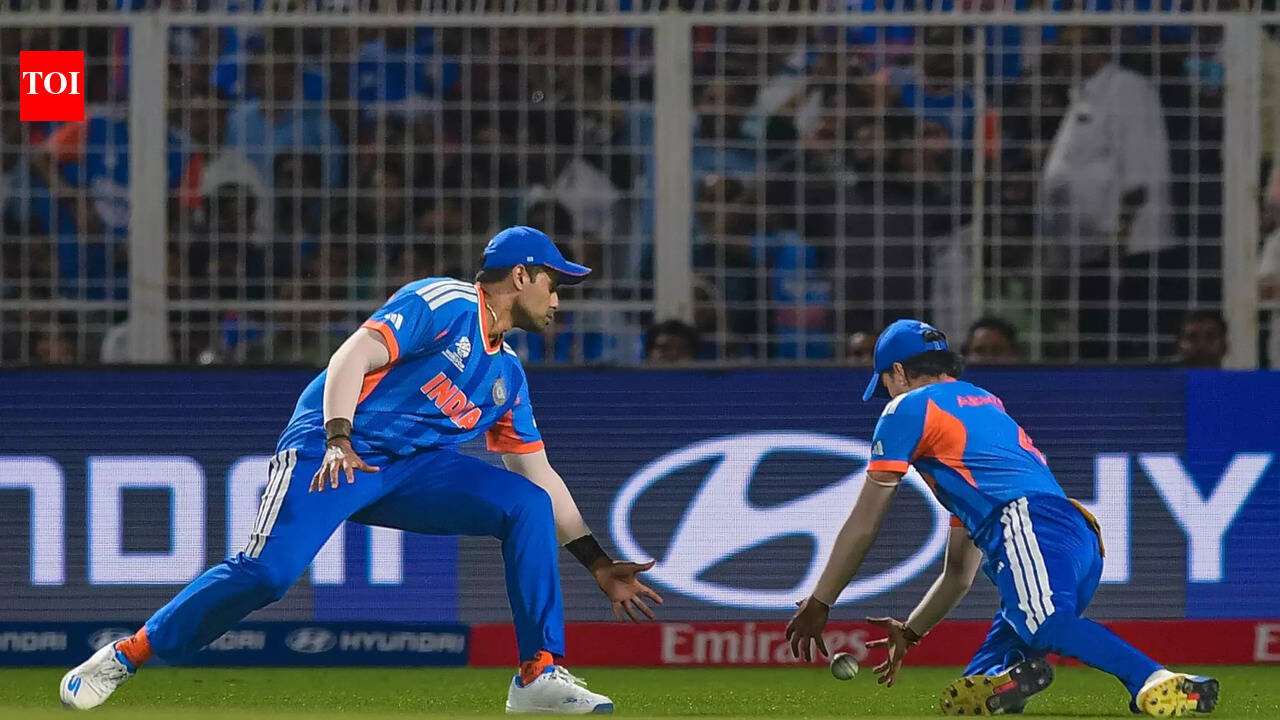
Kolkata, India – As India prepares to face England in the ICC T20 World Cup 2026 semi-final at the Wankhede Stadium on Thursday, concerns are mounting over a recurring weakness in their game: fielding. Recent performances, particularly during their hard-fought victory against the West Indies at Eden Gardens on March 1st, have exposed a worrying trend of dropped catches and fielding errors that could prove costly against a formidable England side. The issue isn’t new, according to former India wicketkeeper-batter Parthiv Patel, who highlighted a pattern of mistakes stretching back “almost a year and a half.”
The pressure of a knockout tournament is immense, and even the smallest errors can have significant consequences. India’s Super Eights clash against the West Indies saw two crucial opportunities slip through their grasp. Varun Chakravarthy missed a run-out chance in the third over, and Abhishek Sharma then dropped a relatively straightforward catch off the bowling of Jasprit Bumrah in the fifth. These lapses allowed Roston Chase to remain at the crease, eventually contributing 40 runs off 25 balls before being dismissed. Whereas India ultimately secured a victory, overhauling a target exceeding 190, the fielding errors served as a stark reminder of a vulnerability that needs immediate attention. The team has now conceded 13 catches throughout the tournament, resulting in a catching efficiency of just 72.7%, the lowest among all teams in the competition.
India’s Fielding Woes: A Growing Concern
Parthiv Patel, speaking to Jio Hotstar, emphasized the consistency of the problem. “One concern I feel is the fielding and not just the way India fielded in the game at Eden Gardens. It has been happening for almost a year and a half. We are dropping quite a few catches. That is something India would definitely like to operate on,” he stated. This isn’t simply a matter of terrible luck; it suggests a systemic issue that requires focused training and a renewed emphasis on fielding drills. The contrast with other teams is particularly striking. Pakistan, often criticized for their fielding standards, have managed a significantly better success rate of 83.3% in the tournament, demonstrating that improvement is possible.
The dropped catch by Abhishek Sharma, in particular, drew attention. A slower ball from Bumrah induced an edge from Chase, and the opportunity presented itself to Sharma at extra cover. Despite getting into position, the catch slipped through his hands, offering Chase a reprieve. This incident, captured on camera, quickly circulated on social media, further amplifying the concerns surrounding India’s fielding performance.
Samson’s Knock and Bumrah’s Brilliance
Despite the fielding concerns, India’s victory over the West Indies was built on a remarkable batting performance from Sanju Samson. Chasing a challenging target, Samson played a crucial innings, scoring a match-winning knock that secured India’s place in the semi-finals. Patel lauded Samson’s composure and maturity, stating, “Skill-wise, we all know that Sanju Samson is a very talented batter, but fighting those mental battles is very demanding. I thought Sanju Samson did that really well.” Samson’s ability to remain calm under pressure and build his innings strategically was instrumental in India’s success.
Jasprit Bumrah also continued to demonstrate his importance to the Indian team. Patel highlighted Bumrah’s ability to capture crucial wickets at key moments, describing him as “the bank” rather than simply a “banker.” Bumrah’s dismissals of Hetmyer and Chase during the match against the West Indies were pivotal in restricting their scoring and ultimately securing the win. His consistency and ability to deliver under pressure build him a vital asset for India in the semi-final and beyond. Bumrah’s knack for breaking partnerships is a key element of his success, and his ability to consistently take wickets makes him a threat to any batting lineup.
The England Challenge: A Test of Nerve and Skill
Looking ahead to the semi-final against England, Patel stressed the importance of early breakthroughs. England boasts a powerful batting lineup featuring players like Phil Salt and Jos Buttler, both of whom are capable of explosive innings. The presence of Jofra Archer, Adil Rashid, Jacob Bethell, and Harry Brook further strengthens England’s batting order, making them a formidable opponent. The ICC has consistently ranked England among the top T20 teams, and their experience in knockout tournaments will undoubtedly pose a significant challenge for India.
To overcome this challenge, India will need to address their fielding vulnerabilities and execute their game plan with precision. Early wickets will be crucial in putting pressure on the England batting lineup and preventing them from gaining momentum. The Wankhede Stadium, known for its batting-friendly conditions, is expected to provide a excellent surface for both teams, but India’s ability to capitalize on their home advantage will depend on their ability to perform consistently in all aspects of the game. The team’s ability to maintain composure under pressure and execute their skills effectively will be key to their success.
Key Takeaways
- Fielding Concerns: India’s catching efficiency is the lowest in the tournament, with 13 catches dropped.
- Samson’s Impact: Sanju Samson’s composed innings was crucial in securing India’s victory against the West Indies.
- Bumrah’s Consistency: Jasprit Bumrah continues to be a key wicket-taker for India, breaking crucial partnerships.
- England’s Threat: England possesses a strong batting lineup and will pose a significant challenge in the semi-final.
- Early Wickets Vital: Securing early breakthroughs against England’s dangerous batters will be paramount for India’s success.
The semi-final clash against England promises to be a thrilling encounter. While India’s batting and bowling have been largely impressive throughout the tournament, their fielding vulnerabilities remain a significant concern. Addressing this issue will be crucial if they are to overcome the challenge posed by England and progress to the final of the ICC T20 World Cup 2026. The team will undoubtedly be working hard in the practice sessions leading up to the match, focusing on improving their catching and overall fielding standards.
The next confirmed checkpoint is the ICC T20 World Cup 2026 final, scheduled for March 9th, 2026, at the Kensington Oval in Barbados. We will continue to provide updates on India’s progress and analysis of their performance throughout the tournament. Share your thoughts on India’s chances in the semi-final and the importance of fielding in T20 cricket in the comments below.
Related reading