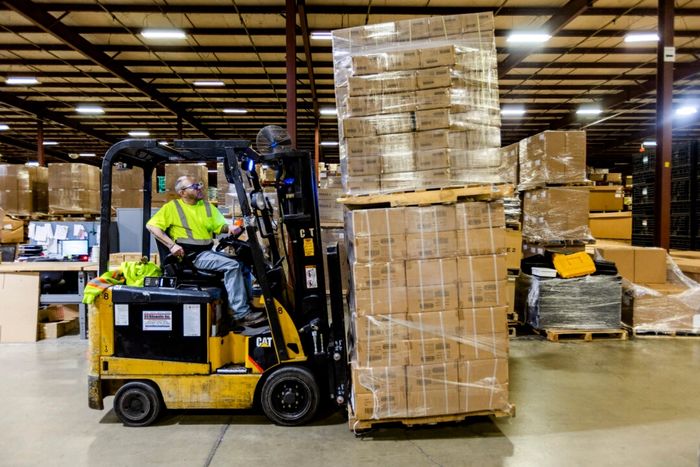
Navigating the Turbulence: A Mid-Year Check-Up on the Commercial Real Estate Landscape
The commercial real estate (CRE) market is undergoing a important recalibration. After the unprecedented boom fueled by pandemic-era shifts,a period of normalization is underway,marked by slowing growth,rising vacancies in some sectors,and increased financial scrutiny. This report provides a complete overview of the current state of the market, focusing on the industrial sector’s challenges and opportunities, alongside broader trends impacting office, multifamily, and retail properties. We’ll delve into the factors driving these changes, expert forecasts, and potential avenues for investment and growth.
Industrial Real Estate: From Hypergrowth to Measured Adjustment
The industrial sector, a star performer in recent years, is experiencing a pronounced slowdown. Vacancy rates climbed to 6.7% in the first half of 2025, as 194.6 million square feet of new space entered the market. While a ample 466 million square feet remains under construction, this influx of supply threatens to exacerbate vacancy issues until demand strengthens. This isn’t a sign of long-term decline, but rather a necessary correction after a period of unsustainable expansion.
Industry experts at NAIOP anticipate continued uncertainty throughout the remainder of 2025 – and potentially beyond - which will likely dampen leasing activity. Their current forecast projects a modest 2.8 million square feet of positive net absorption for the second half of the year, anticipating a subsequent recovery.
However, this recovery isn’t expected to be immediate. The report highlights that demand will be intrinsically linked to adjustments following new tariff regimes. while a rebound is anticipated, higher tariffs and a moderating pace of employment growth are expected to act as headwinds until at least the second quarter of 2026. Longer-term projections suggest full-year absorption of 119.3 million square feet in 2026, with a significant portion – nearly 110 million square feet – expected in the first half of 2027.
What’s Driving the Shift? A Deeper Dive
Several factors are contributing to this industrial slowdown:
Overbuilding: The rapid pace of construction during the pandemic, driven by e-commerce growth, has resulted in an oversupply of space in certain markets.
Economic Uncertainty: Global economic headwinds, including inflation and geopolitical instability, are causing businesses to delay expansion plans and reassess their space needs.
Tariff Impacts: New and evolving tariff policies are creating uncertainty for businesses reliant on international trade,impacting supply chain decisions and space requirements.
Inventory Correction: Many companies overstocked during the pandemic to mitigate supply chain disruptions.As these inventories are worked down, the need for additional warehouse space diminishes.
Beyond Industrial: A Sector-by-Sector Breakdown
While industrial is facing headwinds, the broader CRE landscape presents a more nuanced picture. JPMorgan analysts highlight the relative resilience of multifamily and retail sectors.
Multifamily: Apartments in major metropolitan areas continue to experience strong demand, driven by demographic trends and lifestyle preferences. Retail: Grocery-anchored shopping centers are performing well, benefiting from the enduring need for essential goods and services.
Office: The office sector remains the most challenged, grappling with record-high vacancies of 20.4% in the first quarter. Markets like San Francisco are especially affected, although New York’s Midtown has shown signs of recovery, returning to pre-pandemic rent levels. The trend within the office sector is a clear “flight to quality,” with prime properties considerably outperforming older, less desirable buildings.
Investment Opportunities in a Changing Market
Despite the challenges, opportunities exist for savvy investors. JPMorgan analysts point to specific niches within the industrial sector:
Cold Storage: Driven by the growth of online grocery shopping and the demand for temperature-controlled logistics, cold storage facilities are poised for continued growth.
* Industrial Outdoor Storage (IOS): The increasing need for secure storage for oversized materials and equipment is fueling demand for IOS properties.
CBRE Group also notes that economic uncertainty and potential increases in material costs due to tariffs could limit new construction completions through 2027,potentially stabilizing vacancy rates.
Rising Financial Stress: A Note on mortgage Delinquencies
Adding to the complexity, commercial mortgage delinquencies are on the rise. According to a June report from the Mortgage Bankers Association, delinquency rates ticked higher in the first quarter across all major investor groups. While rates remain relatively low for most lenders, commercial mortgage-backed
Worth a look
- Bronwyn Heslop’s death highlights the urgent need for change in South Africa’s fight against GBV
- Order of the Sinking Star is Ready to Launch on PlayStation 5 and TV
- Trump Pauses Iran Attacks to Allow Space for Diplomatic Talks, UN Envoy Says (time.news)
- US Crypto Ownership Drops Despite Trump Push and ETFs (archyworldys.com)