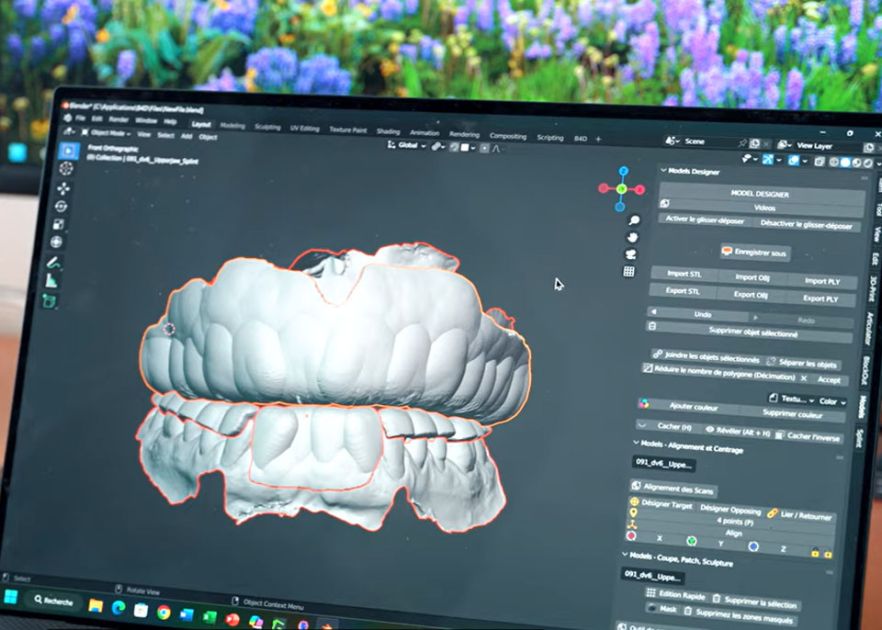
Researchers at the University of Bordeaux are advancing new athletic safety measures through the development of smart mouthguards designed to monitor impact forces during contact sports. Led by academic and clinical innovators at the French institution, the project addresses growing concerns regarding head trauma and concussions in rugby, football, and combat disciplines. By embedding tiny sensors directly into custom-fitted dental equipment, sports scientists can now capture real-time biomechanical data that was previously impossible to measure accurately from the sidelines.
Head injuries remain a critical challenge for sports medicine professionals worldwide. Traditional assessment methods rely heavily on visual observations by medical staff or subjective reporting by athletes who may downplay symptoms to stay in the game. The University of Bordeaux initiative bridges this gap by providing objective metrics straight to team physicians the moment a heavy collision occurs. According to sports safety researchers involved in related European biomechanics studies, wearable sensor technology transforms how medical teams manage player welfare during high-intensity training sessions and competitive matches.
The core technology relies on micro-sensors built into a comfortable, custom-molded dental guard. When an athlete takes a blow to the head or jaw, the device measures linear and rotational acceleration forces instantly. This data transmits via wireless protocols to sideline tablets or monitoring stations, alerting medical personnel to impacts that exceed safe thresholds. By focusing on the upper jaw, where the bone structure couples tightly with the skull, the Bordeaux research team ensures higher data fidelity compared to traditional headbands or helmet-mounted patches that can slip or shift during play.
How Smart Mouthguards Protect Athletes at the University of Bordeaux
Protecting professional and amateur athletes requires reliable tools that do not interfere with performance or breathing. The Bordeaux prototype combines dental protection with advanced telemetry without adding bulky external components. Players wear the equipment just as they would a standard mouthguard, ensuring compliance across youth and senior divisions where safety mandates are increasingly stringent.
Clinical trials and testing phases at university facilities involve monitoring controlled impacts and gathering baseline metrics from volunteer athletes. These trials help engineers calibrate the internal accelerometers and gyroscopes to differentiate between normal game movements, such as running and jumping, and dangerous concussive impacts. Medical researchers emphasize that early detection prevents second-impact syndrome, a potentially fatal condition that occurs when the brain suffers a second trauma before recovering from an initial injury.
The Broader Impact on Sports Medicine and Safety Regulations
Integrating sensor technology into everyday sports gear aligns with broader regulatory shifts across European sports federations. Governing bodies face mounting pressure from player unions and medical associations to enforce stricter concussion protocols. Data gathered from university research projects helps leagues establish evidence-based return-to-play guidelines, replacing guesswork with hard numerical thresholds.
Furthermore, this technology aids longitudinal studies on sub-concussive hits. While a single blow might not trigger immediate clinical symptoms, accumulating smaller impacts over a career can lead to chronic traumatic encephalopathy (CTE) and other neurodegenerative conditions. By tracking every heavy collision over months and years, sports scientists at institutions like the University of Bordeaux hope to identify the exact tipping points for long-term neurological damage.
Future Outlook and Next Steps for Sports Innovation
Development teams are currently working on miniaturizing the internal circuitry further to reduce production costs and improve battery longevity. While elite clubs in rugby and football serve as the initial testing grounds, the long-term goal is to make smart dental protection accessible to amateur and youth leagues where medical staffing is often limited. Official updates regarding clinical trial expansions and partnership announcements are expected from the University of Bordeaux research division as testing continues.
Athletes, coaches, and medical staff interested in tracking further advancements in sports safety equipment can monitor announcements directly through the University of Bordeaux official communications portal. Share your thoughts on wearable tech in sports in the comments below.