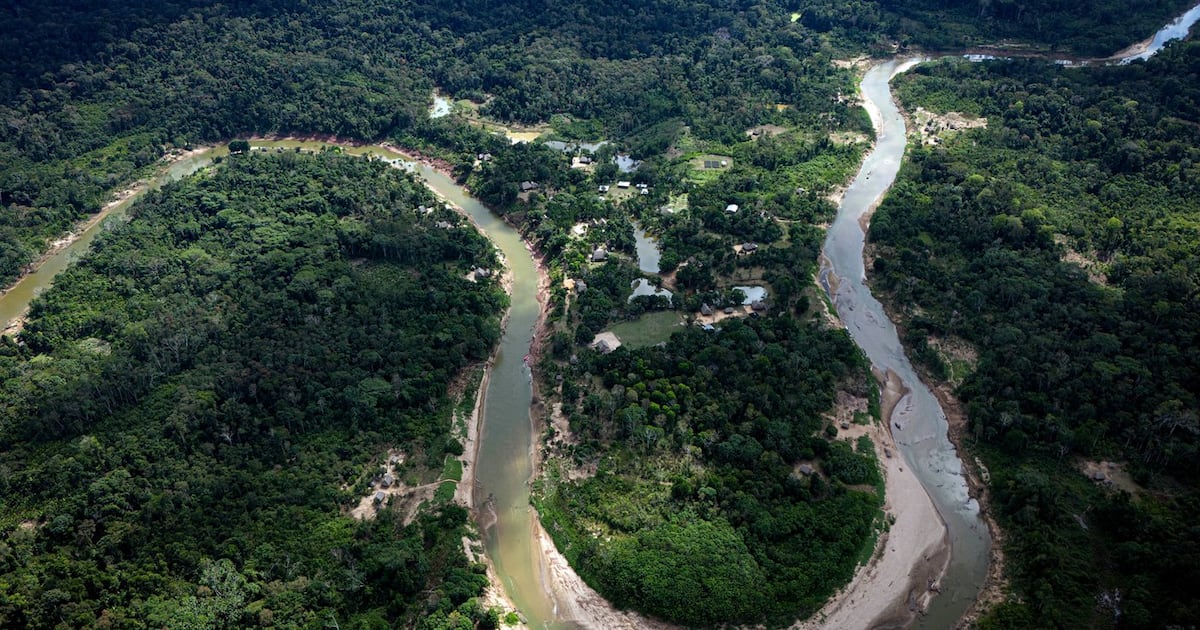
Indigenous communities residing within the Brazilian Amazon are facing mounting pressure from criminal organizations, prompting traditional populations like the Ashaninka to call for stronger protective measures and intervention from federal authorities. According to reports from public defenders and human rights monitors, illegal mining, timber trafficking, and narcotics networks operating in remote border regions have increasingly encroached upon demarcated ancestral territories, straining local defense systems.
The situation highlights enduring security challenges across Brazil’s vast northern frontier, where state presence remains sparse. Indigenous leaders and regional advocates maintain that existing government infrastructure is insufficient to deter heavily armed trafficking factions that use riverways to move contraband through native lands. While federal agencies have periodically launched enforcement operations, communities on the ground argue that a more permanent protective framework is necessary to secure vulnerable borders.
The operational pressures facing Amazonian reserves stem from a convergence of transnational criminal networks and domestic illegal extraction industries. According to data compiled by the Indigenous Missionary Council (CIMI), invasions of protected lands have disrupted traditional subsistence practices, placing pressure on communities that rely on forest conservation for their livelihoods. These networks frequently exploit isolated geography to establish clandestine airstrips, fuel depots, and processing hubs within remote jungle sectors.
Federal prosecutors and environmental enforcement bodies have documented numerous instances where armed groups have threatened residents who attempt to monitor illegal entry. In response, indigenous protection patrols—often operating with limited resources—have attempted to track unauthorized movements and report coordinates to federal authorities. However, community representatives note that logistical delays in dispatching security forces often leave local monitors exposed to retaliation.
Government Response and Institutional Oversight
Brazil’s Ministry of Indigenous Peoples (MPI) and the National Foundation for Indigenous Peoples (Funai) coordinate federal policies aimed at safeguarding demarcated territories. According to official government statements, inter-agency task forces involving the Brazilian Institute of Environment and Renewable Natural Resources (IBAMA) and the Federal Police have carried out targeted disruptions against illegal mining camps and timber extraction rings.
Federal officials emphasize that logistical constraints across the Amazon basin complicate continuous monitoring. Operating in expanses the size of European nations requires significant aviation support, river transport, and coordination with the Brazilian Armed Forces. Budgetary allocations for environmental protection and indigenous security have fluctuated over successive legislative cycles, prompting ongoing debates in Brasília regarding the adequacy of current resource distribution.
Legal Frameworks and International Human Rights Standards
The protection of indigenous lands is anchored in the Brazilian Federal Constitution of 1988, which guarantees original rights over the traditional lands they occupy. According to legal experts specializing in constitutional law, the state holds a duty to demarcate, protect, and respect all properties traditionally inhabited by indigenous peoples. International bodies, including the Inter-American Commission on Human Rights (IACHR), have repeatedly called upon member states to implement precautionary measures to safeguard indigenous populations facing imminent threats from organized crime.
Despite these legal protections, enforcement gaps remain a central challenge for magistrates and public safety officials. Legal analysts point out that jurisdictional overlaps between federal police, state security forces, and environmental agencies can occasionally slow down rapid-response initiatives in remote areas. Human rights organizations continue to press for streamlined protocols that allow indigenous guards to coordinate more effectively with federal law enforcement units during security crises.
Socioeconomic Impact on Traditional Communities
The infiltration of criminal networks alters the social fabric of indigenous villages, introducing economic pressures and security risks that affect younger generations in particular. Contamination of rivers by mercury used in illegal gold mining has degraded aquatic ecosystems, threatening food security for communities that depend on fishing. Furthermore, the presence of armed actors restricts movement along vital waterways, isolating villages from regional health services and educational networks.
Local cooperatives and non-governmental organizations have worked to document these impacts, publishing periodic bulletins detailing environmental degradation and security incidents. These documentation efforts serve as foundational records for public prosecutors seeking to hold accountable individuals and corporate entities linked to illegal supply chains operating within protected zones.
Next Steps and Monitoring Schedules
Federal oversight committees in the National Congress are scheduled to review ongoing security expenditures and environmental enforcement strategies during the upcoming legislative session. Representatives from Funai and the Federal Police are expected to present updated operational metrics regarding anti-encroachment operations in the western Amazon. Readers seeking official updates on territorial protections and legal filings can consult the public registries maintained by the National Foundation for Indigenous Peoples and federal judicial portals.
We welcome your perspectives on this developing situation. Please share your thoughts or join the conversation in the comments section below.