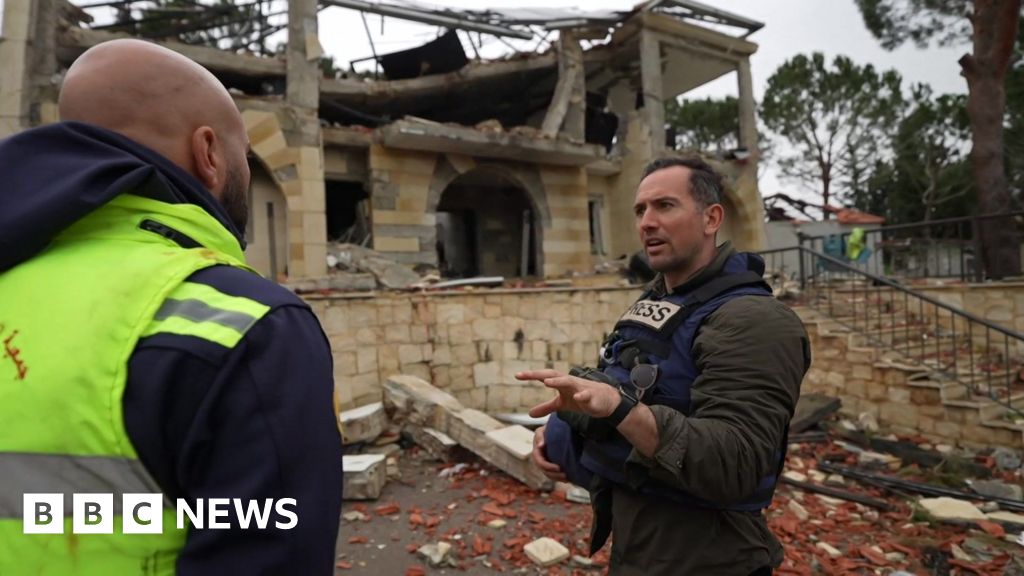
The city of Nabatieh, once a vibrant hub of activity in southern Lebanon, has fallen into a haunting silence. Now largely abandoned, the streets that once buzzed with commerce and community life are marked by the ruins of conflict and the remnants of a displaced population.
Recent Israeli strikes in Lebanon have intensified the humanitarian crisis in the region, leaving medical personnel to operate under extreme peril. For the paramedics remaining on duty, the work is no longer just about emergency response; It’s a struggle for survival amidst a landscape of targeted infrastructure.
The scale of the crisis is reflected in the mass movement of the population. Since fighting renewed in March, one in five people in Lebanon have been forced to flee their homes, creating a displacement crisis that has strained the country’s already fragile resources.
The Human Cost of Medical Response
The danger facing first responders is illustrated by the ruins of an ambulance station in Nabatieh. Local paramedics recount the loss of colleagues in the line of duty, including one instance where a paramedic was killed by a strike while he was on the phone with his wife.
These accounts highlight a growing tension regarding the safety of medical zones. While paramedics on the ground maintain that there is no evidence to support claims that health facilities are being misused, the conflict continues to claim those tasked with saving lives.
Contested Strikes in Bint Jbeil
The dispute over the targeting of medical infrastructure reached a flashpoint in Bint Jbeil, a site known for fierce fighting during the 2006 conflict between Israel and Hezbollah. The Israel Defense Forces (IDF) reported that their troops killed more than 20 Hezbollah fighters who were allegedly operating from a hospital compound on Sunday.
This claim was categorically denied by Lebanon’s health ministry. Ministry officials have accused Israel of deliberately targeting civilians and essential medical facilities, asserting that the hospital compound was not being used for military operations.
The Debate Over Medical Neutrality
At the center of the current escalation is a fundamental disagreement over the neutrality of healthcare facilities. The IDF maintains that some ambulances and health centers in Lebanon are being utilized by Hezbollah for operational purposes, which they argue justifies certain strikes.
Conversely, medical professionals and the Lebanese health ministry argue that these claims are unfounded. They emphasize that the targeting of hospitals and ambulances violates international norms and leaves the civilian population without critical care during a period of mass displacement.
Reporting from these zones requires a deep understanding of the geopolitical volatility of the region. Correspondents based in Beirut, such as Hugo Bachega—who has previously covered conflict zones in Gaza and Ukraine—continue to document the intersection of military strategy and human rights in southern Lebanon.
Key Takeaways
- Mass Displacement: Approximately 20% of the Lebanese population has been displaced since fighting resumed in March.
- Infrastructure Damage: Cities like Nabatieh have been abandoned following targeted strikes.
- Contested Claims: The IDF claims over 20 Hezbollah fighters were killed in a Bint Jbeil hospital compound, a claim denied by the Lebanese health ministry.
- Medical Risk: Paramedics report the death of colleagues at ambulance stations, while disputing claims that medical facilities are used for military purposes.
As the situation remains fluid, the international community continues to monitor the impact of these strikes on civilian infrastructure. The next critical checkpoint will be the updates from the Lebanese health ministry regarding the total number of medical facilities rendered inoperable by the current wave of fighting.
We invite our readers to share their perspectives on the protection of medical neutrality in conflict zones in the comments below.