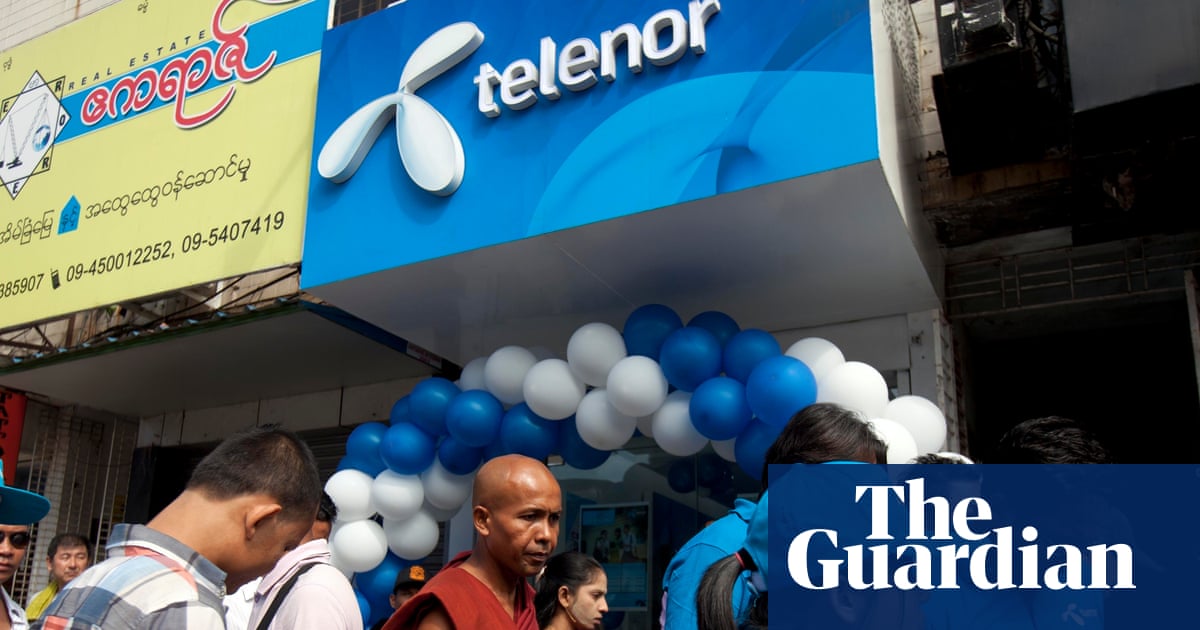
Norway’s state-controlled telecommunications giant Telenor is facing a significant legal battle following allegations that it aided the Myanmar military junta in identifying and arresting political dissidents. A class-action lawsuit filed in Norway claims the company shared sensitive customer data with the regime, facilitating the crackdown on anti-coup activists and other critics of the military government.
The legal action, initiated on April 8, 2026, represents 1,253 customers who allege their privacy was breached to serve the interests of the junta by a Swedish non-profit. The lawsuit argues that Telenor provided historical metadata, including addresses and last-known locations, which allowed the military to locate activists, some of whom were hiding in safe houses.
At the heart of the case is the tension between corporate compliance with local laws and the protection of human rights in volatile regions. Telenor, whose majority shareholder is the Norwegian government, entered Myanmar in 2013 during the country’s transition toward democracy, promising to connect a population that had long been isolated from the global community. However, critics now argue that this trust was breached when the company complied with the demands of the military regime following the 2021 coup.
The impact of these data disclosures has been severe. According to reports, the information passed to the regime helped the military arrest approximately 1,200 activists as detailed in legal filings. Some of those targeted were subsequently jailed, tortured, or executed.
The Legal Challenge and Allegations of Betrayal
The lawsuit was filed by the Justice and Accountability Initiative (JAI), a Swedish rights organization, with additional support from the Open Society Justice Initiative and the Centre for Research on Multinational Corporations. The plaintiffs are seeking a minimum of €11 million (£9.6m) in damages according to court documents.

The claims center on the assertion that Telenor failed to warn its users that their data was being shared with the authorities, even when internal assessments suggested such orders would lead to arrests. The data provided to the junta reportedly included information on high-profile figures, including the deposed leader Aung San Suu Kyi and former MP Phyo Zeya Thaw, who was executed.
One specific account highlights the desperation of the military’s intelligence gathering. Aung Thu, an anti-coup activist, reportedly endured two weeks of torture without betraying his colleagues. His interrogators eventually turned to Telenor, the largest operator in the country at the time, to obtain the data necessary to locate his fellow activists per reports on the lawsuit.
The scale of the cooperation is underscored by Telenor’s own transparency reports, which reveal that the company complied with 96% of the 153 data requests it received from the authorities.
Telenor’s Defense: Employee Safety vs. User Privacy
In response to the allegations, Telenor has defended its actions by citing the extreme risks faced by its local workforce. A company spokesperson clarified that refusing the orders of the military regime would have put the lives of their staff in Myanmar at immediate risk.
The company stated that its employees were working under “extremely difficult and uncertain conditions” and facing direct pressure from the authorities in a “highly volatile security situation.” Telenor maintains that it could not accept risks with employee safety, asserting that their lives were at stake during the period in question as stated by a company spokesperson.
This defense highlights a recurring dilemma for multinational corporations operating in authoritarian regimes: the conflict between upholding international human rights standards and ensuring the physical safety of local employees who are subject to the laws and threats of a military junta.
Key Details of the Telenor-Myanmar Controversy
| Detail | Information |
|---|---|
| Number of Plaintiffs | 1,253 customers |
| Estimated Victims | Over 1,200 activists arrested |
| Compliance Rate | 96% of 153 data requests |
| Financial Demand | Minimum of €11 million (£9.6m) |
| Data Shared | Historical metadata, addresses, and last-known locations |
Broader Implications and Future Oversight
The fallout from this lawsuit extends beyond the courtroom. Because the Norwegian government is the majority shareholder of Telenor, the company’s actions in Myanmar have sparked political scrutiny in Oslo. A parliamentary inquiry is expected later this year to investigate the role and oversight provided by the Norwegian government regarding the company’s operations as reported on April 16, 2026.
The case raises critical questions about the responsibility of “state-backed” companies when they operate in environments where the rule of law has collapsed. For activists in Myanmar, the breach of trust is profound. Joseph Wilde-Ramsing, advocacy director for Somo, noted that the company entered the country promising trust, but that trust was breached, forcing many users to move underground or flee to avoid capture according to his statements.
Telenor eventually exited the Myanmar market in 2022, having served 18 million customers at the time of its departure. However, the legal consequences of its activities prior to that exit continue to unfold.
The next major development in this case will be the upcoming parliamentary inquiry in Norway, which will examine whether the government failed in its duty to ensure Telenor adhered to human rights standards while operating under the military regime.
We invite our readers to share their perspectives on the balance between corporate safety and human rights in the comments below.