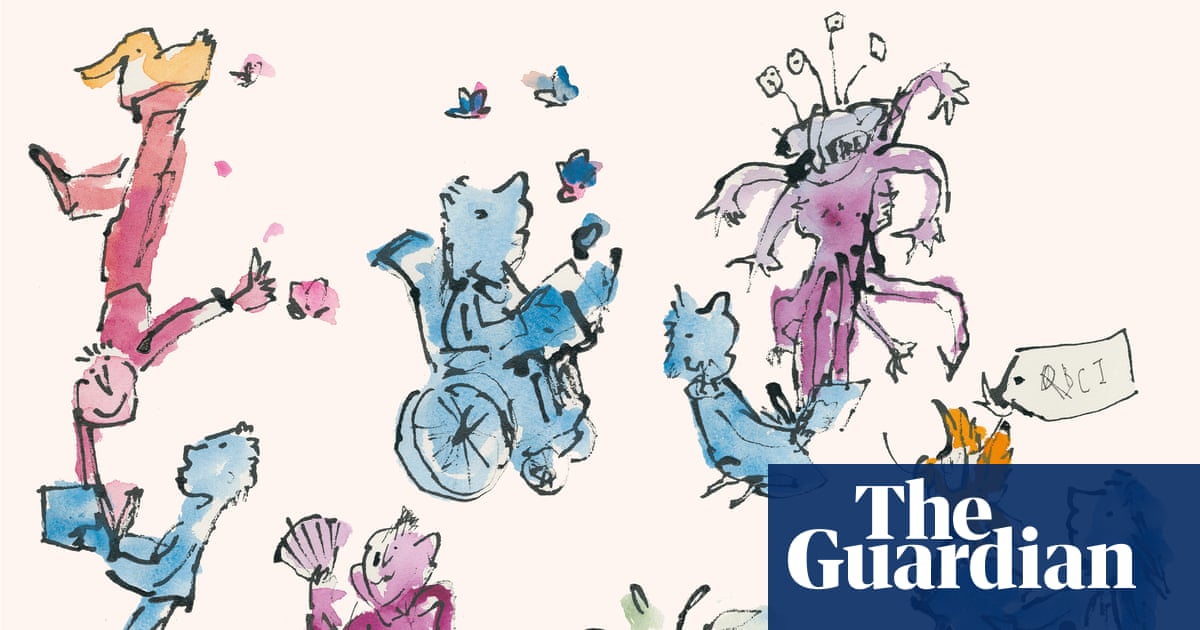
The intersection of ink and imagination has long been the bedrock of childhood literacy, yet the artists who shape these worlds often remain in the shadows of their literary collaborators. However, a significant shift is underway in London’s Clerkenwell district. The Quentin Blake Centre for Illustration, housed within the historic, 17th-century New River Head industrial complex, is preparing to open its doors as a dedicated home for an art form that has historically been relegated to the margins of the fine art world.
For those of us who grew up tracing the frantic, energetic lines of a BFG or the whimsical gloom of a Gruffalo, the art of storytelling through illustration is far from a trivial pursuit. It is a rigorous, deeply intentional craft. As Sir Quentin Blake, now 91 years old, has often demonstrated throughout his prolific seven-decade career, “I am very serious about being silly.” This philosophy—that humor and visual playfulness require immense discipline—is a sentiment shared by a generation of illustrators who have defined the visual language of modern children’s literature.
The new Centre for Illustration is not merely a gallery; it is designed to function as a creative laboratory and a national archive. According to the institution’s official mission, it aims to preserve and celebrate the role of illustration in everything from political cartoons to digital media. Its flagship collection will eventually house a substantial portion of Blake’s own archive, which includes tens of thousands of individual drawings produced over his storied career collaborating with luminaries such as Roald Dahl, Michael Rosen, and Sylvia Plath.
The Architecture of Imagination: Why Illustration Matters
To understand the gravity of this new institution, one must first recognize that children’s illustration is rarely just decoration. It is a vital narrative device. When an illustrator like Axel Scheffler works on a book like The Gruffalo, they are not simply translating text into images; they are expanding the world-building, providing emotional cues, and pacing the reader’s experience. This collaborative process is where the “art of storytelling” truly resides.
Cressida Cowell, the celebrated author and illustrator of the How to Train Your Dragon series, has frequently spoken about the importance of visual literacy in early childhood development. By placing illustration at the heart of British cultural life, the new Centre is signaling that these visual stories are as intellectually significant as any other form of fine art. The decision to locate the centre in a historic industrial space—a site once used for London’s water supply—serves as a metaphor for the way illustration feeds the cultural imagination of the public.
The archive, which boasts a collection of approximately 40,000 items, serves as a primary source for researchers and fans alike. The Art Fund has been instrumental in supporting the development of this site, which represents one of the most significant investments in the preservation of illustration history in the United Kingdom. This is not just a legacy project for Sir Quentin; it is an attempt to create a permanent infrastructure for an art form that is often ephemeral by nature.
Beyond the Page: The Evolution of Visual Storytelling
The scope of the new Centre extends well beyond traditional children’s books. In the modern era, the “art of storytelling” has migrated into animation, digital advertising, and even complex political satire. By bridging these disciplines, the curators hope to attract a global audience, moving away from the perception that illustration is exclusively for the nursery.
Lauren Child, known for her innovative use of mixed media in the Charlie and Lola series, has often noted that the constraints of the page are exactly what drive creative innovation. When an artist is limited by the physical dimensions of a book, they must find ingenious ways to convey movement, time, and character depth. This is where the “seriousness” of being “silly” comes into play. It takes a high level of technical mastery to create a character that feels alive, relatable, and enduring.
For those interested in the technical side of this craft, the Centre will feature rotating exhibitions that peel back the layers of the creative process. Visitors will be able to see the evolution of a character from initial, messy pencil sketches to the final, polished ink work that appears on the shelf. The projected opening of this facility is a milestone for London’s cultural landscape, providing a hub for illustrators to collaborate and showcase their work in a permanent, professional setting.
Key Takeaways for Aspiring Storytellers
- Visual Literacy is Essential: Illustration is a foundational element of literacy, helping children navigate complex emotions and narrative structures.
- The Discipline of Play: The most effective “silly” illustrations are the result of rigorous practice, technical skill, and an deep understanding of character psychology.
- Preservation is Key: With over 40,000 archival items, the new Quentin Blake Centre for Illustration aims to protect the legacy of artists who have shaped generations of readers.
- A Multi-Disciplinary Future: The center bridges the gap between traditional publishing and modern digital media, highlighting the versatility of the illustrator’s craft.
What Happens Next
As the Quentin Blake Centre for Illustration prepares for its grand opening, the institution is currently finalizing its inaugural exhibition schedule. Prospective visitors and researchers are encouraged to monitor the official website for announcements regarding ticket availability and specific programming dates. The Centre’s development team continues to work on the restoration of the Clerkenwell site, ensuring that the 17th-century architecture complements the contemporary nature of the art it houses.

The establishment of this center is a testament to the enduring power of the illustrated word. Whether it is through the dip-pen energy of a classic Roald Dahl collaboration or the modern, digital-first approach of today’s rising stars, the art of storytelling remains a vital, evolving force. As the Centre opens its doors, it invites us all to look a little closer at the pictures—and perhaps find the serious art hidden within the silliness.
What are your favorite illustrated books that shaped your own reading journey? Share your thoughts in the comments below, and stay tuned to World Today Journal for our upcoming features on the intersection of art and literature.