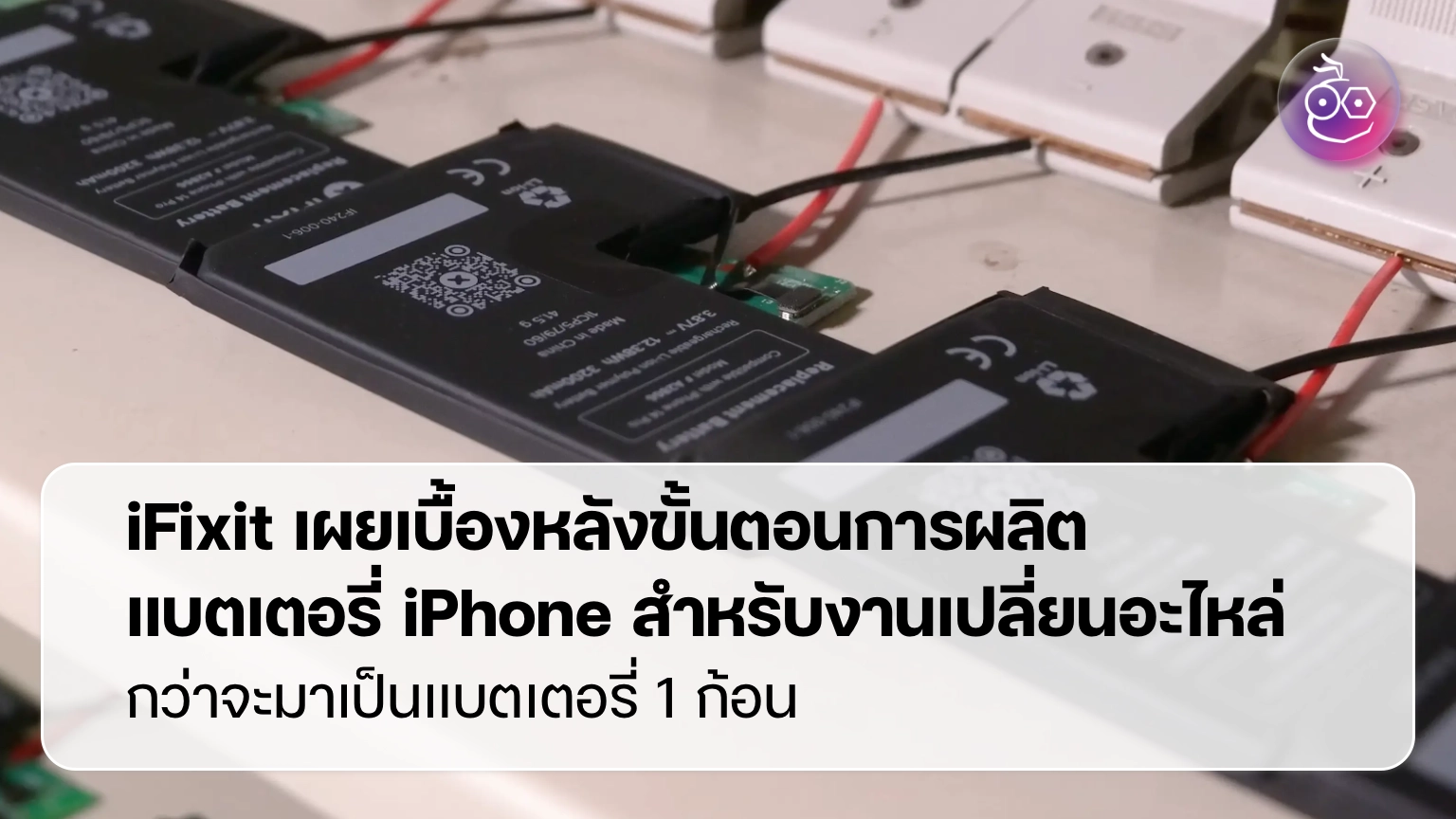
iFixit has detailed the complex manufacturing and assembly process required to produce high-quality iPhone replacement batteries, highlighting the technical challenges of matching original equipment manufacturer (OEM) standards. The electronics repair organization’s analysis focuses on the precision engineering of lithium-ion cells and the critical role of the Battery Management System (BMS) in ensuring device safety and functionality.
According to iFixit, producing a reliable replacement battery involves more than just sourcing a chemical cell; it requires a sophisticated integration of hardware and software. The process begins with the selection of high-grade lithium-polymer cells, which are then wrapped in protective layers and connected to a printed circuit board (PCB) that regulates voltage and temperature. This PCB, or BMS, is the primary point of failure in low-quality third-party batteries, often leading to “Unknown Part” warnings or erratic battery percentage readings on iOS devices.
The organization emphasizes that the “parts pairing” or “serialization” practice implemented by Apple creates a significant barrier for independent repair. When a new battery is installed, the iPhone’s software checks for a specific digital signature from the original battery’s chip. If the signature does not match, the system triggers a notification stating that the device cannot verify the battery is a genuine Apple part, even if the replacement is a high-quality component.
How are iPhone replacement batteries manufactured?
The production of a replacement battery starts with the lithium-ion cell. These cells are composed of an anode, a cathode, and an electrolyte. iFixit notes that the quality of the raw materials—specifically the purity of the cobalt and lithium—directly impacts the battery’s cycle life and energy density. Once the cell is formed, it is encased in a flexible aluminum-plastic laminate foil to prevent leaks and protect against punctures.

Following the cell creation, the BMS is attached. The BMS is a small circuit board that performs several vital functions: it prevents overcharging, protects against deep discharge, and monitors the temperature of the cell. In the case of iPhones, this board also stores the battery’s health data and serial number. iFixit explains that for a replacement battery to function without warnings, the technician must often transfer the original BMS from the old battery to the new cell—a process known as “cell swapping”—which requires precision spot-welding and carries significant safety risks if not performed by a professional.
The assembly process must occur in a controlled environment. Contamination from dust or moisture during the sealing process can lead to internal shorts, which may cause the battery to swell or, in extreme cases, ignite. This is why iFixit advocates for sourcing parts from manufacturers that adhere to strict ISO standards for electronics production.
Why does the “Unknown Part” message appear?
The “Unknown Part” message is a result of Apple’s software-level hardware locking. According to iFixit, Apple uses a process called serialization to link the battery’s unique ID to the phone’s logic board. When a replacement is installed, the logic board detects that the new battery’s ID does not match the one recorded during the device’s initial assembly.

While this measure is framed by Apple as a security and quality control step to ensure users are not using dangerous, low-quality batteries, iFixit argues that it restricts the right to repair. The message does not necessarily mean the battery is defective or dangerous; it simply means the software cannot verify the part’s origin. This software lock prevents the user from seeing the “Battery Health” percentage in the settings menu, a key metric for determining when a battery needs replacing.
To combat this, some third-party manufacturers attempt to “spoof” the serial number or use modified chips, but these methods are often patched by iOS updates. The only official way to avoid this message is to have the repair performed by an Apple Authorized Service Provider, where the technician uses a proprietary calibration tool to “pair” the new battery to the logic board.
What are the risks of low-quality replacement batteries?
The market for iPhone batteries is split between OEM-grade replacements and generic third-party options. iFixit warns that “budget” batteries often cut corners in two specific areas: the quality of the lithium cell and the sophistication of the BMS.
Low-quality cells may have inconsistent voltage, leading to “voltage sag,” where the phone unexpectedly shuts down even when the battery shows 20% or 30% remaining. More dangerously, a poor-quality BMS may fail to shut down the battery if it overheats. Because lithium-ion batteries are volatile, a failure in the thermal cutoff circuit can lead to thermal runaway, causing the battery to expand and potentially crack the screen or damage internal components.
Furthermore, inferior adhesives used to secure the battery to the chassis can fail. Original Apple batteries use high-strength, pull-tab adhesives that allow for clean removal. Cheap replacements often use permanent glues that require prying, which increases the risk of puncturing the battery during future repairs.
The impact of Right to Repair legislation
The struggle over battery serialization is a central point in the global “Right to Repair” movement. In the United States, several states have introduced legislation aimed at forcing manufacturers to make parts and diagnostic tools available to independent shops and consumers. iFixit has been a leading voice in these efforts, arguing that software locks on hardware are an unnecessary barrier to sustainability.

Under pressure from regulators and consumer advocates, Apple has launched a “Self Service Repair” program. This program allows users to purchase genuine parts and rent the necessary tools. However, iFixit points out that the process remains cumbersome, as users must still contact Apple to “validate” the part after installation to remove the “Unknown Part” warning.
The environmental impact is also a key driver for this movement. By making it easier and more transparent to replace batteries, the lifespan of a smartphone can be extended by several years, reducing the amount of electronic waste (e-waste) entering landfills. According to the Apple Environment page, the company aims to be carbon neutral across its entire business by 2030, but critics argue that software-locking parts contradicts this goal by encouraging device replacement over repair.
Comparison of Battery Replacement Options
| Feature | Apple Official / Authorized | High-End Third Party (iFixit Grade) | Generic/Budget Third Party |
|---|---|---|---|
| Battery Health Data | Fully Visible | Hidden (Unknown Part) | Hidden (Unknown Part) |
| Safety Certification | OEM Standard | Certified/Tested | Unverified/Variable |
| Installation | Professional/Guided | DIY/Independent | DIY/Independent |
| Longevity | High | High | Low to Moderate |
The next major development in this space is expected to come from the European Union, where new regulations regarding battery replaceability and sustainability are being implemented. These mandates may eventually force manufacturers to decouple software validation from hardware functionality, potentially ending the “Unknown Part” era for all smartphone users.
Do you prefer repairing your devices independently or sticking to authorized service centers? Share your experiences in the comments below.