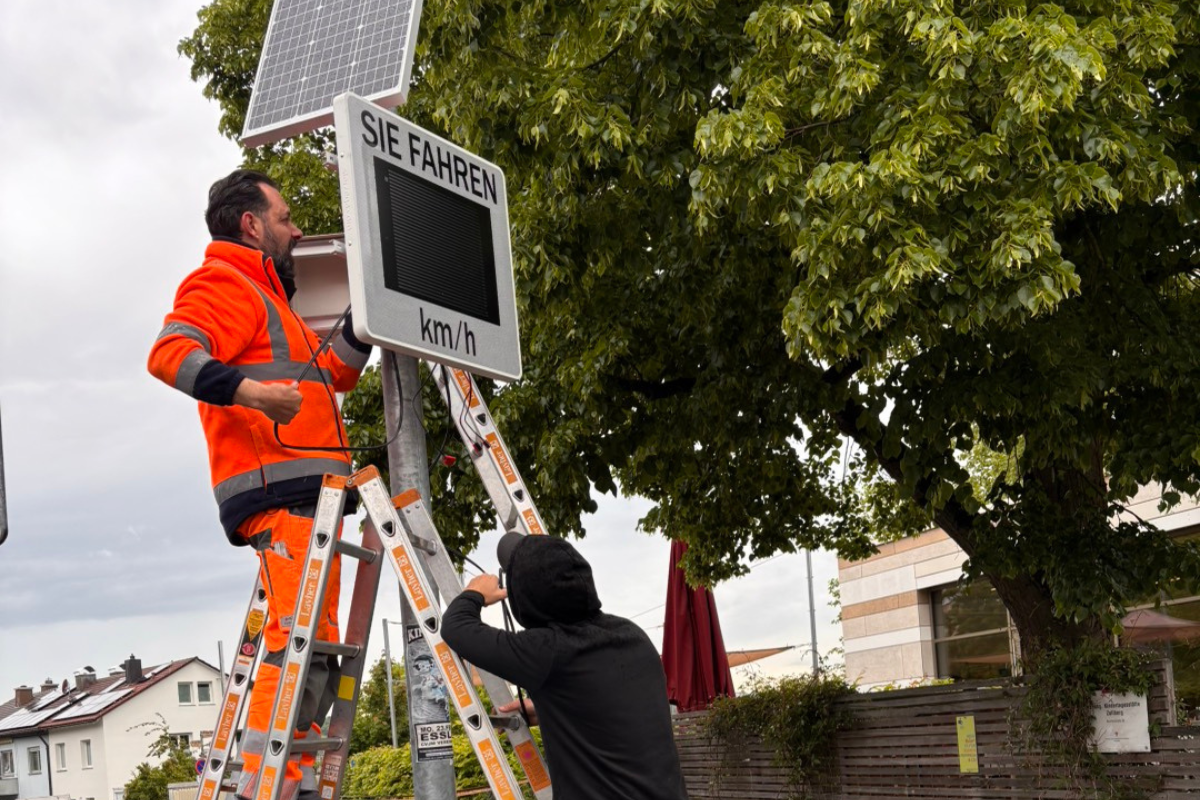
In the city of Esslingen, Germany, local authorities have recently implemented traffic-calming measures that utilize feedback-based technology to influence driver behavior. These installations, often referred to as speed display signs or “smiley” signs, serve as a non-punitive method for traffic management, focusing on real-time awareness rather than automated enforcement.
The core objective of these devices is to provide immediate visual feedback to motorists regarding their current velocity. Unlike traditional speed cameras, which are designed to capture evidence of traffic violations for the purpose of issuing fines, these interactive displays operate on a principle of voluntary compliance. By projecting the driver’s speed back to them—frequently accompanied by a graphical indicator like a smiling or frowning face—the system encourages drivers to adjust their speed to match the posted limit without the threat of a citation.
Understanding Traffic-Calming Technology
The deployment of these systems in Esslingen is part of a broader European trend toward “soft” traffic enforcement. These devices are typically deployed in residential zones, near schools, or in areas where high traffic volume or speed poses a risk to pedestrians and cyclists. According to the Federal Highway Research Institute (BASt), which serves as the central research institution for road transport in Germany, such displays are recognized as effective tools for speed reduction, provided they are implemented in accordance with technical guidelines for traffic signs.
The installation process itself requires precise calibration to ensure the radar sensors accurately detect approaching vehicles. Maintenance crews often manage these setups under various environmental conditions, reflecting the necessity of ensuring that traffic safety infrastructure remains operational regardless of the weather. Because these devices do not record license plates or register individual identities, they are categorized differently under data protection regulations compared to standard speed enforcement cameras.
Why Feedback Displays Matter
For residents and urban planners in Esslingen, the primary value of these signs lies in their ability to foster a culture of mindful driving. When a driver sees their speed displayed, it creates a “feedback loop” that interrupts the automatic, often unconscious, nature of high-speed driving in urban environments. Studies often indicate that such signs can lead to a measurable reduction in average speeds, particularly among drivers who are only slightly exceeding the limit.
However, the effectiveness of these signs is often dependent on their placement. If placed too frequently or in areas where drivers feel the speed limit is incongruent with the road design, the “habituation effect” may occur, where drivers begin to ignore the signs entirely. Municipal authorities often rotate these devices between different locations to maintain their impact on driver attention.
Key Considerations for Traffic Management
- Non-Punitive Approach: These devices do not issue tickets, making them a preferred tool for community-focused traffic calming.
- Environmental Adaptation: Systems must be weather-resistant, as they are essential for safety during periods of low visibility, such as rain or fog.
- Data Utility: While they do not identify individuals, many modern units collect anonymous traffic flow data that helps city planners identify times of day when speeding is most prevalent.
The Future of Road Safety in Urban Centers
As cities like Esslingen continue to balance the needs of commuters with the safety of local neighborhoods, the role of intelligent, non-punitive technology is likely to expand. By focusing on education and awareness, these displays provide a balanced approach to road safety that respects the privacy of motorists while addressing the risks posed by excessive speed.

The next official update regarding traffic infrastructure projects in the region is expected to be released by the Esslingen municipal administration in their quarterly urban development report. Residents are encouraged to review the city’s official portal for upcoming public planning sessions or to submit feedback regarding traffic safety concerns in their specific neighborhoods.
Have you noticed these speed displays in your area? Share your thoughts on whether this technology has changed your driving habits in the comments below.
Worth a look