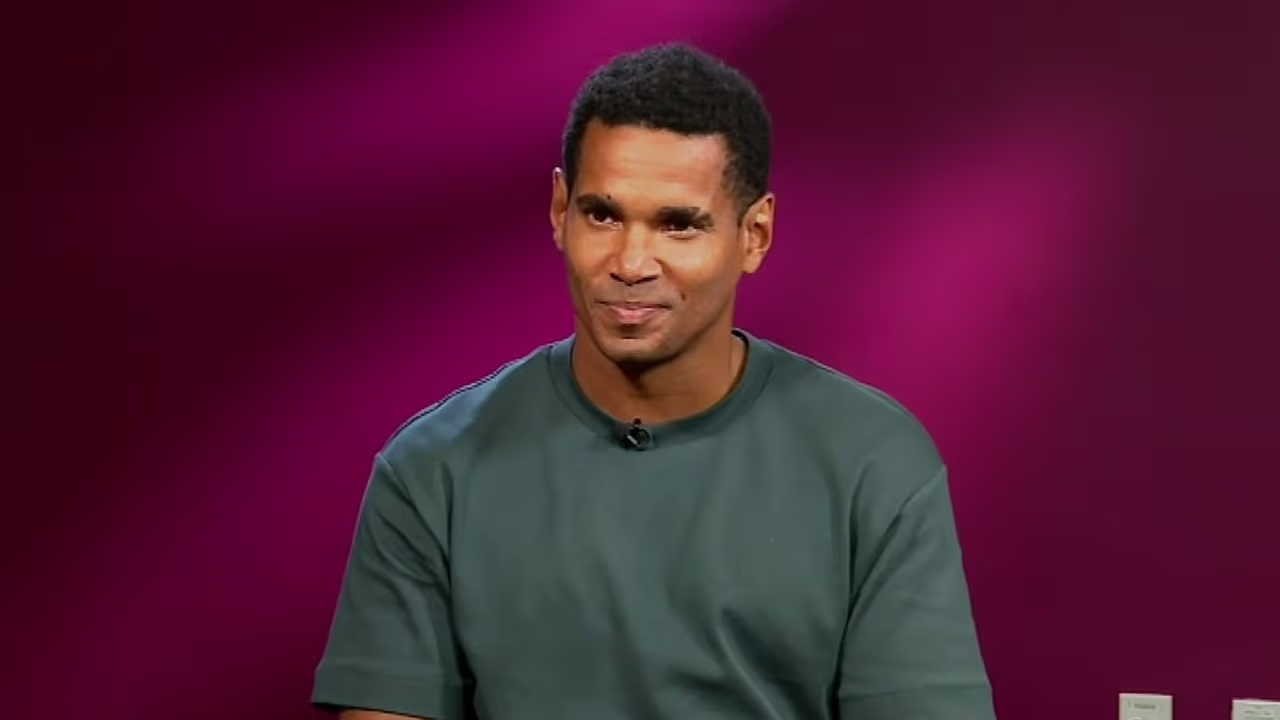
Cuban artist and dissident Luis Manuel Otero Alcántara has spoken publicly for the first time following his release and arrival in the United States, concluding a five-year imprisonment that drew international condemnation from human rights organizations. Otero Alcántara, a founding member of the San Isidro Movement, arrived in Miami after enduring a lengthy prison sentence tied to his peaceful anti-government activism and artistic expression in Havana.
The prominent performance artist and activist addressed his release and the broader situation facing Cuban dissidents during a media appearance on Univision’s Al Punto Florida. His remarks offered an immediate window into his state of mind following years of detention under stringent conditions enforced by Cuban authorities, marking a significant milestone for Cuban civil society and international human rights advocates who campaigned for his liberation.
Otero Alcántara’s imprisonment began in July 2021, when Cuban security forces detained him as he attempted to join nationwide anti-government demonstrations known as the 11J protests. He was subsequently tried and sentenced to five years in prison on charges including contempt, public disorder, and instigation to commit a crime—charges that international observers and legal watchdogs widely characterized as politically motivated attempts to silence independent cultural expression on the island.
The San Isidro Movement and Artistic Resistance in Havana
Founded in 2018, the San Isidro Movement brought together artists, journalists, and intellectuals in Havana to protest government censorship, specifically targeting Decree 349, a regulatory framework designed to restrict independent artistic activity. Otero Alcántara emerged as a central figure within the collective, utilizing performance art, public installations, and digital media to challenge state-controlled cultural narratives.
During his detention at the maximum-security Guanajay prison in Artemisa province, Otero Alcántara engaged in multiple hunger strikes to protest his confinement and the treatment of fellow political prisoners. International human rights organizations, including Amnesty International, designated him a prisoner of conscience, repeatedly calling for his immediate and unconditional release. Amnesty International documented numerous instances where his access to family members and legal counsel was restricted or denied during his five-year incarceration.
The artist’s detention galvanized international solidarity networks, prompting exhibitions, benefit concerts, and advocacy campaigns across Europe, Latin America, and the United States. Cultural institutions and human rights committees frequently highlighted his case as emblematic of the broader suppression of free expression in Cuba, where independent journalists and dissident artists face regular surveillance, arbitrary detention, and travel bans.
International Response and the Broader Context of Cuban Dissent
Otero Alcántara’s release and subsequent relocation to the United States occur against the backdrop of an ongoing migration crisis in Cuba, driven by severe economic hardship, chronic shortages of food and medicine, and limited political freedoms. Independent monitors estimate that hundreds of individuals arrested during the July 2021 protests remain imprisoned, serving sentences ranging from several years to decades.
Human rights advocates emphasize that while high-profile releases like that of Otero Alcántara provide momentary relief for civil society, systemic restrictions on freedom of assembly and expression persist in Cuba. Legal analysts note that the Cuban government maintains expansive penal codes that criminalize peaceful dissent, leaving little legal recourse for citizens challenging state authority domestically.
International organizations continue to monitor the conditions of remaining political prisoners on the island, calling on Havana to comply with international human rights standards and to permit independent monitors access to correctional facilities. The case of Otero Alcántara remains a central reference point in diplomatic discussions regarding human rights and political freedoms in bilateral relations between Cuba and Western democracies.
Next Steps and Official Updates
As Otero Alcántara transitions to life outside of Cuba, human rights advocates and cultural organizations anticipate further public statements regarding his future artistic projects and ongoing advocacy for Cuban political prisoners. Official updates concerning the status of remaining detainees and international diplomatic efforts can be tracked through the reporting portals of major human rights monitors and international news agencies.
Readers are encouraged to share their thoughts or join the conversation in the comments section below.
Keep reading