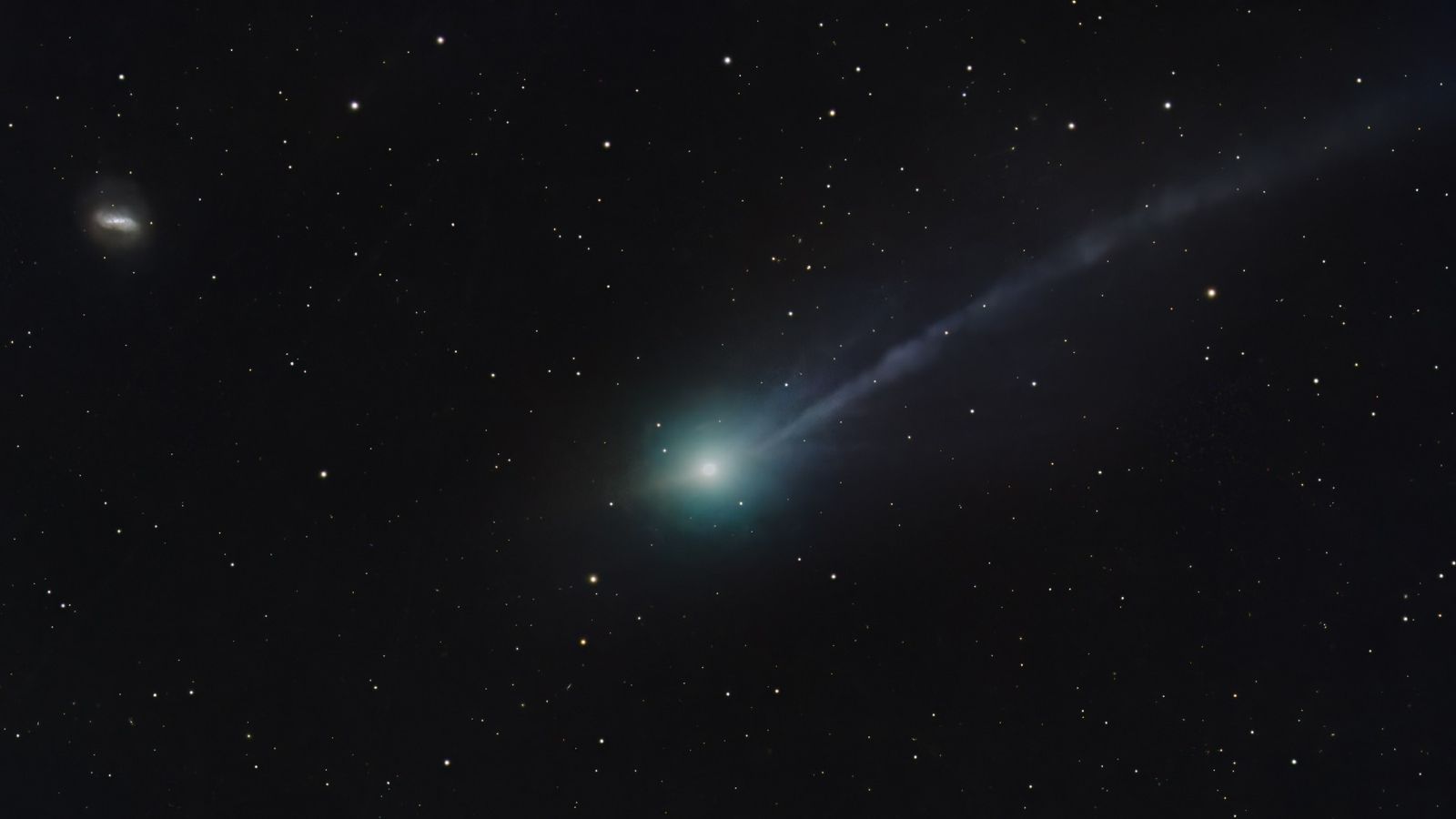
An Interstellar Visitor: Comet 3I/ATLAS is Making a Rare Journey Through Our Solar System
Get ready to witness a truly remarkable celestial event.Comet 3I/ATLAS, an interstellar comet originating from beyond our solar system, is currently embarking on an unusual journey past the planets. This is a rare opportunity to observe a visitor from another star system up close, and astronomers are eagerly preparing for its arrival.
A Comet Unlike Any Other
This isn’t your typical comet. Comet 3I/ATLAS is believed to have traveled for billions of years before entering our cosmic neighborhood.Its origins remain a mystery, and pinpointing its original star system may prove impossible, given the vast distances and time involved.
Closest Approaches & Planetary Flybys
The comet will make its closest approach to Earth in September 2026. However, its most dramatic encounter will be with Jupiter in January 2026, passing within approximately 33 million miles (54 million kilometers) of the gas giant.
Here’s a timeline of its planetary encounters:
* Jupiter: January 2026 (closest approach)
* Saturn: July 2026
* uranus: April 2027
* Neptune: March 2028
While it won’t get especially close to Saturn, Uranus, or Neptune, these flybys still offer valuable opportunities for observation.
Observing the Interloper
Fortunately, you don’t need a powerful telescope to follow this cosmic traveler. NASA’s “Eyes on the Solar System” provides an interactive simulation allowing you to track the comet’s trajectory in real-time. You can explore its path and visualize its journey through our solar system.
What Do We Know About 3I/ATLAS?
Researchers are working diligently to learn as much as possible about this interstellar guest. Currently, several key properties remain uncertain.
* Size: Estimates based on Hubble Space Telescope observations suggest the comet’s nucleus is between 1,440 feet (440 meters) and 3.5 miles (5.6 kilometers) wide.
* Composition: Scientists are analyzing the comet’s composition to understand its origins and the conditions in the star system where it formed.
* Activity: Observing how the comet interacts with the sun’s radiation will provide insights into its structure and behavior.
Why This Matters
Comet 3I/ATLAS represents a unique opportunity to study material from beyond our solar system. By analyzing this interstellar visitor, we can gain valuable insights into the formation and evolution of planetary systems throughout the galaxy. it’s a chance to unlock secrets about the universe and our place within it.
Astronomers will continue to monitor 3I/ATLAS as it journeys through our solar system, hoping to unravel its mysteries and learn more about its fascinating history. Keep an eye on the skies – you’re witnessing a truly exceptional event!
Keep reading