Unveiling the Mysteries of Interstellar Travelers: Comet 3I/ATLAS and the Boundaries of Our Solar System
Have you ever wondered what lies at the very edge of our solar system, and what happens when objects from other star systems pay us a visit? Recently, astronomers have been captivated by just such a visitor: Comet 3I/ATLAS, an interstellar comet offering unprecedented insights into the cosmos beyond our familiar planetary neighborhood.Let’s dive into what makes this comet so special,and what it tells us about the vastness of space.
Defining the Solar System’s Edge
First, let’s address a essential question: where does the solar system end? It’s not a hard boundary, but rather a gradual fading of the sun’s influence. Generally, we consider the solar system to extend to the outer edge, where the sun’s gravitational pull and solar wind are still dominant. Though, pinpointing the exact origin and path of interstellar objects like 3I/ATLAS is a complex undertaking.
A Comet’s Remarkable Journey: 3I/ATLAS
Comet 3I/ATLAS is truly unique. It’s only the third confirmed interstellar comet to ever be observed,and it’s currently making its closest approach to Earth on December 19th. This comet recently completed a dramatic journey behind the sun, a maneuver known as perihelion on October 29th.
During its solar flyby, 3I/ATLAS exhibited some truly fascinating behavior, including:
* Unexpected Brightening: The comet unexpectedly flared in brightness as it swung around the sun, puzzling astronomers.
* Temporary Color Change: Observations revealed the comet subtly shifted colors, a phenomenon not fully understood.
* A Puzzling anti-Tail: Unlike typical comets, 3I/ATLAS developed a distinct “anti-tail” – a jet of material pointing towards the sun.
These anomalies are providing valuable data as scientists attempt to understand the comet’s composition and history.
What Makes 3I/ATLAS Different?
Observations from powerful telescopes, like the James Webb Space Telescope, have revealed even more about this interstellar wanderer. It appears 3I/ATLAS has been heavily altered by billions of years of exposure to cosmic radiation. This radiation has significantly impacted its surface, creating a highly irradiated exterior.
Furthermore, the comet’s composition seems different from those born within our solar system. This difference supports the theory that it originated around another star.
Debunking the Myths
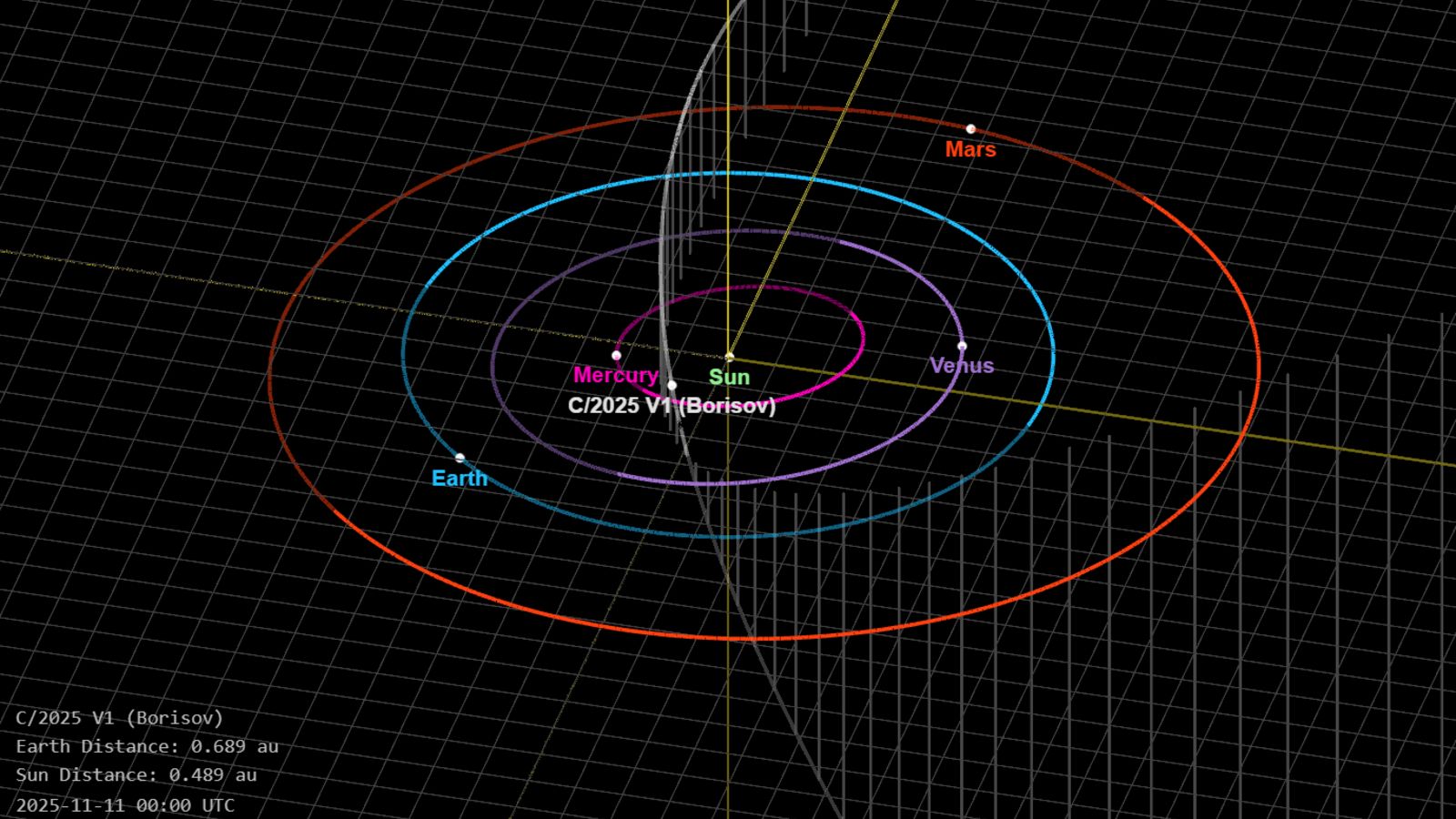
Despite some speculation, there’s currently no credible evidence to suggest 3I/ATLAS is anything other than a comet. It’s meaningful to rely on verified scientific data and avoid sensationalized claims. In fact,it shares many characteristics with another comet,C/2025 V1,which is also expected to become visible in the coming years.
Why This Matters to You
Studying interstellar objects like 3I/ATLAS isn’t just about cataloging cosmic visitors. It’s about understanding the building blocks of planetary systems beyond our own. By analyzing these comets, you can gain insights into:
* The Formation of Other Solar Systems: The composition of interstellar comets can reveal clues about the conditions in which other planetary systems formed.
* The Prevalence of Water in the Universe: Comets are rich in water ice, and studying them helps us understand how water might be distributed throughout the galaxy.
* The Potential for Life Beyond earth: Understanding the ingredients for planetary formation is a crucial step in the search for life elsewhere in the universe.
As 3I/ATLAS continues its journey out of our solar system, it will undoubtedly leave behind a wealth of knowledge.It’s a reminder that our solar system is just one small part of a vast and wondrous universe, and that there’s always more to discover. Keep looking up – you never know what cosmic marvel





![Wednesday News: Latest Updates & Headlines – [Date]](https://assets.thelocal.com/cdn-cgi/rs:fit:1200/quality:75/plain/https://apiwp.thelocal.com/wp-content/uploads/2025/12/watermarks-logo-visigoth-crown.jpg@webp "Wednesday News: Latest Updates & Headlines – [Date]")