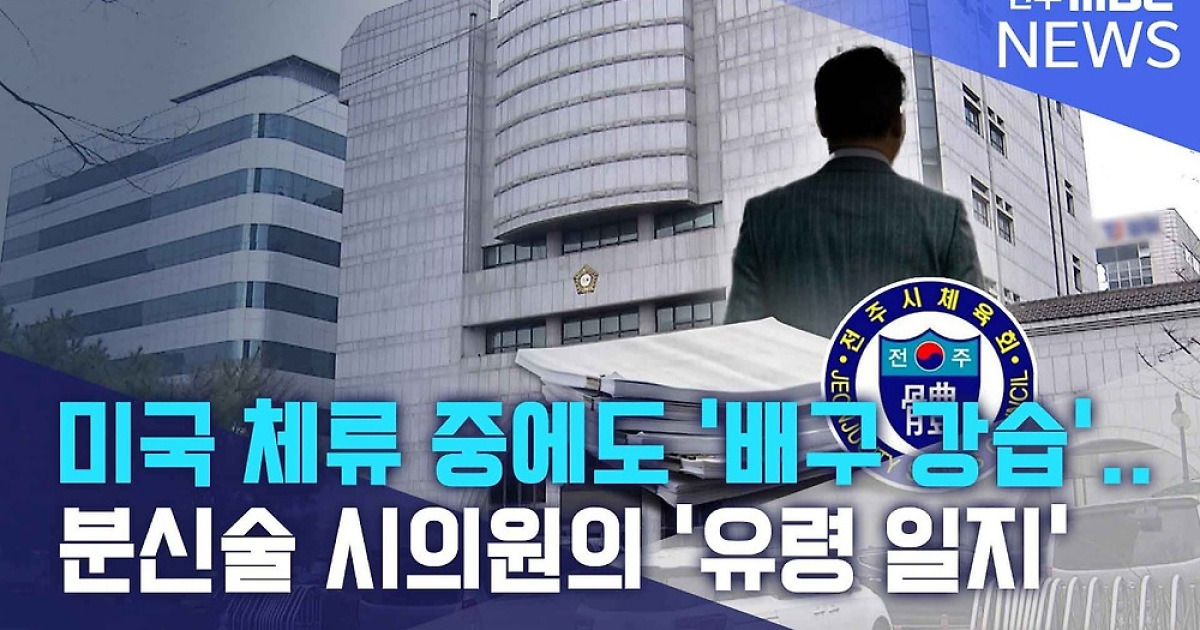
Reports have surfaced regarding allegations of falsified activity logs involving a member of the Jeonju city council, raising concerns over administrative transparency and the accountability of public officials. The controversy centers on claims that the official recorded professional activities within the city while simultaneously being abroad on an official trip.
The core of the dispute involves a discrepancy between the official’s actual location and the records submitted to document their work. According to reports, the official is accused of maintaining a “ghost log” of activities that did not occur as described, specifically regarding the instruction of sports classes in the local community.
Discrepancies in May Activity Logs
The most significant allegation pertains to a period in May, during which the city council member was reportedly away from South Korea for nearly ten days to attend a training program in the United States. Despite being physically absent from the country, the official’s activity logs allegedly indicate that six separate volleyball classes were conducted normally within Jeonju during that same timeframe.
-KlookUnitedStates.jpg "Jeonju United States Reports")
This overlap suggests a direct contradiction between the official’s travel itinerary and their reported professional duties. The claim that these classes were “normally conducted” while the instructor was in the United States has led to questions regarding the verification process for council members’ activity reports and the potential for administrative negligence.
Further Allegations and Regional Discrepancies
The scrutiny of the official’s records extends beyond the May trip. Reports indicate that further inconsistencies were found in logs from November, specifically involving comparisons of activities in Mokpo and Haenam. While the specific nature of these November discrepancies is less detailed than the May incident, they contribute to a broader pattern of alleged inaccuracies in the official’s reporting.
The Impact on Public Trust
For a public official, the integrity of activity logs is not merely a matter of paperwork but a reflection of their commitment to the constituents they serve. When records are allegedly manipulated to show presence and productivity during an overseas absence, it undermines the trust between the local government and the public.
The case highlights a critical need for more rigorous oversight of official logs. If public officials can report activities that are physically impossible to perform due to their location, it suggests a failure in the internal auditing mechanisms of the city council.
At this time, the specific identity of the council member and the formal response from the Jeonju city council have not been independently verified through official government statements or court filings in the available data. The details regarding the number of classes and the duration of the U.S. Trip remain based on reports and have not been confirmed by a primary administrative source.
The next expected step in this matter would be an official investigation by the city council’s ethics committee or a formal response from the accused official to clarify the discrepancies in the May and November logs.
We invite our readers to share their thoughts on public official accountability in the comments below.
Related reading