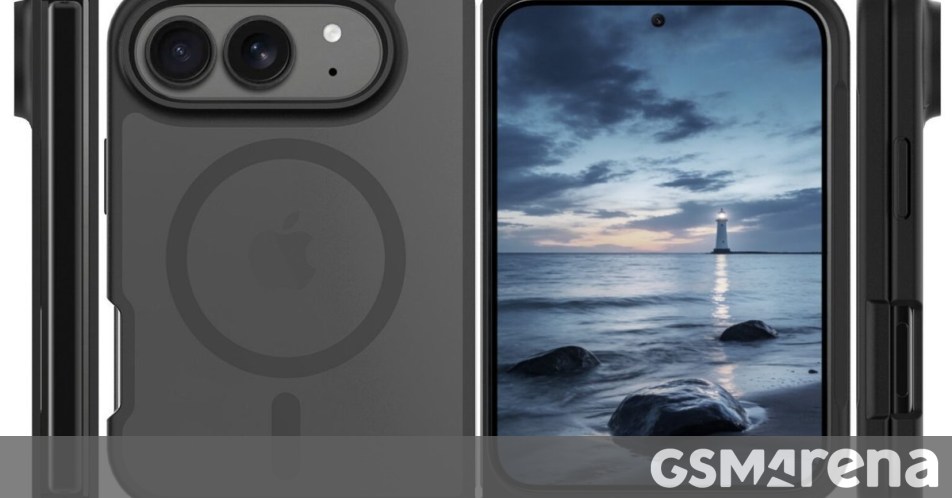
As the smartphone market continues to evolve, speculation regarding Apple’s potential entry into the foldable device space has reached a fever pitch. While the company has yet to provide an official roadmap for a folding handset—frequently referred to in industry circles as the iPhone Ultra—newly surfaced renders from a case manufacturer have provided a fresh look at what a future iteration of Apple’s hardware might entail. For enthusiasts and analysts alike, these design leaks offer a glimpse into how the Cupertino-based tech giant might balance its signature aesthetic with the complex engineering requirements of a foldable form factor.
The latest reports suggest a design characterized by a sleek, black finish and a distinct dual-camera array. Perhaps most notably, these renders indicate that the device may lack integrated MagSafe technology, a feature that has become a staple of the modern iPhone experience. If this holds true, it would mark a significant departure from current design trends, potentially necessitating the use of specialized cases to restore magnetic wireless charging functionality for the user. As we track these developments, it is essential to distinguish between circulating industry rumors and the verified hardware trajectories established by Apple in recent years, such as the ongoing refinement of the iPhone lineup.
Design Renders and the Evolution of the Foldable Form Factor
The allure of a foldable iPhone has long been a subject of intense debate among tech journalists and software developers. With over 3 billion units sold as of July 2025, the iPhone remains a dominant force in global mobile communications, and any shift in its physical architecture carries significant weight for the broader consumer electronics industry (source: Wikipedia). The recent renders, while unverified by Apple, highlight a design philosophy that prioritizes portability and screen real estate—the primary drivers behind the foldable movement.

From an engineering perspective, the transition to a foldable display presents unique challenges, particularly regarding battery longevity and chassis durability. Apple’s current design language, characterized by the seamless integration of hardware and software, would likely be tested by the mechanical stresses of a folding hinge. The inclusion of a dual-camera setup in these leaks suggests a focus on essential imaging capabilities rather than the triple-lens arrays found on the high-end Pro models, potentially positioning the device as a lifestyle-focused premium option rather than a direct replacement for the flagship Pro series.
MagSafe and the Ecosystem Trade-offs
One of the most intriguing aspects of the leaked renders is the apparent absence of built-in MagSafe support. Since its introduction, MagSafe has simplified the way users interact with their devices, from magnetic wallets to specialized charging pucks. The suggestion that a foldable model might require a case to regain this functionality points to the inherent trade-offs involved in miniaturizing components for a foldable chassis.
In the world of hardware design, every millimeter of internal volume is accounted for. If Apple chooses to omit native magnetic arrays to accommodate a folding hinge or a larger battery, it would represent a calculated decision to prioritize the device’s folding mechanism over existing accessory compatibility. For the average consumer, this raises questions about the “seamless experience” that Apple has cultivated across its ecosystem. If the device indeed lacks native magnetic support, it would shift the burden to the accessory market to bridge the gap, likely leading to a new category of “MagSafe-ready” cases designed specifically for the foldable form factor.
Market Context and Future Expectations
It is essential to remember that Apple has maintained a consistent strategy of annual hardware updates since the launch of the original iPhone in 2007. As of the most recent data, the company continues to refine its mobile operating system, iOS, to support an increasingly diverse array of hardware, from the entry-level iPhone 17e to the top-tier 17 Pro Max (source: Wikipedia). Any move to introduce a foldable device would likely be timed to coincide with a broader push for new product categories, ensuring that the software experience remains consistent across the entire range.
As we look toward the future, the primary checkpoint for consumers remains Apple’s official product events, which typically occur in the fall. Until the company issues a formal announcement, details regarding the “iPhone Ultra” or any other foldable project remain purely speculative. We encourage our readers to stay tuned to official channels for verified updates. We welcome your thoughts on the future of mobile design—do you believe a foldable iPhone is the next logical step for the brand, or is the current slab design still the gold standard? Join the conversation in the comments below.