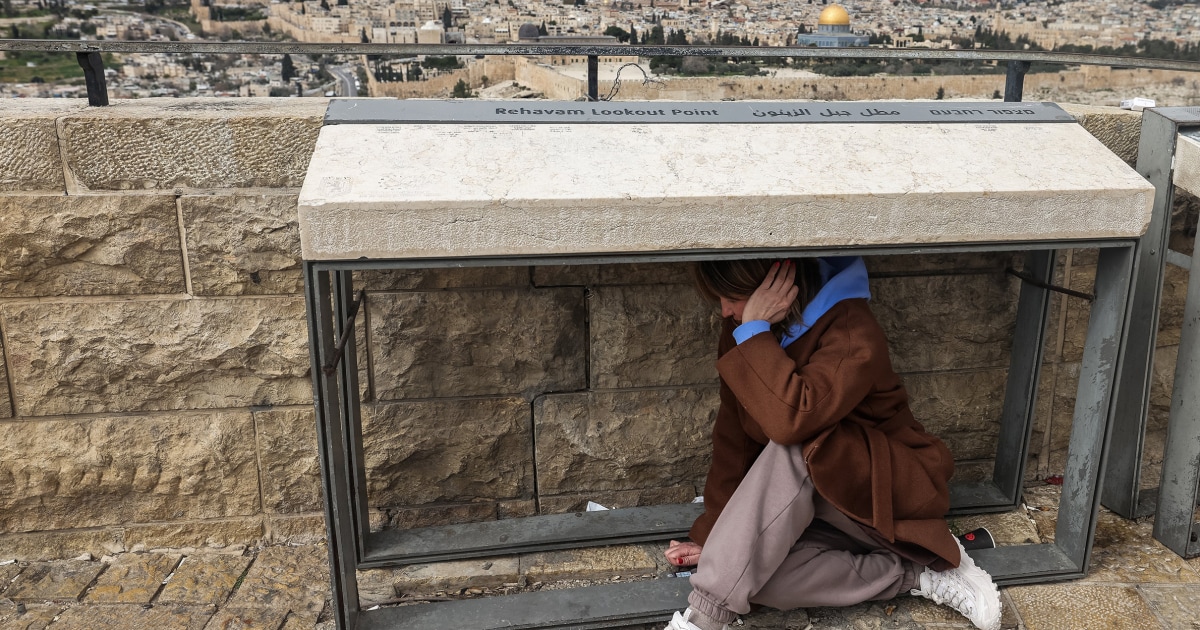
Jerusalem – Civilians across Israel sought shelter Saturday as air raid sirens wailed in major cities, signaling retaliatory strikes from Iran following a joint military operation by the United States and Israel against Iranian targets. The escalating conflict, rooted in recent strikes within Iran, has prompted widespread concern and international calls for de-escalation. The current situation represents a significant intensification of tensions between Iran and its regional adversaries, with potential ramifications for global stability.
The Iranian Islamic Revolutionary Guard Corps (IRGC) confirmed it had launched missile attacks against U.S. Military bases in the Gulf, according to reports from The Guardian. Explosions were reported in several Gulf states, including Bahrain, Kuwait, the UAE, and Qatar, with one fatality reported in the UAE due to shrapnel from an Iranian missile. Simultaneously, multiple waves of missiles were launched towards Israel, with blasts reported over Jerusalem. The Israel Defence Forces (IDF) stated that its air defense systems were actively intercepting the incoming barrage.
Escalation Following Joint US-Israel Operation
The retaliatory strikes from Iran follow a major joint operation conducted by the United States and Israel against targets within Iran. U.S. President Donald Trump confirmed the operation, vowing a “massive and ongoing” campaign to crush Iran’s military and eliminate its nuclear program, as reported by The Guardian. Trump characterized the Iranian regime as a “vicious group of very hard, terrible people” and stated the objective is to defend the American people by eliminating imminent threats. Israeli Prime Minister Benjamin Netanyahu described the operation as a joint effort that could “create the conditions for the brave Iranian people to take their destiny into their own hands.”
According to reports from the Jerusalem Post, senior officials within the IRGC and the Iranian regime were reportedly killed in the strikes. Sources indicate that Ayatollah Ali Khamenei, Iran’s supreme leader, was moved to a secure location, even as President Masoud Pezeshkian is reported to be safe. The IDF published a video showcasing the initial results of what they termed “Operation Raising Lion.”
International Reactions and Calls for Restraint
The escalating conflict has drawn swift reactions from international leaders. The BBC reports that EU Commission President Ursula von der Leyen emphasized the European Union’s existing “extensive sanctions” against Iran’s “murderous regime” and urged all parties to exercise maximum restraint, protect civilians, and fully respect international law. Italy’s Prime Minister Giorgia Meloni’s office expressed solidarity with the Iranian civilian population and pledged to consult with allies to ease tensions.
Australia’s Prime Minister Anthony Albanese voiced support for the U.S. Efforts to prevent Iran from acquiring a nuclear weapon and declared his country’s solidarity with the Iranian people in their struggle against oppression. However, Russia’s foreign ministry condemned the U.S. And Israel’s actions as “reckless” and a violation of international law, calling for a return to political and diplomatic solutions. The United Kingdom also expressed concern, stating it does “not want to see further escalation into a wider regional conflict” and stands ready to protect its interests.
Nuclear Talks Stall Amidst Rising Tensions
The current escalation occurs amidst stalled negotiations between the U.S. And Iran regarding Tehran’s nuclear program. Talks concluded inconclusively on Friday, with a suggestion that further discussions might be held next week. President Trump expressed dissatisfaction with the progress of these talks, according to The Guardian. The future of these negotiations remains uncertain given the current volatile situation.
The immediate impact of the Iranian strikes has been felt across Israel, with citizens scrambling for safety. Reports indicate that beaches, boardwalks, and hospitals were quickly evacuated as people sought refuge in underground parking lots and overpasses. Security personnel were observed moving patients from exposed hospital wards to safer underground locations.
Impact on Civilian Life in Israel
The scenes unfolding across Israel paint a picture of widespread disruption and fear. The activation of air raid sirens in major cities like Jerusalem, Tel Aviv, and Haifa triggered a mass exodus to shelters. The urgency of the situation was evident as citizens sprinted towards available buildings, seeking protection from potential rocket attacks. The disruption extends beyond immediate safety concerns, impacting daily life and essential services.
Background to the Conflict
The recent escalation is the latest chapter in a long-standing and complex relationship between Iran, Israel, and the United States. Tensions have been simmering for years, fueled by Iran’s nuclear ambitions, its support for regional proxies, and its opposition to Israel’s existence. The U.S. Withdrawal from the Joint Comprehensive Plan of Action (JCPOA), commonly known as the Iran nuclear deal, in 2018 further exacerbated these tensions. The JCPOA aimed to limit Iran’s nuclear program in exchange for sanctions relief, but its collapse led to a resurgence of concerns about Iran’s nuclear capabilities.
Israel has consistently viewed Iran’s nuclear program as an existential threat and has repeatedly warned against allowing Iran to develop nuclear weapons. The country has been widely believed to have conducted covert operations against Iran’s nuclear facilities, and has openly expressed its willingness to take military action if necessary to prevent Iran from acquiring a nuclear weapon. The United States, under both the Obama and Trump administrations, has maintained a policy of preventing Iran from obtaining a nuclear weapon, though the approaches taken have differed significantly.
The Role of Regional Proxies
Iran’s support for various regional proxies, including Hezbollah in Lebanon, Hamas in Gaza, and Houthi rebels in Yemen, has also been a major source of tension. These groups have engaged in conflicts with Israel and other U.S. Allies in the region, often with Iranian backing. The U.S. And Israel accuse Iran of using these proxies to destabilize the region and advance its own strategic interests. Iran, in turn, portrays its support for these groups as legitimate resistance against Israeli occupation and U.S. Interference.
What Happens Next?
The immediate future remains highly uncertain. Further escalation appears likely, with Iran signaling its determination to retaliate for the recent strikes against its territory. The extent and nature of any further escalation will depend on a number of factors, including the response of Israel and the United States, the actions of other regional actors, and the outcome of any potential diplomatic efforts. Talks between the US and Iran are tentatively scheduled for next week, but their viability is now in question.
The international community is likely to intensify its efforts to de-escalate the situation and prevent a wider regional conflict. However, the deep-seated mistrust and animosity between the parties involved will make any diplomatic solution extremely challenging. The coming days and weeks will be critical in determining whether the current crisis can be contained or whether it will spiral into a full-scale war.
Key Takeaways:
- Iran launched retaliatory missile strikes against U.S. Military bases in the Gulf and Israel following a joint U.S.-Israel operation against Iranian targets.
- International reactions have been divided, with some countries calling for restraint and others expressing support for the U.S. And Israel.
- Negotiations between the U.S. And Iran regarding the nuclear program have stalled amidst rising tensions.
- The escalation represents a significant intensification of the long-standing conflict between Iran, Israel, and the United States.
We will continue to monitor the situation closely and provide updates as they turn into available. Share your thoughts on this developing story in the comments below, and please share this article with your networks.
Keep reading