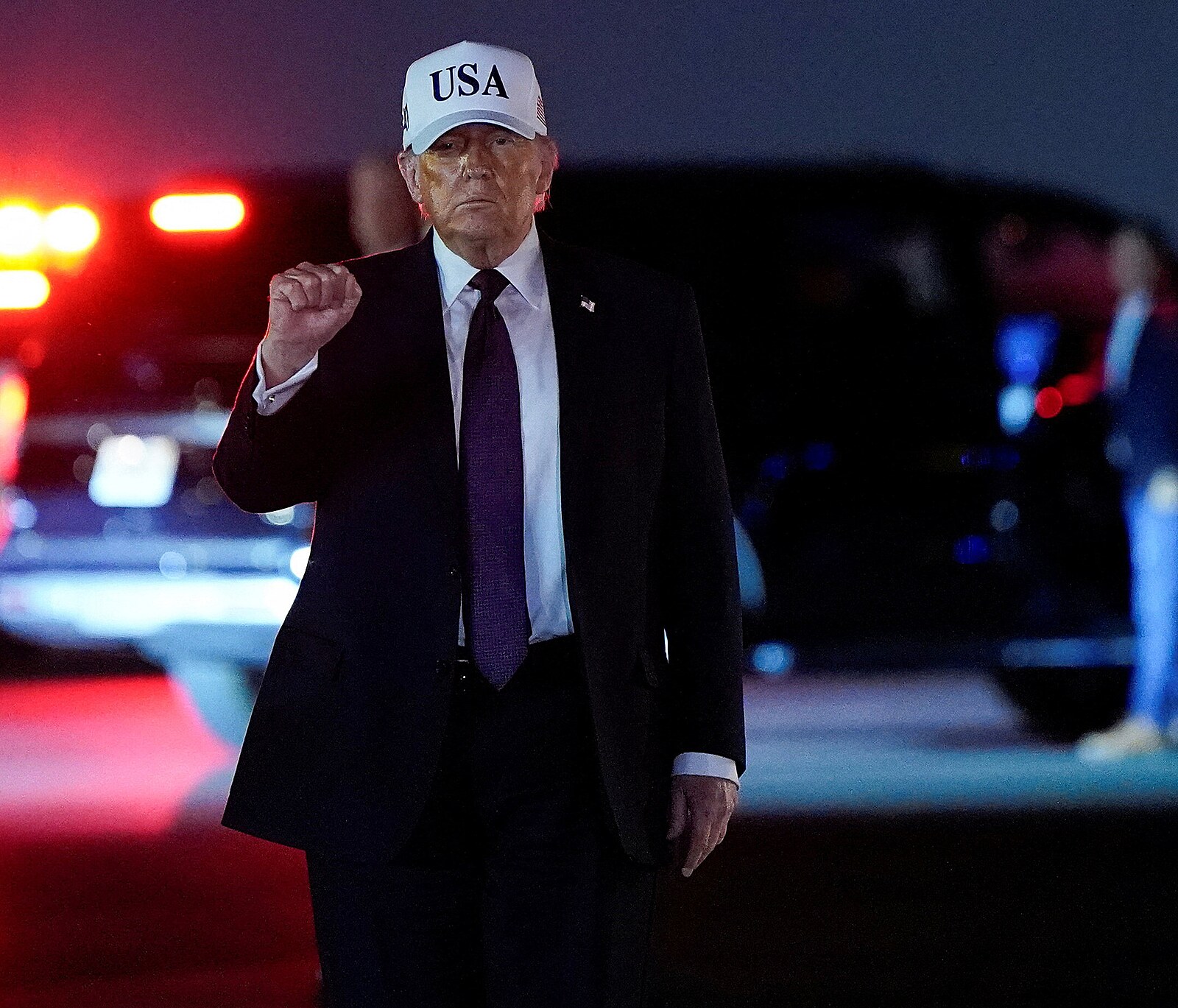
Geneva – As tensions escalate in the Middle East, the specter of military conflict between the United States and Iran looms large. President Donald Trump’s administration is navigating a precarious path, balancing aggressive rhetoric and a significant military buildup with ongoing diplomatic efforts. The situation is further complicated by internal deliberations within the administration, with key advisors like Steve Witkoff and Jared Kushner playing pivotal roles in shaping the president’s response to Iran’s nuclear program. The core question facing the administration is whether to pursue a military strike against Iran, a move fraught with risk, or to continue negotiations, a path that has so far yielded limited progress.
The current crisis stems from the unraveling of the 2015 Joint Comprehensive Plan of Action (JCPOA), commonly known as the Iran nuclear deal. Trump withdrew the United States from the agreement in 2018, reinstating sanctions on Iran and demanding a renegotiation of the terms. Iran, in response, has gradually rolled back its commitments under the deal, increasing its uranium enrichment levels and taking steps that bring it closer to developing nuclear weapons capabilities. The US maintains that Iran’s actions are destabilizing and pose a threat to regional security, while Iran insists its nuclear program is for peaceful purposes. The situation is further inflamed by a series of incidents in the region, including attacks on oil tankers and drone strikes, which the US has blamed on Iran or its proxies.
Recent diplomatic efforts have centered around talks in Geneva, Switzerland, involving Oman’s Foreign Minister Sayyid Badr bin Hamad Al Busaidi, US Special Envoy Steve Witkoff and Jared Kushner. These discussions, as reported by Fox News, focused on Tehran’s proposals and perspectives regarding its nuclear program, as well as US concerns about guarantees for a potential agreement. The Omani minister described the talks as taking place in a “constructive spirit,” with negotiators demonstrating “unprecedented openness to new and creative ideas, and solutions.” However, despite this apparent progress, a breakthrough remains elusive.
Trump’s Frustration and the Threat of Military Action
President Trump has repeatedly expressed his frustration with Iran’s perceived lack of willingness to negotiate a new deal. According to the BBC, Trump is “curious” as to why Iran hasn’t “capitulated” given the significant US military presence in the region. Witkoff relayed this sentiment, stating that Trump questioned why Iran hadn’t approach forward with a commitment not to pursue nuclear weapons, especially in light of the US military buildup. This rhetoric has fueled concerns that Trump is seriously considering military action against Iran.
The US military has been visibly increasing its presence in the Middle East in recent weeks. The USS Abraham Lincoln aircraft carrier and multiple guided-missile destroyers are operating in the Arabian Sea, with additional destroyers stationed in the Mediterranean and Red Seas. Combat ships are also positioned in the Persian Gulf near Iran’s southern coastline. This deployment is intended to deter Iranian aggression and signal US resolve, but it also raises the risk of miscalculation and escalation. Trump has reportedly considered limited strikes to pressure Iran, and, failing that, a larger attack aimed at regime change, as reported by The Guardian.
The Role of Witkoff and Kushner
The decision on whether to order airstrikes against Iran is heavily influenced by the judgment of Steve Witkoff and Jared Kushner. Witkoff, a lawyer and longtime Trump associate, has been the lead US negotiator in indirect talks with Iran. Kushner, Trump’s son-in-law and a senior advisor, also plays a key role in shaping the administration’s Iran policy. Both men were present at the recent talks in Geneva and are tasked with assessing the likelihood of a diplomatic resolution. Their assessment will be crucial in determining whether Trump opts for military action or continues to pursue negotiations.
The dynamic between Witkoff and Iranian officials has reportedly been tense. Novinky reports that the Iranian Foreign Minister Abbas Araghchi reportedly “screamed” at Witkoff during negotiations, and that US strikes followed two days later. Araghchi has stated that there is still a chance for a diplomatic solution, based on a “win-win game,” and that Iran is preparing a draft agreement to present to Witkoff.
Regional Implications and Potential Retaliation
A military strike against Iran would have far-reaching consequences for the region. Iran has warned that it would retaliate against any attack, potentially targeting US forces and allies in the Middle East, as highlighted by Seznam Zprávy. The US has expressed concerns that Iran could seek revenge on American soil. Recent retaliatory strikes by Iran against Saudi Arabia and the United Arab Emirates, as reported by ČT24, demonstrate Iran’s willingness to project power beyond its borders. A wider conflict could draw in other regional actors, such as Saudi Arabia, Israel, and Turkey, further destabilizing the Middle East.
The potential for escalation is particularly concerning given the complex network of alliances and proxy conflicts in the region. Iran supports various armed groups in Lebanon, Syria, Iraq, and Yemen, and could potentially activate these proxies in response to a US attack. The US, in turn, has close ties with Saudi Arabia and Israel, and could rely on these allies for support in a conflict with Iran. The risk of a regional war is very real, and the consequences could be devastating.
Trump’s Options and the Path Forward
President Trump faces a tough choice. A military strike against Iran could escalate into a wider conflict with unpredictable consequences. However, continuing negotiations without a clear path to a deal could be seen as a sign of weakness and embolden Iran to continue its nuclear program. Trump’s decision will likely hinge on the assessment of Witkoff and Kushner, as well as his own calculations about the political and strategic risks and benefits of each course of action.
Some analysts believe that Trump may be seeking to create a crisis in order to force Iran back to the negotiating table. Others suggest that he is genuinely considering military action, and that the military buildup is a prelude to an attack. Whatever his intentions, Trump’s actions are being closely watched by the international community. The European Union, Russia, and China have all urged restraint and called for a diplomatic solution. The future of the Iran nuclear deal, and the stability of the Middle East, hangs in the balance.
As of February 26, 2026, the situation remains fluid and uncertain. The next key development will be the outcome of the talks in Geneva, and whether Iran presents a draft agreement that is acceptable to the US. The world awaits the next move from Washington and Tehran, hoping that a diplomatic solution can be found before This proves too late. The stakes are incredibly high, and the potential consequences of miscalculation are catastrophic.
What are your thoughts on the escalating tensions between the US and Iran? Share your perspectives in the comments below.
Worth a look
- Iganga Deputy RDC Lyavala Slams Parish Chiefs Over PDM Petition and Insubordination
- Ukraine War Update: Missile Attacks, Strategic Shifts, and New Russian Offensives
- Signum Global Advisors Formula Forecasts Trump Policy Pivot on Iran (archyworldys.com)
- Rectal Cancer Surgery: Good Radiation Therapy Response May Allow Omission of Lateral Lymph Node Dissection (world-today-news.com)