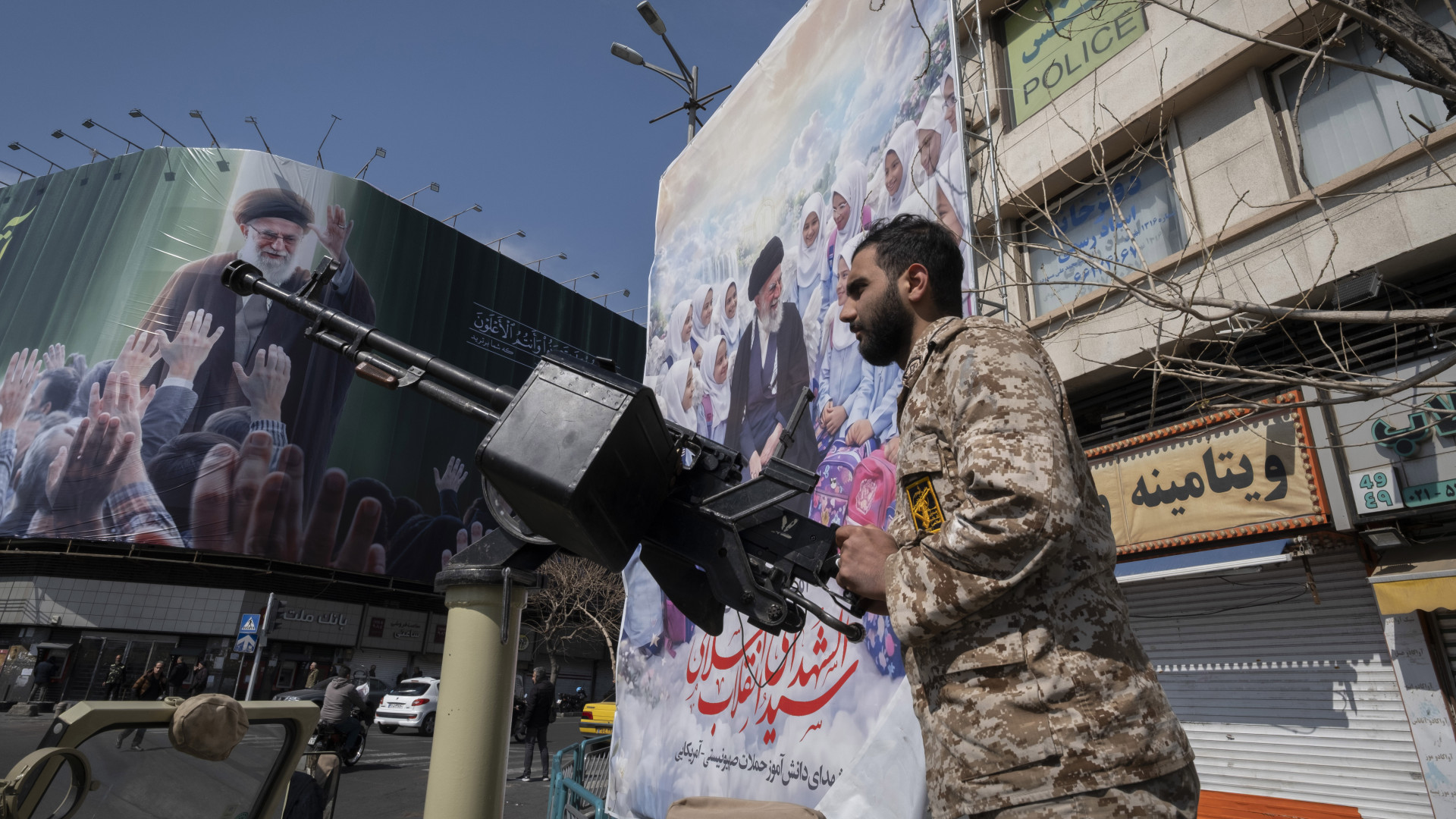
Sofia, Bulgaria – The conflict in the Middle East escalated sharply on Saturday as the Iranian Revolutionary Guard Corps (IRGC) claimed responsibility for attacks targeting facilities in the United Arab Emirates and Kuwait. These claims come amidst a broader backdrop of heightened tensions following a recent wave of military actions initiated by the United States and Israel against Iran. The situation is further complicated by reports of increasing friction between political and military leaders within Iran itself, signaling a potentially volatile internal dynamic.
The IRGC stated it had successfully targeted radar systems, fuel storage facilities, and runways at key locations within the two Gulf states. This announcement, reported by Iranian state media, marks a significant escalation in direct confrontation and raises concerns about the potential for a wider regional conflict. The timing of these alleged attacks coincides with the sixth day of the US-Israeli offensive against Iran, which has been characterized by what US officials describe as “remarkable initial successes” in the air campaign.
The initial phase of the war against Iran, launched on Saturday, appears to have been well-planned and executed, though the conflict continues to expand. According to reports, the Israeli Air Force, utilizing American-made F-35 fighter jets, engaged in its first-ever aerial combat over Tehran on Wednesday, downing a Russian-made Yak-130 training aircraft. Simultaneously, a US submarine reportedly sank an Iranian frigate approximately 3,000 kilometers from Iran, near the waters of Sri Lanka, resulting in significant casualties – with only an estimated 35 survivors out of a crew of 180. This event marks the first known instance of the US firing a torpedo in a combat situation since 1945.
Escalation in the Gulf: Claims of Attacks on UAE and Kuwait
The IRGC’s claims, as reported by Al Jazeera, center on strikes against the Al Dhafra Air Base in the United Arab Emirates and the Ali Al Salem Air Base in Kuwait. The alleged attacks involved the use of both cruise and ballistic missiles, as well as drones. According to the IRGC, the Al Dhafra Air Base was targeted with precision strikes that reportedly destroyed an advanced early warning radar system, hangars used for maintaining MQ-9 drones, and facilities supporting American reconnaissance aircraft, including the U-2 spy plane. The Ali Al Salem Air Base reportedly sustained damage to its radar systems, fuel storage facilities, and two runways used by American aircraft.
Even as the IRGC asserts the success of these operations, independent verification remains challenging. The UAE and Kuwait have not yet issued official statements confirming the extent of the damage, and the claims are being treated with caution by international observers. The US Department of Defense has not yet commented on the specific allegations, but officials have acknowledged increased Iranian activity in the region. The situation is further clouded by the ongoing information warfare, with both sides attempting to control the narrative and shape public perception.
Internal Tensions within Iran
Beyond the external conflict, reports suggest growing discord between Iran’s political and military leadership. This internal friction is reportedly stemming from disagreements over the handling of the war and the escalating costs of the conflict. While details remain scarce, analysts suggest that the IRGC is increasingly taking the lead in directing military operations, potentially marginalizing the influence of more moderate political factions. This shift in power dynamics could have significant implications for the future trajectory of the conflict and Iran’s willingness to negotiate a ceasefire.
The potential for a widening of the conflict is also increasing, with speculation that Arab monarchies in the Gulf region may grab a more assertive stance against Iran. This could involve increased military cooperation with the US and Israel, as well as potentially direct involvement in the fighting. The situation is further complicated by the possibility of a new front opening up with Kurdish groups, who have historically been at odds with the Iranian government.
US and Israeli Offensive: Early Successes and Strategic Considerations
The US-Israeli offensive, now in its sixth day, has been characterized by a significant imbalance in military capabilities. Israel is reportedly capable of launching attacks against up to 1,000 targets daily, aided by American aerial refueling tankers that allow for quicker turnaround times. US aircraft are primarily operating from bases in Jordan and from two aircraft carriers positioned in the region. The United States has also secured access to the Diego Garcia airbase in the Indian Ocean, providing a crucial logistical hub for its operations. US War Secretary Pete Hegseth has publicly stated the goal is to decisively defeat Iranian forces.
The initial successes of the offensive, however, do not necessarily translate into a swift resolution. Iran possesses a substantial arsenal of missiles and drones, and its asymmetric warfare capabilities pose a significant challenge to conventional military forces. The IRGC’s recent claims of attacks against UAE and Kuwait demonstrate its ability to project power beyond its borders and disrupt regional stability. The potential for escalation through proxy groups and cyberattacks remains a serious concern.
The Role of Regional Actors
The involvement of regional actors is crucial to understanding the dynamics of the conflict. The United Arab Emirates and Kuwait, both key US allies, are strategically important due to their proximity to Iran and their hosting of US military bases. Any significant disruption to these facilities could have far-reaching consequences for the US military presence in the region. Omán, also a key player in the Gulf, has emphasized the importance of unity and collective self-defense among Arab nations. The potential for increased cooperation between these countries could further isolate Iran and intensify the pressure on its government.
The conflict also has broader geopolitical implications, potentially impacting global energy markets and trade routes. The Strait of Hormuz, a vital waterway for oil tankers, remains a potential flashpoint, and any disruption to shipping could lead to a significant increase in oil prices. The international community is closely monitoring the situation, with calls for de-escalation and a return to diplomatic negotiations.
Looking Ahead: Potential Scenarios and Challenges
The future of the conflict remains uncertain. Several potential scenarios could unfold, ranging from a negotiated ceasefire to a protracted regional war. A key factor will be the ability of the US and its allies to contain Iran’s retaliatory capabilities and prevent further escalation. The internal dynamics within Iran will also play a crucial role, as will the actions of regional actors.
The increasing tensions between Iran’s political and military leadership could lead to a more aggressive stance, potentially increasing the risk of miscalculation and unintended consequences. Conversely, a shift towards more moderate leadership could open the door for diplomatic negotiations. The involvement of proxy groups, such as Hezbollah in Lebanon and Houthi rebels in Yemen, could further complicate the situation and expand the scope of the conflict.
The next key development to watch will be the official response from the UAE and Kuwait regarding the IRGC’s claims of attacks. Confirmation of these attacks would likely trigger a further escalation of the conflict and could lead to direct military intervention by the US and its allies. The international community will also be closely monitoring the upcoming meetings of the United Nations Security Council, where the situation in the Middle East is expected to be discussed.
The situation remains fluid and highly volatile. Continued monitoring of developments on the ground, coupled with a commitment to diplomatic solutions, will be essential to preventing a wider regional catastrophe. The world watches with bated breath as the conflict unfolds, hoping for a peaceful resolution to this dangerous and escalating crisis.
What are your thoughts on the escalating conflict in the Middle East? Share your comments below and join the conversation.
Related reading