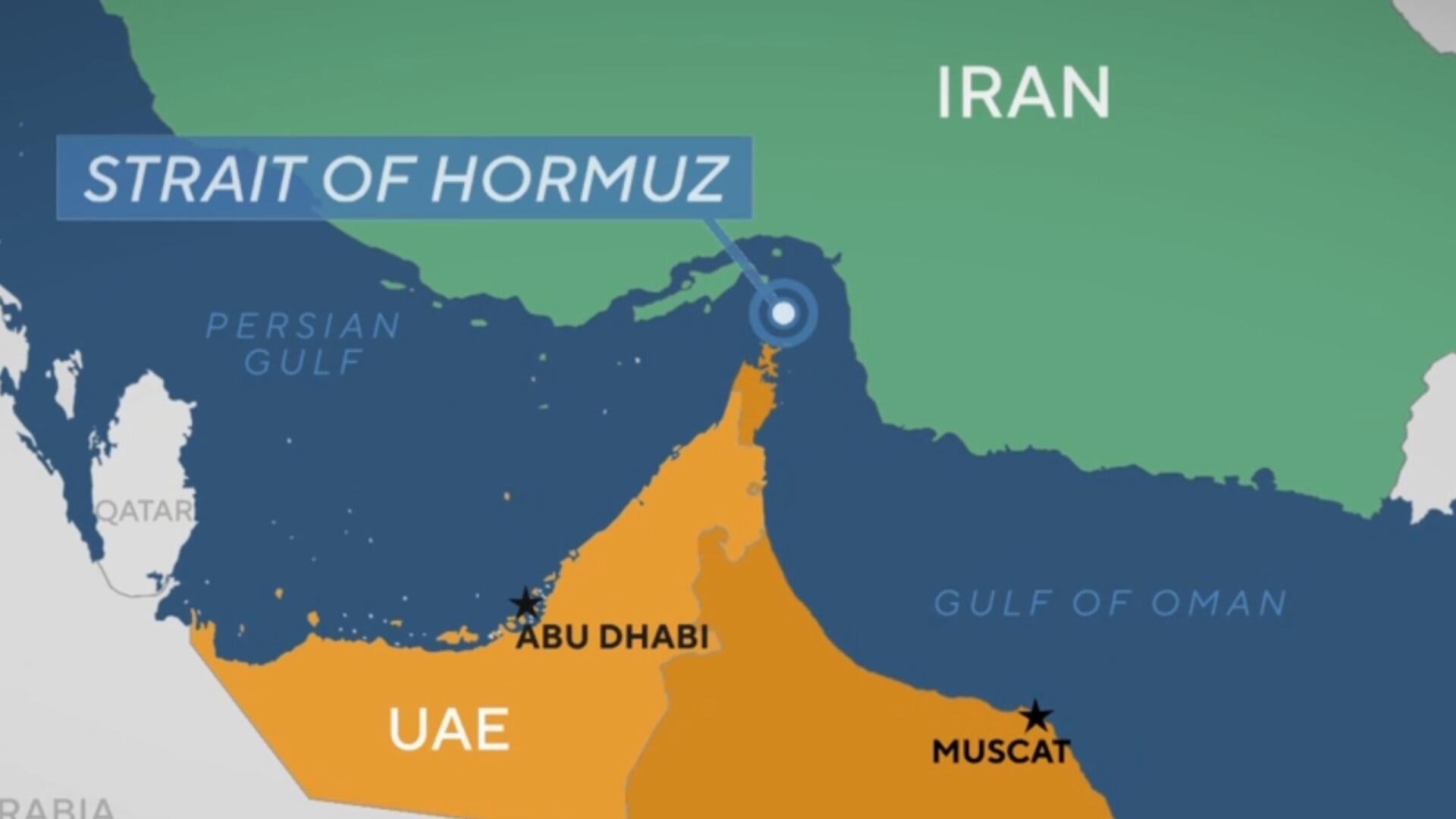
Iran has declared the Strait of Hormuz closed and launched attacks on five Gulf nations following a third round of U.S. strikes last week. Despite the renewed military escalation, Iranian officials maintain that the door to diplomacy remains open, even as the 14-point memorandum of understanding signed last month teeters on collapse.
Escalation in the Strait of Hormuz
The conflict between the United States and Iran has spiraled into a new phase of maritime and regional instability. Following a third round of U.S. airstrikes that targeted 140 military sites—including radar, missile, and drone facilities across southern Iran—Tehran has officially closed the Strait of Hormuz to commercial traffic. According to U.S. Central Command (CENTCOM), the U.S. military strikes were conducted to hold Iranian forces accountable for recent attacks on commercial shipping, including a Cyprus-flagged vessel.

The situation intensified on Sunday when Iran claimed to have launched missile and drone strikes against Bahrain, Kuwait, Jordan, Qatar, and Oman. Tehran identified these attacks as a direct response to renewed U.S. bombings on its southern coastline. The closure of the waterway, which serves as a critical global energy transit point, follows a series of tit-for-tat exchanges that began when the Islamic Revolutionary Guard Corps (IRGC) struck three commercial vessels, including a Qatari liquefied natural gas (LNG) tanker, off the coast of Oman last week.
For more on this story, see Iran Closes Strait of Hormuz Amid Renewed US-Iran Peace Talks in Switzerland.
The Breakdown of the U.S.-Iranian Memorandum of Understanding
The recent violence marks the effective end of the 14-point memorandum of understanding (MoU) reached between Washington and Tehran just last month. That agreement, which had established a fragile ceasefire and included a pledge from Iran to halt its pursuit of nuclear weapons, is now publicly contested. U.S. President Donald Trump announced this week that the ceasefire is over, while Iranian Supreme Leader Mojtaba Khamenei has pledged to avenge the killing of his father.

The failure of the agreement appears rooted in its own structural ambiguity regarding the administration of the Strait of Hormuz. Iranian officials have signaled that they no longer feel bound by the terms of the original document. Mohammad Bagher Ghalibaf, the speaker of Iran’s parliament and the nation’s lead negotiator, recently posted an image of Article 5 of the MoU on X, accompanied by a sharp critique of the U.S. position.
This follows our earlier report, Iran Closes Strait of Hormuz Amid Israel Conflict: US Military on High Alert.
Economic and Strategic Consequences for Iran
While Iran has demonstrated its capacity to disrupt global energy markets by controlling the Strait of Hormuz—a move U.S. Secretary of State Marco Rubio described in April as an economic nuclear weapon
—analysts suggest the regime may be overplaying its hand. Reports indicate that Tehran intends to impose new fees and restrictions on commercial vessels, moving away from the previous status quo of free passage. Ghalibaf has stated explicitly that the Strait of Hormuz will never return to its previous condition
and that Iran will charge fees in return for the services we provide.
Read also: US Revokes Iran Oil Sales Authorization After Tanker Attacks.

This strategy carries significant risks. By attempting to formalize a new toll-based system, Iran may accelerate global efforts to develop alternative shipping routes, potentially lowering the strategic cost for its adversaries to launch future conflicts. While the regime views these controls as a necessary deterrent and a way to mitigate the economic damage sustained during the war, the move threatens to turn the strait into a permanent locus of postwar instability. As of this week, the primary uncertainty remains whether the 60-day negotiating period—originally intended to resolve these difficult issues—can survive the current military escalation or if the region is headed for prolonged conflict.
Find more reporting in our World section.
Related reading