The escalating conflict between the United States and Israel, on one side, and Iran, on the other, is sending significant shockwaves through the global economy. Disruptions to trade, energy markets, and international supply chains are already being felt, according to economic officials and businesses. The situation, which began with strikes against Iran on February 28th, has rapidly evolved, raising concerns about a wider regional conflagration and its potential economic fallout. This conflict against Iran is already impacting key sectors of the global economy.
A primary concern centers on the Strait of Hormuz, a strategically vital waterway through which approximately one-fifth of the world’s oil supply transits. Recent reports indicate significant disruption to maritime traffic in the area following retaliatory drone strikes by Iran, launched in response to the U.S. And Israeli attacks. Simultaneously, major air routes over the Gulf region have been closed, further paralyzing international transport. The New York Times reported on March 1, 2026, that the U.S. And Israel have attacked approximately 4,000 targets within Iran, demonstrating the scale of the military operation. See a map of the attacks here.
This disruption has triggered a rapid increase in oil and gas prices, raising costs for businesses worldwide. Analysts fear this energy surge could ignite a new wave of inflation, already a concern for investors and economic policymakers. The price of Brent crude oil, a global benchmark, rose sharply in the immediate aftermath of the strikes, reaching levels not seen in several months. The situation is particularly acute for countries heavily reliant on energy imports, such as those in Europe and Asia.
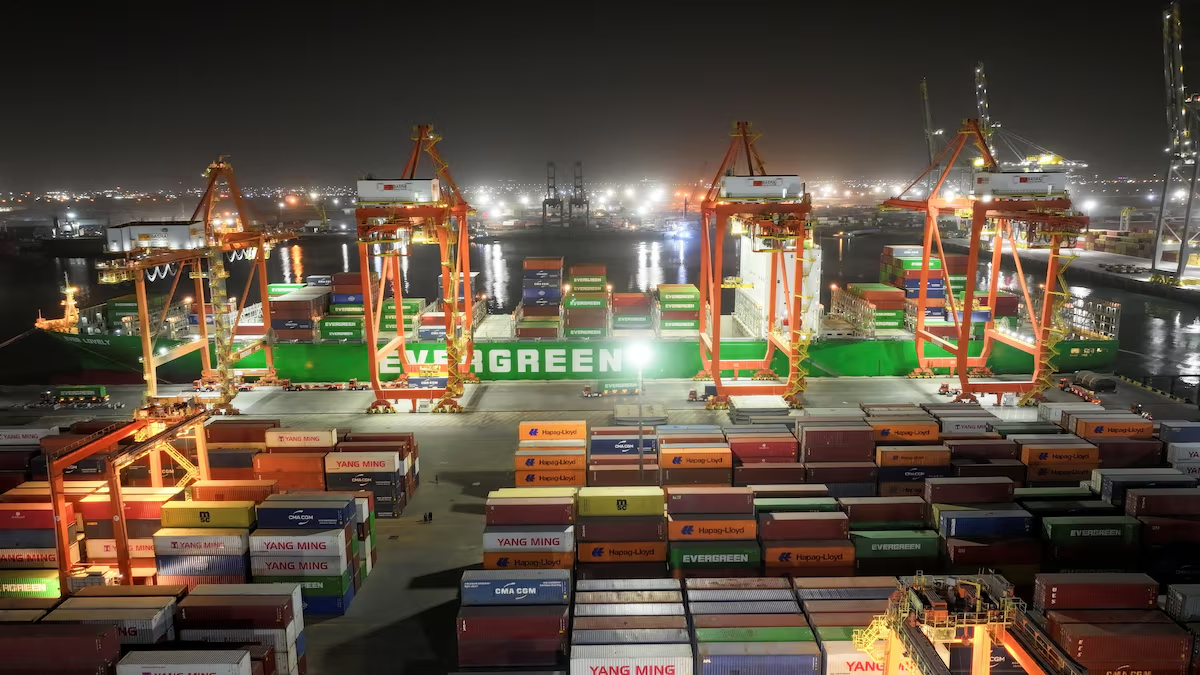
The disruptions are impacting a wide range of industries, from consumer goods to specialized materials. Companies are particularly worried about the supply of essential raw materials and the reliability of trade routes used to transport diverse goods, including food products, electronic components, and automotive parts. The interconnected nature of global supply chains means that even localized disruptions can have cascading effects across multiple sectors.
Young Liu, Chairman of Foxconn, one of the world’s largest electronics manufacturers and a major partner of Nvidia, warned that the economic effects could rapidly expand if the conflict persists. “If these effects persist, everyone will start to feel them,” he stated, highlighting the potential for widespread economic consequences. Radio Canada reports on the broader implications of the conflict.
The Human Cost and Initial Military Actions
The conflict began with a joint military operation by the United States and Israel against targets within Iran on Saturday, February 28th, 2026. According to reports from Radio Canada, the strikes resulted in the deaths of several high-ranking Iranian officials, including the Supreme Leader, Ayatollah Ali Khamenei, who had been in power since 1989, as well as at least 555 other individuals, according to a preliminary count released by the Iranian Red Crescent on March 2nd. The loss of Ayatollah Khamenei represents a significant shift in Iran’s political landscape, the long-term effects of which remain uncertain.
In response, Iran launched missiles and drones targeting neighboring countries, including Gulf monarchies that host U.S. Military bases. These retaliatory strikes also targeted civilian infrastructure, including airports, resulting in casualties and, as of now, relatively limited damage. Israel has also been heavily targeted, with missiles striking several cities, causing at least a dozen deaths and injuries. The U.S. Department of Defense has confirmed the deaths of three American soldiers and injuries to five others since the start of the operation against Iran.
Impact on Financial Markets and Global Trade
Financial markets have already reacted to this new geopolitical crisis. During the first week following the outbreak of war with Iran, several major global stock indices declined, although U.S. Markets remained relatively stable. The volatility in oil prices has contributed to uncertainty in equity markets, with investors seeking safe-haven assets such as gold and U.S. Treasury bonds. The potential for further escalation of the conflict is keeping investors on edge, leading to increased risk aversion.
The disruption to shipping through the Strait of Hormuz is a major concern for global trade. Approximately 20% of the world’s oil supply passes through this narrow waterway, making it a critical chokepoint. Any prolonged interruption to traffic could lead to significant supply shortages and further price increases. Alternative routes, such as the Suez Canal, are less efficient and would add to transportation costs. The closure of airspace over parts of the Gulf region is also impacting air cargo and passenger travel, adding to logistical challenges.
Foxconn and the Tech Sector
The warning from Young Liu, Chairman of Foxconn, underscores the potential impact on the technology sector. Foxconn is a key supplier to many major tech companies, including Apple and Nvidia. Disruptions to the supply of components from Iran or the surrounding region could lead to production delays and higher prices for electronic devices. The tech sector is heavily reliant on global supply chains, making it particularly vulnerable to geopolitical risks. The company’s close ties to Nvidia, a leader in artificial intelligence chips, highlight the potential for broader implications for the AI industry.
Economic Forecasts and Potential Scenarios
Economists estimate that if the conflict intensifies or prolongs, the consequences could be severe for the global economy, leading to slower growth and losses of billions of dollars for international businesses. The International Monetary Fund (IMF) is closely monitoring the situation and is preparing to revise its global growth forecasts if necessary. The extent of the economic damage will depend on the duration and scope of the conflict, as well as the effectiveness of international efforts to mitigate the disruptions.
Several scenarios are being considered by economists. A limited conflict, contained to Iran and its immediate neighbors, would likely result in a temporary spike in oil prices and some disruption to trade. Still, a wider regional war, involving multiple countries, could have far more devastating consequences, potentially triggering a global recession. The possibility of Iran disrupting oil supplies or attacking U.S. Assets in the region is a major concern.
The Role of the Strait of Hormuz
The Strait of Hormuz remains a critical focal point. Control over this waterway is essential for ensuring the uninterrupted flow of oil to global markets. Any attempt by Iran to close the strait would likely provoke a strong response from the United States and its allies. The U.S. Navy maintains a significant presence in the region to protect shipping lanes and deter aggression. The potential for miscalculation or escalation in the Strait of Hormuz is a major source of concern.
Looking Ahead: Key Takeaways
- Geopolitical Risk Premium: The conflict has introduced a significant geopolitical risk premium into global financial markets, leading to increased volatility and uncertainty.
- Energy Market Volatility: Oil and gas prices are likely to remain elevated and volatile in the near term, impacting businesses and consumers worldwide.
- Supply Chain Disruptions: Disruptions to trade routes and supply chains are expected to continue, potentially leading to shortages and higher prices for various goods.
- Economic Slowdown: The conflict could contribute to a slowdown in global economic growth, particularly in countries heavily reliant on energy imports or trade with the region.
The situation remains fluid and highly unpredictable. The next key developments to watch include any further military escalation, diplomatic efforts to de-escalate the conflict, and the response of major economic powers. The IMF is scheduled to release an updated assessment of the global economic outlook on March 20th, which will likely incorporate the impact of the conflict. We will continue to provide updates as the situation evolves. Share your thoughts and analysis in the comments below.
- Fed Holds Interest Rates Steady as Policymakers Project Future Increase
- Sanae Takaichi’s Bid for Japan’s First Female PM: Economic Hurdles and Geopolitical Tensions
- Why Nighttime Heat Is Rising Faster Than Daytime Highs in US Cities (daybreakwire.com)
- Oil Prices Surge Over 7% as Trump Threatens Military Strike Against Iran (archyworldys.com)