

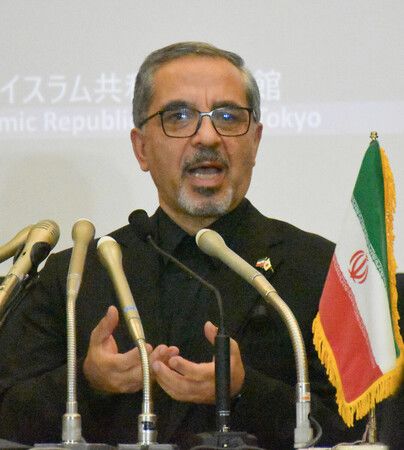
Tokyo, Japan – Iran is signaling a firm stance against diplomatic negotiations with the United States and Israel as tensions escalate following recent attacks, with the Iranian ambassador to Japan, Peiman Seadat, delivering a strong message to Tokyo. The ambassador has requested that Japan “firmly oppose” the recent military actions undertaken by Washington and Jerusalem against Iranian interests, a plea made during a meeting with Japanese Foreign Minister Motegi Toshimitsu on Monday.
Seadat’s remarks, delivered during a press conference in Tokyo, represent a significant hardening of Iran’s position. He characterized the attacks as “flagrant violations of international law and the United Nations Charter,” and went further, labeling them as both a “war crime” and “genocide.” According to statements reported by Jiji Press, Seadat warned that a failure to respond decisively to such aggression would “encourage its authors” and inflict lasting damage on the international legal order. The ambassador’s comments underscore a growing sense of defiance within Iran following the recent loss of a key figure.
The Death of a Leader and Accusations of Terrorism
The catalyst for this heightened tension is the death of Iran’s Supreme Leader, Ali Khamenei, in attacks carried out by the United States, and Israel. Seadat unequivocally condemned these actions, characterizing them as an “act of terrorism.” He stated that Iran’s defense would continue “until the aggression ceases,” signaling a commitment to retaliation and a rejection of any immediate de-escalation. This stance reflects a broader pattern of Iranian responses to perceived threats, particularly those originating from the US and Israel. The timing of these events is critical, occurring amidst a complex geopolitical landscape in the Middle East.
The situation is further complicated by Iran’s actions in the Strait of Hormuz, a vital waterway for global oil shipments. Seadat defended Iran’s potential to disrupt traffic through the strait, asserting that “any country facing an existential threat would not hesitate to apply its capabilities and geopolitical leverage.” This statement raises concerns about potential disruptions to global energy supplies and the broader economic implications of escalating conflict. The Strait of Hormuz has long been a point of contention, and Iran’s control over this strategic chokepoint gives it significant influence in the region.
Diplomatic Isolation and Regional Focus
Ambassador Seadat made it clear that Iran will not engage in diplomatic negotiations while under attack. This decision effectively halts any potential for immediate dialogue aimed at de-escalating the crisis. The ambassador emphasized that the responsibility for halting the “aggression” lies with the United Nations Security Council and the international community, rather than with Iran itself. This position suggests a willingness to allow international pressure to build on the US and Israel, while simultaneously preparing for a prolonged confrontation. The rejection of diplomacy at this juncture significantly narrows the pathways to a peaceful resolution.
Interestingly, Seadat clarified that Iran’s military targets are focused on US interests and bases within the region, and not on neighboring countries. This statement appears to be an attempt to reassure regional partners and prevent the conflict from spiraling into a wider regional war. However, the potential for miscalculation and unintended consequences remains high, given the volatile nature of the situation. The delicate balance of power in the Middle East means that any escalation could quickly draw in other actors.
Japan’s Role and International Response
The Iranian ambassador’s direct appeal to Japan underscores the importance of Tokyo’s position on the international stage. Japan has historically maintained close ties with both Iran and the United States, and its stance could influence the broader international response. Seadat’s request for Japan to “firmly oppose” the attacks reflects a desire to garner support from a key regional ally. Japan’s foreign policy is often characterized by a commitment to peaceful resolution and multilateralism, and its response to this crisis will be closely watched.
The situation also brings to light the complex relationship between the United States, Israel, and Iran. The attacks on Iranian soil represent a significant escalation of tensions, and the potential for further retaliation is high. The international community faces a difficult challenge in navigating this crisis and preventing a wider conflict. The role of the United Nations Security Council will be crucial in attempting to mediate a ceasefire and establish a framework for future negotiations. However, the effectiveness of the UN is often hampered by political divisions and the veto power of permanent members.
Historical Context and Potential Implications
The current crisis builds upon a long history of tensions between Iran and the West. The Iranian nuclear program has been a major source of concern for the international community, and the US withdrawal from the Joint Comprehensive Plan of Action (JCPOA) in 2018 further exacerbated the situation. The JCPOA, also known as the Iran nuclear deal, was an agreement reached in 2015 between Iran and several world powers to limit Iran’s nuclear program in exchange for sanctions relief. The US withdrawal and subsequent reimposition of sanctions led to a deterioration in relations and increased the risk of conflict. NHK World reports that Iran views the recent attacks as a continuation of this aggressive policy.
The potential implications of this escalating conflict are far-reaching. Beyond the immediate humanitarian consequences, a wider war could disrupt global energy markets, destabilize the Middle East, and have significant economic repercussions. The Strait of Hormuz, through which approximately 20% of the world’s oil supply passes, is particularly vulnerable. Any disruption to oil flows could lead to a sharp increase in prices and have a negative impact on the global economy. The conflict also raises concerns about the potential for terrorist attacks and the spread of extremism.
the situation has prompted a response from other international actors. While details are still emerging, the international community is grappling with how to respond to the escalating violence and prevent further bloodshed. The need for a coordinated diplomatic effort is paramount, but the prospects for success remain uncertain given the deep-seated mistrust and animosity between the parties involved.
As of March 4, 2026, the situation remains fluid and highly volatile. The international community awaits further developments and hopes for a peaceful resolution to this dangerous crisis. The next key event to watch will be the upcoming session of the United Nations Security Council, scheduled for March 8, where the situation in Iran is expected to be a primary topic of discussion.
What are your thoughts on the escalating tensions in the Middle East? Share your comments below and let us understand what you believe should be done to de-escalate the situation.