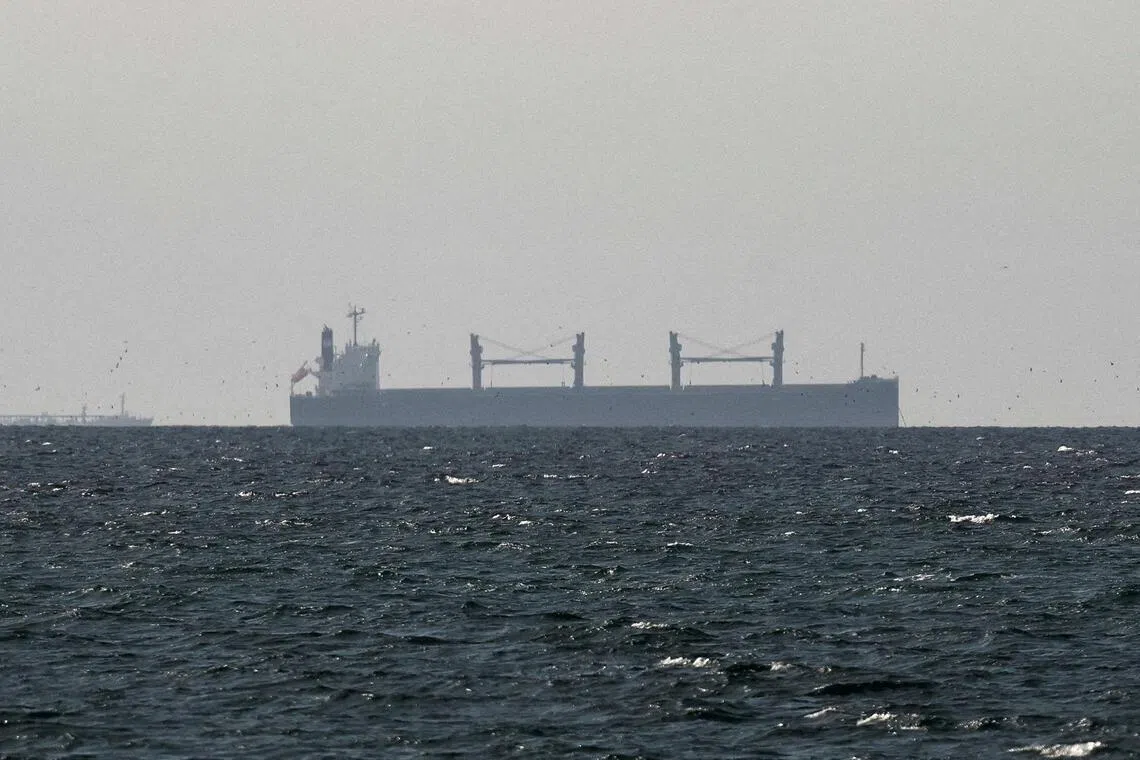
Global shipping markets are grappling with profound uncertainty as the industry seeks clarity on Hormuz passage following a volatile series of diplomatic shifts between Washington, and Tehran. Although a provisional ceasefire was announced on Wednesday, April 8, 2026, reports indicate that Iran continues to maintain strict controls over the strategic waterway, leaving commercial operators in a precarious position.
The current tension centers on a conditional two-week ceasefire agreement reached between the United States and Iran. The deal, mediated in part by Pakistani Prime Minister Shehbaz Sharif, was designed to suspend military hostilities and ensure that shipping traffic is allowed through the Strait of Hormuz, a critical artery for the world’s fuel and goods according to the BBC.
However, the optimism following the announcement has been tempered by conflicting reports on the ground. Despite the agreement to reopen the route, Iran has indicated that the waterway remains closed to vessels sailing without a permit. This discrepancy creates a high-risk environment for ship owners and insurers who must decide whether to resume transit through one of the world’s most sensitive maritime chokepoints.
The economic stakes are immense. Global investors initially reacted with relief to the news, causing crude oil prices to plunge and stocks to soar as the prospect of a reopened Strait offered a reprieve from the supply chain disruptions that have plagued the region during the war as reported by NPR.
The Terms of the Two-Week Truce
The provisional agreement is characterized by its fragility and specific conditions. U.S. President Donald Trump stated that he agreed to “suspend the bombing and attack of Iran for a period of two weeks” on the condition that Tehran agrees to reopen the Strait of Hormuz per the BBC. Trump framed the decision on Truth Social, asserting that the U.S. Had already “met and exceeded all military objectives.”
The ceasefire follows a period of extreme escalation. Hours before the announcement, President Trump had issued a stark warning, suggesting that a “whole civilization will die tonight” if Iran did not agree to open the Strait. This rhetoric drew sharp condemnation from UN Secretary General António Guterres and Pope Leo XIV, who described the threat as “truly unacceptable” via NPR.
While the U.S. And Iran have agreed to this temporary suspension, the regional security landscape remains unstable. Israel has stated its support for the agreement but continues to conduct assaults on Iranian-backed fighters in Lebanon, specifically targeting Hezbollah. These ongoing strikes in Beirut demonstrate that while a direct U.S.-Iran ceasefire is in place, the broader regional conflict remains active.
Market Volatility and the ‘Permit’ Dilemma
For the global shipping industry, the core issue is the definition of “reopening.” The U.S. Administration views the ceasefire as a mechanism to free up the Strait of Hormuz, which Iran has largely blocked during the conflict. However, the requirement for permits—as suggested by recent Iranian warnings—introduces a layer of bureaucratic control that could be used as a political tool.
Shipping companies typically rely on predictable transit corridors. The introduction of a permit system under a “fragile” truce creates several critical risks:
- Legal Ambiguity: Vessels sailing without permits may be seized or harassed by Iranian forces, despite the U.S.-Iran ceasefire.
- Insurance Premiums: War-risk insurance premiums are likely to remain elevated if the “reopening” is conditional or selectively enforced.
- Supply Chain Lag: Even with a ceasefire, the time required to coordinate permits and clear backlogs of fuel and goods will prevent an immediate return to normalcy.
The financial markets have already shown how sensitive they are to these developments. The initial plunge in crude oil prices reflects a “relief rally,” but analysts warn that this could be short-lived if the ceasefire “shows cracks,” as reported by NPR regarding continued attacks across the region on April 8, 2026.
Geopolitical Leverage and Economic Sanctions
The ceasefire is not merely a military pause but a strategic maneuver involving economic leverage. President Trump has indicated that the U.S. Will be “talking tariff and sanctions relief” with Iran as part of the ongoing dialogue. However, this openness is paired with aggressive new economic threats.
In a separate post on Truth Social, Trump announced a stringent new policy regarding the supply of weaponry to Iran. He stated that any country supplying military weapons to Iran would be immediately hit with a 50% tariff on “any and all goods sold to the United States of America,” with no exclusions or exemptions according to the BBC.
This approach combines the “carrot” of potential sanctions relief with the “stick” of massive tariffs, attempting to isolate Iran further while simultaneously forcing the reopening of the Strait. For shippers, this means the stability of the waterway is now inextricably linked to broader trade wars and diplomatic negotiations over weaponry and tariffs.
Timeline of Recent Escalations and Agreements
| Date/Period | Event | Impact |
|---|---|---|
| June 24, 2025 | Twelve-Day War Ceasefire | Ended the Twelve-Day War; mediated by U.S. And Qatar. |
| February 28, 2026 | Expiration of Previous Ceasefire | Conclude of the truce that followed the Twelve-Day War. |
| March 2026 | Coordinated Attacks | U.S. And Israel launched coordinated attacks on Iran. |
| April 8, 2026 | Provisional Two-Week Ceasefire | U.S. And Iran agree to suspend strikes to reopen the Strait of Hormuz. |
What Happens Next for Global Trade?
The immediate focus for the shipping industry is the next 14 days. The ceasefire is provisional and conditional, meaning any significant violation—either by Iranian forces blocking ships or by U.S./Israeli strikes—could lead to an immediate collapse of the agreement.
Prime Minister Shehbaz Sharif of Pakistan has urged all parties to exercise restraint and respect the two-week window so that diplomacy can lead toward a peaceful settlement via NPR. For the business community, the “peaceful settlement” depends on whether the U.S. Can successfully negotiate the reopening of the Strait without Iran imposing restrictive permit requirements that effectively maintain the blockade.
Shipping operators are advised to monitor official maritime advisories and government guidance regarding permit requirements for the Strait of Hormuz. As the U.S. Continues to evaluate “tariff and sanctions relief,” the economic viability of the region will depend on whether these diplomatic gestures translate into actual freedom of navigation.
The next critical checkpoint will be the expiration of this two-week provisional window, at which point the U.S. And Iran must either extend the truce or face a return to full-scale hostilities.
Do you suppose the two-week window is sufficient to stabilize the region, or is the permit requirement a sign of a looming collapse? Share your thoughts in the comments below.