London, United Kingdom – February 20, 2026 – Amidst escalating tensions, Iran has dismissed what it characterizes as an ultimatum from the United States regarding its nuclear program, reaffirming its stance that a resolution cannot be achieved through imposed deadlines or pressure tactics. This comes as international concerns mount over the potential for conflict in the region, and diplomatic efforts to revive the 2015 nuclear deal remain stalled. The core issue revolves around Iran’s enrichment of uranium and the international community’s desire to ensure it remains solely for peaceful purposes.
The exchange highlights the delicate balance between diplomatic negotiation and the threat of military action. Even as the U.S. Seeks to prevent Iran from developing nuclear weapons, Tehran maintains its program is exclusively for civilian applications, including energy production and medical isotopes. The current impasse centers on the scope and verification mechanisms of any potential agreement, with both sides demanding guarantees and concessions.
Recent Talks and Differing Accounts
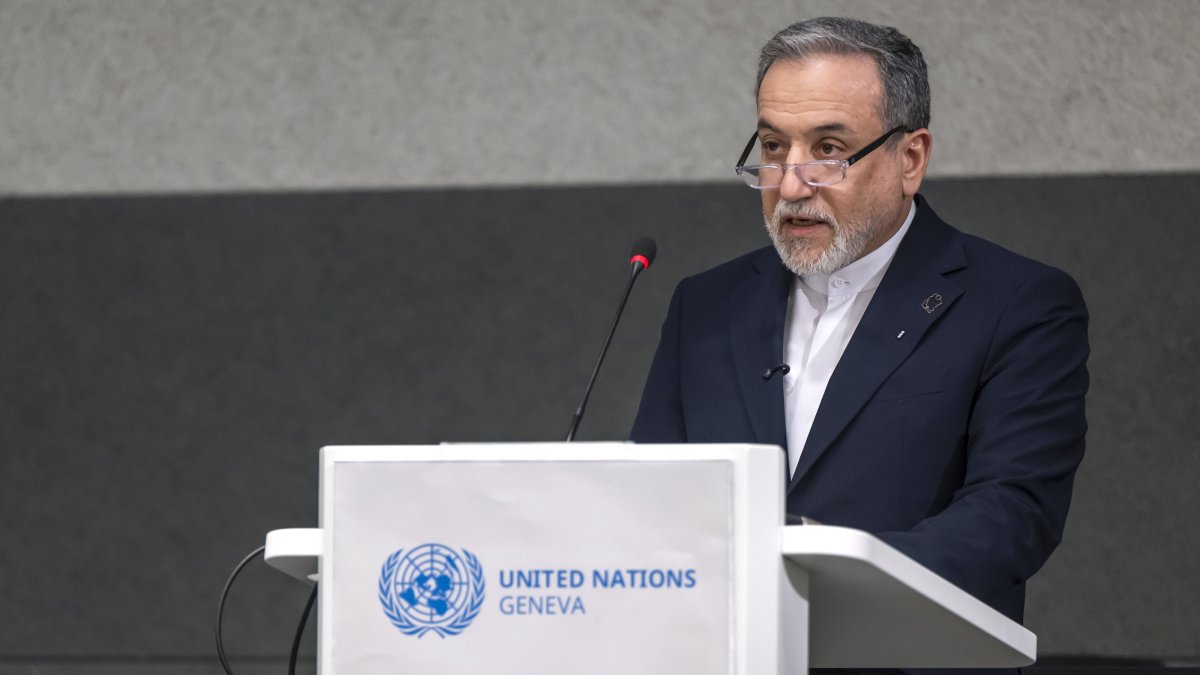
Iranian Foreign Minister, speaking on Friday, stated that recent discussions with U.S. Officials in Geneva were focused on finding a “prompt deal,” rather than responding to an ultimatum. He identified U.S. Special Envoy Steve Witkoff and Jared Kushner as participants in these talks, describing them as positive and centered around establishing “guiding principles” for a “fair and equitable deal.” According to the Iranian Foreign Minister, both sides agreed to function towards a framework for a potential agreement, with Iran being asked to prepare a draft proposal. This account contrasts with reports suggesting a more forceful approach from the U.S. Side.
However, reports from earlier in the week indicated a more assertive stance from former U.S. President Donald Trump, who reportedly set a 10-to-15-day deadline for progress in negotiations, threatening potential military action if no breakthrough was achieved. He suggested the situation would become clearer within that timeframe. This timeline has been met with skepticism from Iranian officials, who argue that complex negotiations require more time and cannot be dictated by arbitrary deadlines. The assertion that the U.S. Was demanding a complete cessation of uranium enrichment has been refuted by Iranian officials, who state that discussions are focused on ensuring the peaceful nature of Iran’s enrichment activities.
The Question of Uranium Enrichment and Sanctions Relief
A central point of contention remains the issue of uranium enrichment. While Iranian officials insist the U.S. Has not demanded “zero enrichment,” they emphasize that the discussions revolve around guarantees that Iran’s enrichment program will remain peaceful. Iran is simultaneously seeking the lifting of sanctions that have crippled its economy, arguing that sanctions relief is a necessary component of any lasting agreement. These sanctions, imposed by the U.S. And other countries, have significantly impacted Iran’s oil exports, financial sector, and overall economic stability. Al Jazeera reported on Iran’s response to U.S. Military build-up.
Historical Context: The 2015 Nuclear Deal
The current situation is rooted in the 2015 Joint Comprehensive Plan of Action (JCPOA), commonly known as the Iran nuclear deal. This agreement, reached between Iran and the P5+1 (China, France, Germany, Russia, the United Kingdom, and the United States), imposed restrictions on Iran’s nuclear program in exchange for sanctions relief. However, in 2018, the U.S. Unilaterally withdrew from the JCPOA under the Trump administration, reimposing sanctions on Iran. This withdrawal led Iran to gradually roll back its commitments under the deal, escalating tensions and raising concerns about its nuclear ambitions. The Financial Times details Iran preparing a deal proposal for the U.S.
Military Considerations and Regional Implications
The possibility of military confrontation remains a significant concern. Iranian officials have asserted that there is no military solution to the nuclear issue, pointing to past U.S. Actions as evidence of their ineffectiveness. However, the U.S. Has maintained a strong military presence in the region, and has repeatedly stated its commitment to preventing Iran from acquiring nuclear weapons. Any military escalation could have devastating consequences for the region, potentially drawing in other countries and exacerbating existing conflicts. The Strait of Hormuz, a vital shipping lane for global oil supplies, is particularly vulnerable in the event of a conflict.
the situation has broader regional implications. Iran’s nuclear program is viewed with concern by several countries in the Middle East, including Saudi Arabia and Israel, who perceive it as a threat to their security. These countries have been actively lobbying for a stronger stance against Iran and have expressed support for potential military action if diplomatic efforts fail. The potential for a regional arms race is also a growing concern.
Diplomacy as the Preferred Path
Despite the tensions, diplomatic efforts continue. The recent talks in Geneva, while yielding no immediate breakthrough, suggest a willingness from both sides to engage in dialogue. However, significant obstacles remain, including disagreements over the scope of sanctions relief, verification mechanisms, and the future of Iran’s enrichment program. The international community is urging both sides to exercise restraint and to prioritize a diplomatic solution to avoid a potentially catastrophic conflict. MS NOW reports on Iran’s foreign minister calling for diplomacy while also stressing preparedness for war.
Key Takeaways
- Iran has rejected what it calls an ultimatum from the U.S. Regarding its nuclear program.
- Recent talks in Geneva were described as positive, with both sides agreeing on “guiding principles” for a potential deal.
- The issue of uranium enrichment and sanctions relief remains central to the negotiations.
- The possibility of military confrontation remains a significant concern, with potentially devastating regional consequences.
- Diplomatic efforts continue, but significant obstacles remain.
The situation remains fluid and highly sensitive. The coming days and weeks will be crucial in determining whether a diplomatic solution can be reached or whether the region will be plunged into further conflict. The international community will be closely monitoring developments and urging both sides to prioritize dialogue and restraint. Further updates will be provided as they become available.
Stay informed: For the latest developments on this story, continue to follow World Today Journal and refer to official statements from the U.S. State Department and the Iranian Foreign Ministry.
Related reading
- Haitian Labor: The Invisible Backbone of the Dominican Economy
- House Committee Demands Classified Briefing on Non-Citizen Voting and Election Security
- Baker Mayfield Feels Undervalued as Buccaneers Contract Talks Hit a Wall (time.news)
- The Senate Blue Slip, Explained: The Custom Trump Wants Gone (daybreakwire.com)