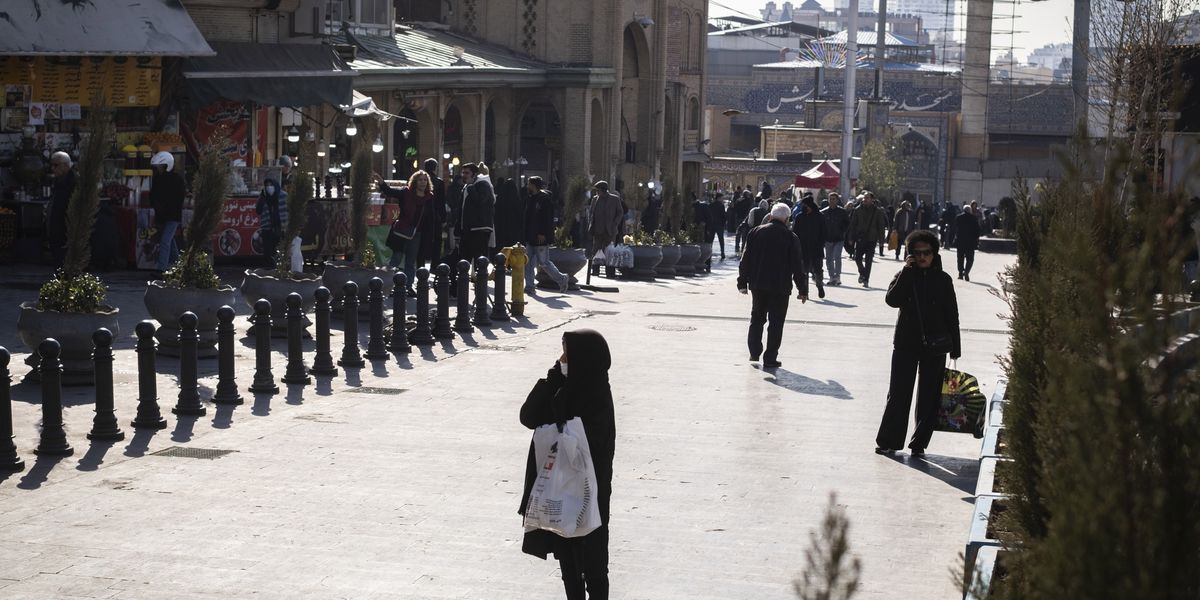
Iran’s Economic Tightrope: Pezeshkian’s Challenges and the Looming Risk of Instability
Iran is navigating its most precarious economic and political period as the Iran-Iraq War of the 1980s. The recent impeachment of Economy Minister Davoud Hemmati, coupled with a spiraling currency crisis and persistent inflation, underscores the depth of the challenges facing President Mohammad Pezeshkian. While Hemmati’s return too a key economic role signals a potential attempt at stabilization, the path forward is fraught with obstacles – both internal and external – that threaten to unravel the Islamic Republic’s fragile stability.
A Troubled economic Legacy & Hemmati’s Re-Engagement
Hemmati’s own career trajectory reflects the complexities of Iran’s economic system. A veteran of the central banking world, he served as Deputy and Director General of News Broadcasting before leading the Central Insurance Corporation. His decade-long stewardship of Sina Bank and Bank Mellat (2006-2016) – institutions heavily linked to the Revolutionary Guard’s Qods Force and afterward sanctioned by the US and EU – highlights the interwoven nature of Iran’s financial institutions and its security apparatus.
Despite a presidential bid centered on economic stabilization, Hemmati was disqualified by the Guardian Council. His subsequent appointment as Pezeshkian’s economy minister, followed by a swift impeachment triggered by soaring inflation and a rial devaluation to 950,000 to the dollar (a figure now considered a relative advancement), demonstrates the immense pressure facing any attempt at economic reform. His re-engagement, though, is crucial. Hemmati will be tasked with urgently addressing inflation, prioritizing protection for vulnerable low-income and rural populations. A core component of this strategy will necessitate a painful but essential restructuring of the banking sector, requiring acknowledgement of bad loans and a tightening of credit to prevent further reckless lending.
Budgetary Constraints and the Prioritization of Security
Pezeshkian’s economic agenda faces significant headwinds,most notably in the realm of budgetary reform. While details remain limited, the continued prioritization of funding for security and military entities will severely constrain resources available for civilian programs. The proposed 20% salary increase for public workers,while politically expedient,is unlikely to keep pace with inflation and will strain already limited funds. The budget debate, extending until March 2026, is expected to be contentious, with a focus on increased tax collection and subsidy cuts – politically sensitive measures that will likely fuel further public discontent – rather than relying on oil revenues.
The Foreign Policy Impasse & the Search for Economic Lifelines
Perhaps the most significant impediment to Iran’s economic recovery lies in its fraught relationship with the international community. Pezeshkian’s government will undoubtedly pursue strategies to mitigate the impact of sanctions through strengthened ties with Russia, China, and African nations, and will continue to signal a willingness to engage in talks with Washington. Historically,even the attempt at negotiations with the US has provided a temporary boost to the rial.
However,the prospects for a breakthrough remain dim. hardline elements within the regime,notably the Qods Force,continue to prioritize aggressive regional policies,actively seeking to rebuild proxy networks in countries like Sudan and expand influence across africa. This behavior directly contradicts the demands of the international community. The Trump management’s stance – demanding “seismic changes” in Iran’s nuclear, missile, and regional policies in exchange for sanctions relief - remains largely consistent, and Gulf Arab states are unwilling to consider rapprochement without a cessation of Qods Force activities. Without a fundamental shift in these dynamics, significant foreign investment in Iran will remain unfeasible, hampered by concerns over terrorism and human rights sanctions.
Echoes of Revolution: A System Under Strain
The current crisis unfolds against a backdrop of deeply concerning societal trends mirroring the conditions that preceded the 1979 revolution. Institutional failure, fragmentation within the ruling elite, generational alienation, a persistent fiscal crisis, widespread economic suffering, growing class antagonism, escalating protests, and a lack of a unifying national narrative all contribute to a volatile habitat.
Pezeshkian’s recent rhetoric, characterizing Iran as “in a full-fledged war with America, Israel, and Europe,” is a calculated move to appease hardline domestic audiences while reinforcing a confrontational image abroad. This approach, however, risks further exacerbating the country’s fragility. In the short term, Iran is highly likely to adopt a strategy of cautiously testing Western red lines while attempting to navigate this critical period.
Looking Ahead:
The challenges facing Pezeshkian and Hemmati are immense. Successfully navigating this economic and political storm will require a delicate balancing act – addressing immediate economic concerns while managing internal political pressures and a hostile international environment. The coming months will be pivotal in determining whether Iran
Keep reading