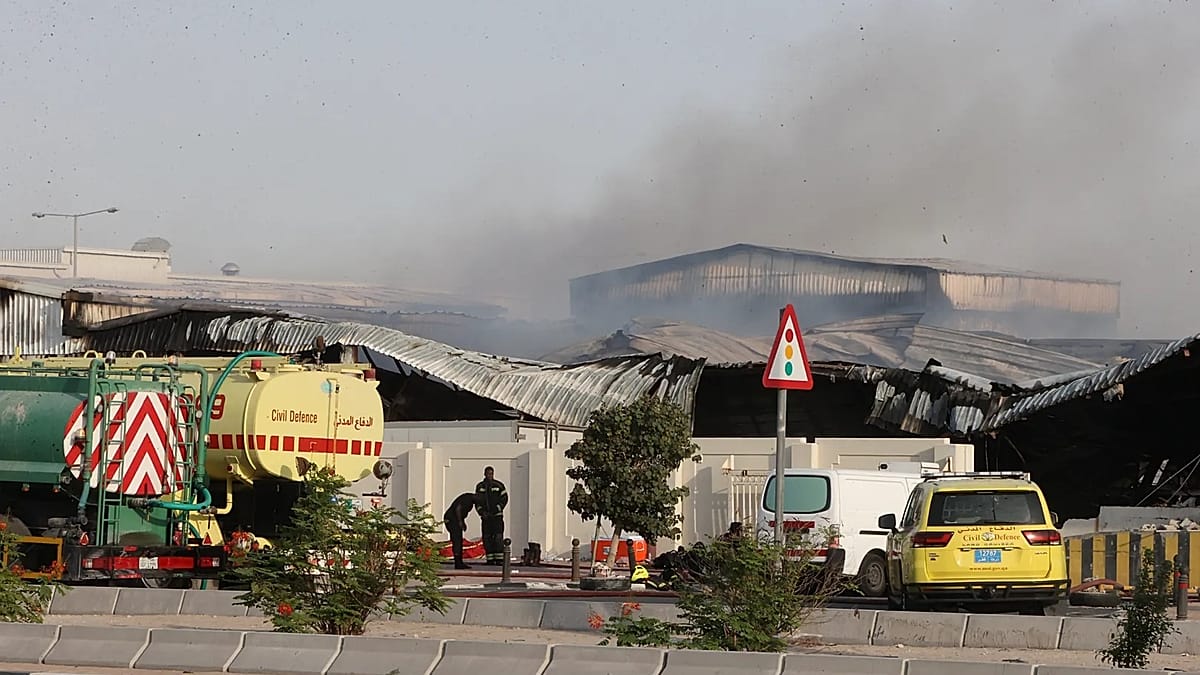
Qatar Vows Response to Iranian Attacks, Cites Violation of Sovereignty
Doha has issued a strong condemnation of recent attacks originating from Iran, stating that “red lines have already been crossed” and that retaliation is firmly on the table. The escalating tensions follow a series of strikes targeting Qatari territory, including civilian infrastructure and Doha airport, according to statements released by the Qatari Foreign Ministry on Tuesday. This latest exchange of hostilities comes against a backdrop of wider regional instability, stemming from conflicts in Gaza, Syria and Lebanon, and escalating tensions between Iran, and Israel. The situation is further complicated by the ongoing Twelve-Day War, a conflict that saw initial Iranian strikes on Qatar in June 2025, as detailed in reports from last year.
The Qatari government confirmed that its air force successfully intercepted seven ballistic missiles and five drones launched by Iran, and also downed two Iranian SU-24 fighter aircraft that entered its airspace on Monday. This marks a significant escalation in the conflict, potentially signaling the beginning of direct air-to-air combat between the two nations. Majed Al-Ansari, a spokesperson for the Qatari Foreign Ministry, emphasized that the attacks were not limited to military facilities, but deliberately targeted civilian areas, representing a direct assault on Qatar’s sovereignty and the safety of its citizens and residents. Qatar is home to a diverse population of over 140 nationalities, adding a humanitarian dimension to the crisis.
Escalation of Regional Tensions
The current crisis is rooted in a complex web of regional conflicts and retaliatory actions. In June 2025, Iran launched missile strikes on Al Udeid Air Base in Qatar, a key US military installation, in response to US strikes on Iranian targets, as reported by Wikipedia. These attacks were part of a broader period of conflict known as the Twelve-Day War. While Qatar did not retaliate at that time, prioritizing regional security and a potential ceasefire, officials now assert that the repeated attacks and the violation of its sovereignty leave them with no other option but to consider a response.
The recent Iranian strikes have also impacted Qatar’s critical energy infrastructure. Al-Ansari stated that attacks on Qatar’s Liquefied Natural Gas (LNG) facilities forced their temporary closure, creating what he described as “a grave danger to international economies.” Qatar is a major global supplier of LNG, and disruptions to its production could have significant consequences for energy markets worldwide. The closure of Qatari airspace has also stranded over 8,000 transit passengers, who are currently being accommodated within the country.
Qatar’s Position and Potential Retaliation
Despite the escalating tensions, Qatar maintains that its primary focus remains the protection of its citizens and residents. Al-Ansari stressed that Doha is “exercising our right in self defense and deterring Iranian attacks,” but also emphasized the country’s commitment to regional stability. However, he made it clear that the attacks “will not go unanswered,” and that all options for retaliation are being considered by Qatari leadership.
Al-Ansari also asserted Qatar’s military capabilities, stating that the country is “able to stop any entity that is trying to attack or inflict harm” and possesses “enough air-defence missiles to deal with any attack.” This statement underscores Qatar’s determination to defend its territory and deter further aggression. Notably, Notice currently no open lines of communication between Qatar and Iran, further complicating efforts to de-escalate the situation.
International Implications and Economic Concerns
The escalating conflict has broader implications for regional and global stability. The attacks on Qatar’s LNG facilities, in particular, raise concerns about potential disruptions to global energy supplies. The Jerusalem Post reports that the attacks on LNG facilities pose a threat to international economies. The closure of Qatari airspace is also impacting international travel, causing significant disruptions for passengers and airlines.
The situation is further complicated by the ongoing conflicts in the region, including the war in Gaza and the escalating tensions between Israel and Iran. The potential for a wider regional conflict remains a significant concern, and diplomatic efforts to de-escalate the situation are urgently needed. The United States has expressed its support for Qatar’s right to defend itself, but has also called for restraint and a peaceful resolution to the crisis.
Downed Iranian Jets and Military Escalation
The confirmation by Qatar’s Defence Ministry that its air force downed two Iranian SU-24 aircraft represents a major military escalation. Al Jazeera reports that This represents potentially the beginning of air-to-air combat, a significant development in the conflict. The incident underscores the increasing risk of direct military confrontation between Qatar and Iran.
Zein Basravi, Al Jazeera’s correspondent in Doha, described the downing of the Iranian aircraft as “a serious escalation” in a conflict that is “already spiralling.” The lack of immediate comment from Iran regarding the incident further adds to the uncertainty and tension surrounding the situation. The incident raises questions about Iran’s intentions and its willingness to engage in direct military confrontation with Qatar.
Qatar’s response to the attacks, including the interception of missiles and drones and the downing of Iranian fighter jets, demonstrates its commitment to defending its sovereignty and protecting its interests. However, the potential for further escalation remains high, and the situation requires careful monitoring and diplomatic engagement to prevent a wider regional conflict.
As of today, March 3, 2026, Qatar’s airspace remains closed, and the country is focused on ensuring the safety and well-being of its citizens and residents. The Qatari government has not yet announced any specific plans for retaliation, but has made it clear that attacks on its sovereignty will not be tolerated. The international community is closely watching the situation, and diplomatic efforts are underway to de-escalate the tensions and prevent a further escalation of the conflict.
Key Takeaways:
- Qatar has condemned Iranian attacks on its territory, including civilian infrastructure and Doha airport.
- Qatar’s air force intercepted missiles and drones and downed two Iranian fighter jets.
- Qatar asserts its right to self-defense and warns that attacks will not go unanswered.
- The attacks have disrupted Qatar’s LNG production and airspace, impacting international energy markets and travel.
- The situation represents a significant escalation in regional tensions and raises concerns about a wider conflict.
The next official update from the Qatari Foreign Ministry regarding potential retaliatory measures is expected within the next 48 hours. We will continue to monitor the situation closely and provide updates as they become available. Please share your thoughts and perspectives on this developing story in the comments below.
- Why Measles Is Making a Comeback in the US: Record Cases and Declining Vaccination Rates
- Taiwan’s “Oil Not For You” Controversy: Selective Law Enforcement or Legal Accountability?
- Saudi Arabia Blamed for Drone Attacks by Iran-Backed Militias in Iraq (time.news)
- Mere Closure Prompts Scrutiny Over New Discount Chain in Siauliai (archyworldys.com)