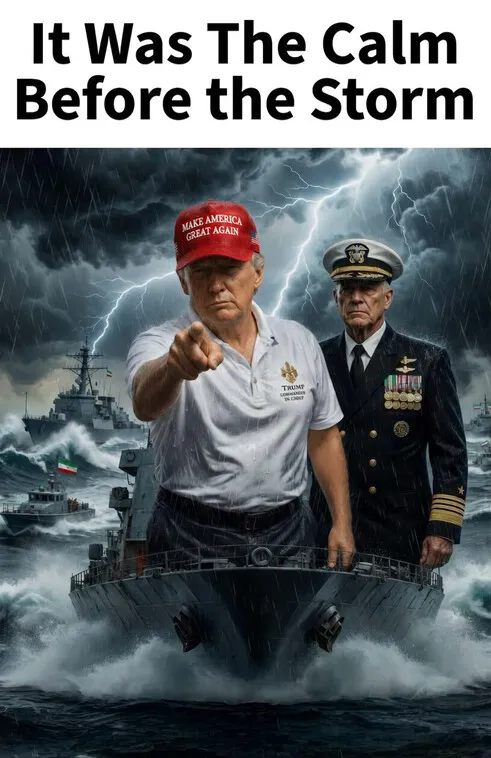
The fragile stability of the world’s most critical oil artery is once again under threat as Strait of Hormuz tensions surge following a provocative digital signal from the White House and a corresponding hardening of posture from Tehran. The geopolitical atmospheric pressure shifted sharply on May 16, when U.S. President Donald Trump signaled a potential return to direct confrontation with Iran, utilizing a blend of AI-generated imagery and stark warnings to frame the current maritime standoff.
This latest escalation comes immediately after the U.S. President’s return from a high-stakes summit with China, suggesting a rapid pivot in strategic focus toward the Persian Gulf. The situation has transitioned quickly from diplomatic friction to active military maneuvering, with U.S. Naval assets increasing their presence in the region while Iran threatens to fundamentally alter the legal and financial terms of transit through the strait.
For global energy markets and international shipping conglomerates, the stakes could not be higher. The Strait of Hormuz serves as the primary choke point for the global oil supply chain, and any disruption to the flow of tankers typically triggers immediate volatility in crude prices and insurance premiums for maritime cargo. The current standoff represents a dangerous intersection of “digital diplomacy” and hard military power.
Digital Warnings and Naval Maneuvers
The catalyst for the current spike in anxiety was a post on Truth Social shared by President Trump on May 16. The post featured an AI-generated image depicting the President alongside General Dan Kane, Chairman of the Joint Chiefs of Staff, standing aboard a U.S. Vessel. The backdrop of the image showed a tempestuous sky with lightning striking over the Strait of Hormuz, accompanied by the caption, “Calm before the storm.”

While the imagery was synthetic, the military response on the ground is very real. U.S. Central Command (CENTCOM) reported that U.S. Army helicopters have been deployed to observe the waters near the strait, where a counter-blockade operation is currently underway. According to reports from U.S. Central Command, the operational environment has already forced significant changes in commercial traffic. On May 16, 78 merchant vessels were forced to alter their planned routes to avoid the area of tension, while four ships were ordered to halt operations to ensure compliance with blockade measures.
The physical manifestation of this U.S. Posture is centered on the USS George H.W. Bush. On May 15, Admiral Curt Renshaw, Commander of the U.S. Navy’s 5th Fleet, visited the aircraft carrier to underscore the critical nature of the ongoing mission. The presence of a carrier strike group in such close proximity to the Iranian coast serves as a potent deterrent, but also increases the risk of a tactical miscalculation that could spark a wider conflict.
Iran’s Response: The Threat of Maritime Tolls
Tehran has responded to the U.S. Counter-blockade not with retreat, but with a proposal to institutionalize its control over the waterway. Iranian state media, including the IRIB, has asserted that the “Iranian order” in the Strait of Hormuz remains firm. In a significant escalation of their maritime strategy, Iranian officials have indicated that they intend to announce a new traffic management system for the strait.

The most alarming aspect of this proposed system is the potential imposition of transit fees. Members of the Iranian parliament’s security committee have suggested that the new framework will include the collection of tolls from vessels passing through the strait. This move would effectively treat one of the world’s most important international shipping lanes as a sovereign toll road, a claim that contradicts international maritime law regarding the right of transit passage.
Iranian state media has further claimed that some European nations have already entered negotiations with the Iranian military to secure passage. If implemented, these fees would not only serve as a revenue stream for Tehran but would act as a political tool to exert leverage over East Asian economies—specifically China, Japan, and Pakistan—which rely heavily on the uninterrupted flow of energy from the Gulf.
Why the Strait of Hormuz Matters to the Global Economy
To understand why a single image on social media and a threat of transit fees can rattle global markets, one must look at the geography of energy. The Strait of Hormuz is a narrow waterway separating Oman from Iran, connecting the Persian Gulf with the Gulf of Oman and the Arabian Sea. It is the only sea passage from the Persian Gulf to the open ocean.
The implications of a prolonged blockade or the imposition of “Iranian-style order” include:

- Energy Price Spikes: Because a significant portion of the world’s liquefied natural gas (LNG) and crude oil passes through this point, any perceived risk of closure leads to “fear premiums” in oil pricing.
- Supply Chain Instability: Beyond oil, the strait is vital for the movement of chemicals and other raw materials essential for global manufacturing.
- Increased Insurance Costs: Maritime insurance providers typically raise “War Risk” premiums when tensions escalate in the Gulf, increasing the cost of goods for the end consumer.
- Geopolitical Realignment: The pressure on East Asian nations to negotiate separately with Iran could create fractures in traditional security alliances.
The current “counter-blockade” by the U.S. Is designed to ensure that the strait remains open to international commerce, but the friction between the U.S. Navy’s 5th Fleet and the Iranian Revolutionary Guard Corps Navy (IRGCN) creates a volatile environment where a single encounter between fast-attack boats and destroyers could escalate rapidly.
Looking Ahead: The Path to De-escalation or Conflict
The current situation is characterized by a high degree of uncertainty. The use of AI-generated imagery by the U.S. Presidency introduces a new variable into geopolitical signaling, where the line between psychological warfare and actual intent is blurred. For Iran, the move toward a “transit fee” model suggests they are looking for a way to monetize their geographic advantage while challenging U.S. Hegemony in the region.
The immediate focus for international observers will be whether the U.S. Continues to divert merchant shipping or if a diplomatic channel is opened to prevent the “storm” predicted in the President’s post. The involvement of the U.S. Navy and the strategic positioning of the USS George H.W. Bush indicate that the U.S. Is prepared for a kinetic response should Iran attempt to physically close the strait or seize commercial vessels.
The next confirmed checkpoint for the international community will be the official announcement from the Iranian parliament regarding the specifics of the new maritime traffic management system and the associated fee structure. This announcement will likely dictate the next phase of the U.S. Military response in the Gulf.
World Today Journal will continue to monitor the situation in the Persian Gulf. We invite our readers to share their perspectives on the impact of digital diplomacy on global security in the comments below.