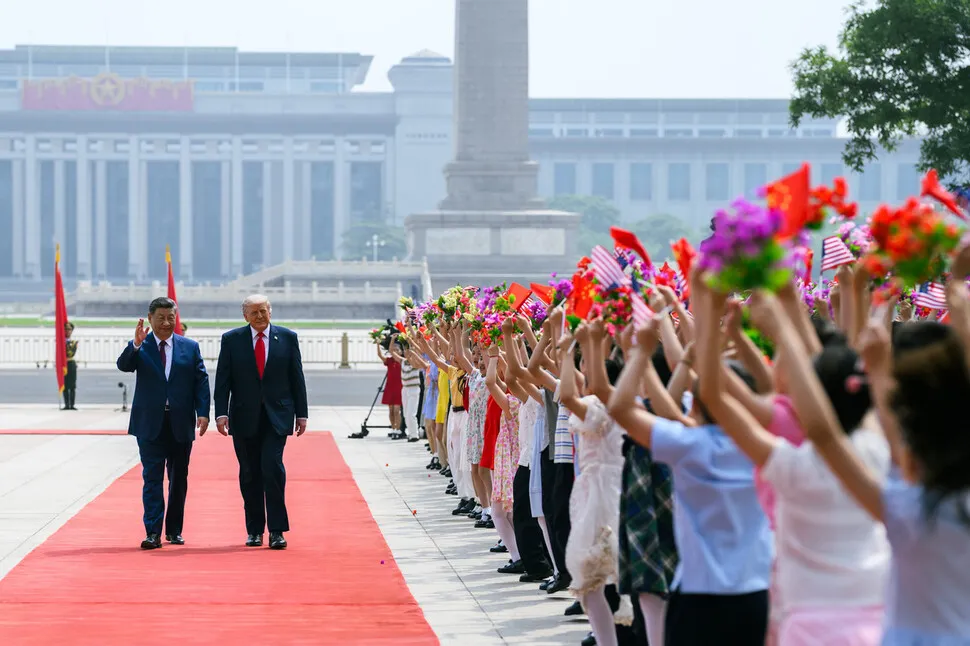
The high-stakes diplomatic theater of Beijing has concluded, leaving global observers with a striking contrast between the meticulously choreographed pageantry of the event and the scarcity of tangible economic breakthroughs. Following a meeting between U.S. President Donald Trump and Chinese President Xi Jinping on May 15, 2026, the prevailing consensus among geopolitical analysts is that the summit was less about resolving deep-seated conflicts and more about establishing a framework for stable relationship management.
While the White House characterized the discussions as “very productive,” the actual output of the summit remained elusive. Despite the presence of major corporate leaders and an atmosphere of outward optimism, the meeting failed to produce a comprehensive trade agreement or the announcement of large-scale corporate contracts that many market analysts had anticipated. Instead, the summit served as a critical exercise in tension reduction, signaling to the world that the two superpowers are currently more interested in avoiding a collision than in achieving a total reconciliation.
President Trump, speaking at the Great Hall of the People, highlighted the ambition of the gathering, suggesting that the summit had the “possibility of being the largest summit ever.” He further described the ties between the United States and China as the “world’s most crucial economic relationship.” However, these optimistic descriptors stood in stark contrast to the unresolved status of tariffs and trade disputes that continue to strain the bilateral bond.
Managing the Rivalry: Stability Over Solution
For international observers, the primary victory of the Beijing summit was not a signed treaty, but the mutual agreement to maintain a functional line of communication. According to analysis from U.S.-based experts, the meeting confirmed a shared will to manage the relationship stably, even as the core drivers of the rivalry—technological supremacy, trade imbalances and regional influence—remain unchanged.
A central theme emerging from the Chinese delegation was the proposal of a “constructive strategic stable relationship.” Analysts suggest this terminology is a diplomatic rebranding of “mutual respect,” aimed at creating a predictable environment where competition does not devolve into open conflict. Patrick Cronin, the chair for Asia-Pacific security at the Hudson Institute, noted in a commentary that while the summit did not yield massive achievements, it provided a general sense of relief regarding the nature of U.S.-China competition. Cronin suggested that the event served to elevate China’s global standing while simultaneously lowering the immediate temperature of the rivalry.
This shift toward “management” rather than “resolution” has immediate implications for Asian nations. By moving the U.S.-China relationship into a managed phase, countries in the region may see a reduction in the economic uncertainty that has plagued global supply chains and trade policies over recent years.
The Taiwan ‘Red Line’ and Security Risks
Despite the warm optics and the emphasis on economic ties, the summit did not shy away from the most volatile flashpoint in the relationship: Taiwan. While the two leaders maintained a veneer of cordiality, the underlying warnings were explicit. President Xi Jinping cautioned that the issue of Taiwan is a critical boundary, warning that if the matter is mishandled, it could lead the two nations toward collision or direct conflict.
This stern reminder serves as a “red line” for the U.S. Administration, signaling that while China is open to economic stability and “constructive” relations, it views the status of Taiwan as a non-negotiable security interest. The tension between Trump’s desire for economic deals and Xi’s insistence on territorial sovereignty remains the most significant barrier to a true normalization of ties.
The duality of the summit—the “most important economic relationship” versus the threat of “collision” over Taiwan—underscores the precarious balancing act both leaders are performing. The U.S. Continues to seek concessions on trade and technology, while China seeks a guarantee of non-interference in its core internal affairs.
Economic Expectations vs. Reality
The presence of high-profile CEOs in Beijing suggested a potential for a “big deal,” yet the concluding reports indicate that such breakthroughs were largely absent. The summit focused heavily on the image of cooperation rather than the mechanics of a new trade deal. While President Xi previously noted that progress had been made during trade negotiations held in South Korea, those gains did not translate into a comprehensive agreement during the Beijing visit.
The lack of a “big deal” suggests that neither side was willing to make the significant concessions necessary to resolve the trade war. For the U.S., In other words tariffs and trade barriers likely remain in place, and for China, it means the pressure to restructure its economic model persists. However, the mere act of repeated summit diplomacy is now viewed by experts as a vital management tool in itself, preventing misunderstandings from escalating into crises.
Key Takeaways from the Beijing Summit
- Focus on Management: The summit prioritized the stabilization of the relationship over the resolution of core disputes.
- Economic Stagnation: Despite high expectations and the presence of CEOs, no comprehensive trade breakthroughs or major corporate contracts were announced.
- Security Warnings: President Xi explicitly warned that mishandling the Taiwan issue could lead to direct conflict.
- Strategic Framework: China proposed a “constructive strategic stable relationship,” interpreted by experts as a call for mutual respect and predictability.
- Regional Impact: The move toward managed competition is expected to reduce some economic uncertainty for Asian allies and partners.
What Happens Next?
With the Beijing summit concluded, the focus now shifts to whether the “constructive strategic stable relationship” can survive the domestic political pressures in both Washington and Beijing. The lack of a concrete trade deal means that the economic friction will continue, but the established communication channels may prevent these frictions from triggering a wider geopolitical rupture.

The global community will be watching for the implementation of the “mutual respect” framework in upcoming diplomatic encounters and trade discussions. The next critical checkpoint will be the follow-up reports from the White House and the Chinese Foreign Ministry regarding the specific technical working groups tasked with maintaining this “stable” relationship.
World Today Journal encourages readers to share their perspectives on the U.S.-China diplomatic trajectory in the comments below.
Worth a look