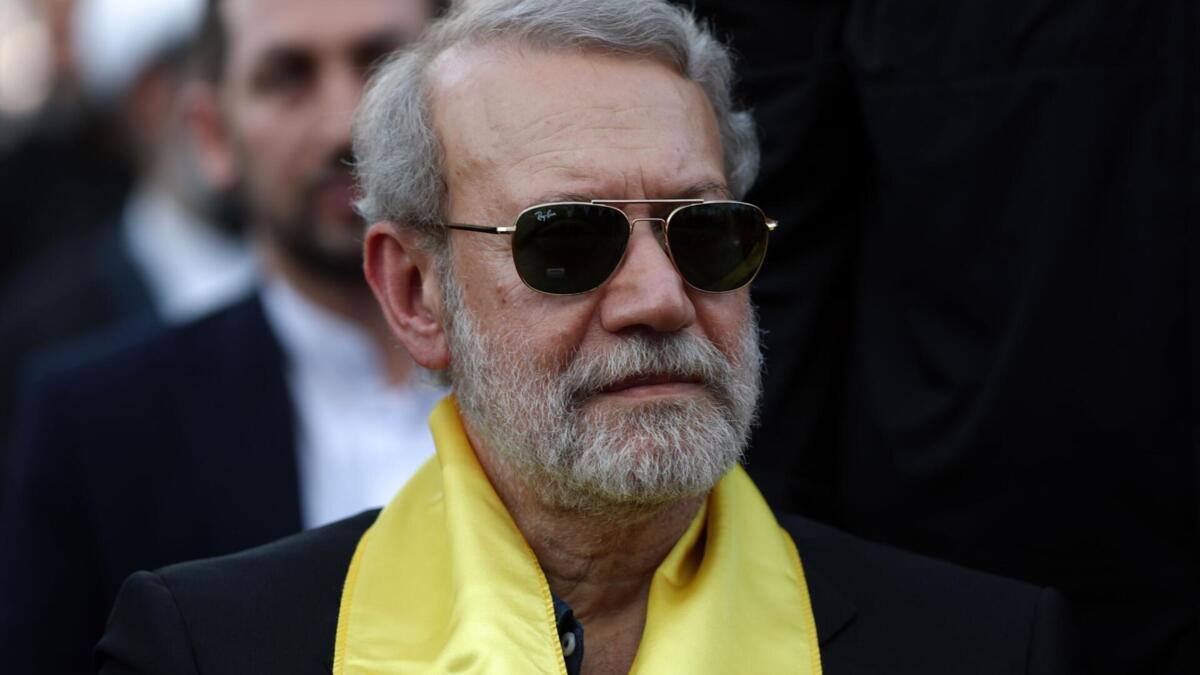
Escalating Tensions: Iran Mourns Security Chief, Vows Retaliation Amidst Regional Conflict
Tehran is in mourning following the death of Ali Larijani, a prominent figure in Iran’s national security apparatus, and is vowing retribution for his killing. The circumstances surrounding Larijani’s death, reported on Friday, have significantly escalated tensions in an already volatile Middle East, prompting retaliatory strikes by Iran against Israel and raising fears of a wider regional war. The loss of Larijani, alongside other high-ranking officials, marks a critical moment in the ongoing conflict and underscores the increasingly direct involvement of Iran in the escalating hostilities. This comes as the region grapples with the broader consequences of the conflict, including concerns about global economic stability and the potential for further escalation.
The funeral for Larijani is scheduled for 10:30 local time in Tehran, coinciding with the funerals of Gholamreza Soleimani, a leader of the Basij paramilitary force, and over 80 Iranian military personnel who perished in the sinking of a frigate reportedly sunk by the United States two weeks ago off the coast of Sri Lanka. This joint mourning event underscores the breadth of recent losses sustained by Iran’s security establishment and signals a unified front in the face of perceived external aggression. The timing and scale of the funerals are intended to demonstrate national solidarity and resolve, while also serving as a platform for further calls for vengeance. The situation remains highly fluid, with the potential for further escalation dependent on the actions of all parties involved.
The death of Ali Larijani, a veteran politician and key architect of Iran’s foreign policy, represents a significant blow to the country’s leadership. He previously served as the Speaker of the Iranian Parliament and held numerous other influential positions within the government. According to reports from Iranian state media, including Fars News Agency and Tasnim News Agency, Larijani was targeted in an attack attributed to both American and Israeli combat aircraft at his daughter’s home. While these claims have not been independently verified by U.S. Or Israeli officials, they reflect the prevailing narrative within Iran regarding the source of the attack. The Iranian military, in a statement carried by Tasnim, has vowed to avenge Larijani’s death, stating that “the pure blood” of the fallen will not go unanswered. Tasnim News Agency reported on the vow of revenge from the Iranian army chief.
Retaliatory Strikes and Regional Fallout
In a direct response to Larijani’s death, Iran’s Islamic Revolutionary Guard Corps (IRGC) launched attacks that reportedly caused at least two casualties in the Tel Aviv region. This marked a significant escalation in the direct exchange of fire between Iran and Israel, moving beyond proxy conflicts to a more overt confrontation. The IRGC stated that these attacks were specifically intended to avenge Larijani and other Iranian officials. The attacks have prompted widespread condemnation from international actors and heightened concerns about the potential for a broader regional conflict. The situation is further complicated by the involvement of other regional players, including Saudi Arabia and the United Arab Emirates, who have also reported intercepting drones and missiles.
Reports suggest that Larijani had become a central figure in Iran’s decision-making process in the weeks leading up to his death, described by an anonymous Israeli military official as “the de facto leader of the regime.” This assessment highlights the extent of Larijani’s influence and the potential impact of his loss on Iran’s strategic calculations. The Israeli military has also reportedly threatened the life of Mojtaba Khamenei, the son of Supreme Leader Ali Khamenei, who has assumed his father’s role following reports of the elder Khamenei’s injury or death. These threats further underscore the escalating tensions and the willingness of both sides to target the highest levels of leadership. However, the reports regarding Ali Khamenei’s condition remain unconfirmed.
The United States has also taken steps to increase pressure on Iranian leadership, announcing a reward of $10 million for information leading to the location of key leaders within the IRGC, including the new Supreme Leader. The U.S. State Department’s Rewards for Justice program details the offer. Reports from U.S. And Israeli officials suggest that Mojtaba Khamenei may have been injured or disfigured in the attack that allegedly killed his father, though these claims have not been independently verified. The situation is further complicated by conflicting narratives and a lack of transparency from all parties involved.
Broader Implications and International Response
Iranian Foreign Minister Abbas Araghchi has warned that the consequences of the conflict will be felt globally, stating that “the wave of repercussions will only just initiate and will affect everyone, regardless of wealth, belief or race.” This statement reflects Iran’s assessment of the potential for widespread economic and political disruption as a result of the escalating conflict. The conflict’s impact on global energy markets is already being felt, with concerns about disruptions to oil supplies from the Middle East driving up prices. The potential for further escalation could have even more severe consequences for the global economy.
Adding another layer of complexity, former U.S. President Donald Trump has criticized NATO, withdrawing his demand for allies to support the U.S. Navy in ensuring the security of the Strait of Hormuz, a critical waterway for global oil and gas shipments. Trump stated via his social media platform, Truth Social, that the U.S. “no longer needs or wants the support of NATO countries,” a sentiment that has drawn criticism from international leaders. This move raises questions about the future of U.S. Commitment to collective security and the potential for a more unilateral approach to foreign policy. The Strait of Hormuz, through which approximately 20% of the world’s oil supply passes, remains a key strategic chokepoint.
Meanwhile, Iran continues to launch missiles and drones at Israel and its regional neighbors, targeting both American interests and civilian infrastructure. Saudi Arabia has reported intercepting drones and a ballistic missile near Prince Sultan Air Base, where U.S. Military personnel are stationed. The United Arab Emirates has also reported an incident involving a projectile falling near an Australian army base in Dubai. Qatar and Kuwait have similarly reported intercepting attacks. These incidents demonstrate the widening scope of the conflict and the increasing risk of regional escalation. The coordinated nature of these attacks suggests a deliberate strategy to pressure Israel and its allies.
Key Takeaways
- Escalated Conflict: The death of Ali Larijani has significantly escalated tensions between Iran and Israel, leading to direct retaliatory strikes.
- Regional Instability: The conflict is spreading to neighboring countries, with reports of missile and drone attacks in Saudi Arabia, the UAE, Qatar, and Kuwait.
- Global Economic Impact: The conflict is disrupting global energy markets and raising concerns about a wider economic downturn.
- Political Ramifications: The crisis is prompting a reassessment of U.S. Foreign policy and the future of its alliances.
The situation remains highly volatile and unpredictable. The coming days will be critical in determining whether the conflict can be contained or whether it will spiral into a wider regional war. International diplomatic efforts to de-escalate the situation are ongoing, but their success remains uncertain. The world is watching closely as the Middle East teeters on the brink of further conflict.
Further developments are expected as international mediators attempt to broker a ceasefire. World Today Journal will continue to provide updates as the situation unfolds. We encourage readers to share their perspectives and engage in constructive dialogue in the comments section below.