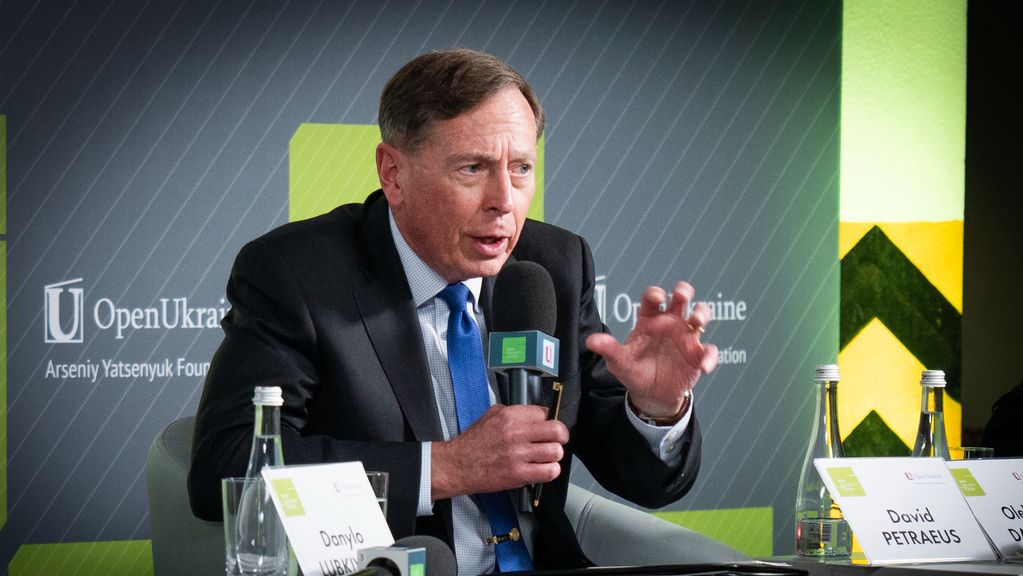
Former CIA Director Petraeus: Strikes Against Iran Won’t Trigger Regime Change
As tensions between Washington and Tehran remain elevated, former CIA Director David Petraeus has cautioned against expecting a military strike to topple the Iranian government. Speaking on a U.S. Radio station, Petraeus assessed that even a substantial military action would have limited impact on the ruling power structure. This assessment comes amid ongoing negotiations between U.S. And Iranian diplomats regarding Iran’s nuclear program and a heightened U.S. Military presence in the Middle East. The situation is further complicated by differing perspectives on the internal dynamics within Iran, with some, including former President Donald Trump, citing significant unrest and potential for change.
“Let’s be realistic: that’s not going to lead to regime change,” Petraeus stated, acknowledging, although, that he could support strikes aimed at weakening Iran’s ballistic missile program or damaging its security forces. His reasoning centers on the unwavering ideology of Supreme Leader Ali Khamenei, whom he believes is unlikely to concede on fundamental issues, particularly concerning nuclear development. This perspective underscores a long-held view within U.S. National security circles regarding the resilience of the Iranian theocracy and the challenges of externally imposed regime change. David Petraeus, a retired U.S. Army general, served as the fourth Director of the Central Intelligence Agency from September 2011 to November 2012, following a distinguished 37-year career in the military. His extensive experience in the region, including command roles in Iraq and Afghanistan, informs his assessment of the situation.
The Nuclear Program and Regional Implications
The current situation unfolds against a backdrop of stalled negotiations over Iran’s nuclear program, formally known as the Joint Comprehensive Plan of Action (JCPOA). The JCPOA, originally agreed upon in 2015 between Iran and the P5+1 (China, France, Germany, Russia, the United Kingdom, and the United States), aimed to limit Iran’s nuclear enrichment activities in exchange for sanctions relief. The United States unilaterally withdrew from the JCPOA in 2018 under the Trump administration, reimposing sanctions and escalating tensions. Petraeus’s assessment highlights the continued threat posed by Iran’s nuclear ambitions, not only to the United States but also to its regional allies, particularly Israel. Israel has consistently maintained that it views a nuclear-armed Iran as an existential threat and has hinted at potential unilateral action if it deems diplomatic efforts insufficient.
Beyond the nuclear issue, Petraeus emphasized Iran’s support for various non-state actors throughout the Middle East, including Hezbollah in Lebanon, Hamas in Palestine, the Houthi rebels in Yemen, and numerous Shia militias in Iraq. These groups are often accused of destabilizing regional security and carrying out attacks against U.S. Interests, and allies. The U.S. State Department has designated several of these groups as terrorist organizations, citing their involvement in violence and their ties to the Iranian government. The continued support for these groups adds another layer of complexity to the U.S.-Iran relationship and complicates efforts to de-escalate tensions.
Trump’s Stance and Claims of Iranian Unrest
Former President Donald Trump continues to maintain a hardline stance towards Iran, officially keeping the door open to diplomacy while simultaneously bolstering the U.S. Military presence in the region as a deterrent. On Friday, Trump called on Iran to “negotiate a fair deal,” signaling a willingness to engage in talks but also reiterating his demand for more favorable terms. He also referenced a figure of 32,000 protesters allegedly killed in Iran, a number initially advanced by Iranian opposition groups. However, this figure has been met with skepticism and has not been independently verified by international organizations or human rights groups. Petraeus, while acknowledging the internal pressures within Iran, did not comment specifically on the disputed death toll.
The claim of 32,000 deaths stems from the 2019 protests against fuel price hikes in Iran, which were met with a violent crackdown by security forces. While reports of significant casualties emerged at the time, verifying the exact number has proven difficult due to restrictions on access to information and the Iranian government’s lack of transparency. Amnesty International reported at least 304 deaths during the November 2019 protests, while Reuters estimated the number to be over 1,500. The discrepancy in figures highlights the challenges of accurately assessing the human cost of political unrest in Iran.
A ‘Substantial’ Demonstration of Force?
Petraeus suggested that if Iran remains inflexible in negotiations, it could face a “incredibly substantial” demonstration of U.S. Military power. This statement echoes previous warnings from U.S. Officials regarding the potential consequences of Iran’s continued pursuit of nuclear weapons and its destabilizing activities in the region. The U.S. Maintains a significant military presence in the Middle East, including naval forces in the Persian Gulf, air bases in several countries, and troops stationed in Iraq and Syria. Any military action against Iran would likely involve a complex and potentially escalatory scenario, with the risk of broader regional conflict.
The potential for escalation is further heightened by the involvement of other regional actors, such as Saudi Arabia and Israel, who share concerns about Iran’s growing influence. Saudi Arabia and Iran have been engaged in a proxy conflict for years, supporting opposing sides in conflicts in Yemen, Syria, and other countries. Israel has repeatedly warned against allowing Iran to develop nuclear weapons and has threatened military action to prevent it. The complex web of alliances and rivalries in the Middle East makes any military intervention in Iran a highly risky undertaking.
Key Takeaways
- Former CIA Director David Petraeus believes military strikes against Iran are unlikely to result in regime change.
- The primary concern remains Iran’s nuclear program and its support for regional proxy groups.
- Negotiations over the JCPOA remain stalled, with both the U.S. And Iran holding firm on their positions.
- The potential for military escalation remains a significant risk, given the complex regional dynamics.
- Claims regarding the number of protesters killed in Iran during past unrest remain unverified and disputed.
Looking ahead, the situation remains fluid and unpredictable. The next key development to watch will be the outcome of ongoing diplomatic efforts, particularly any potential resumption of negotiations over the JCPOA. The International Atomic Energy Agency (IAEA) is expected to release its next report on Iran’s nuclear program in March 2026, which will provide an updated assessment of its enrichment activities. Readers are encouraged to stay informed about these developments and to engage in constructive dialogue about the challenges and opportunities facing the region. Share your thoughts in the comments below.
- Gut Microbiome and Cancer: How Intestinal Bacteria are Transforming Immunotherapy and Diagnosis
- International Reproductive Medicine in Europe: A Guide for Future Parents
- Dow Jones Plunges 555 Points as Middle East Tensions Spike Oil Prices (archyworldys.com)
- PCOS to PMOS: Why the Name Change Matters for Women’s Health (archynewsy.com)