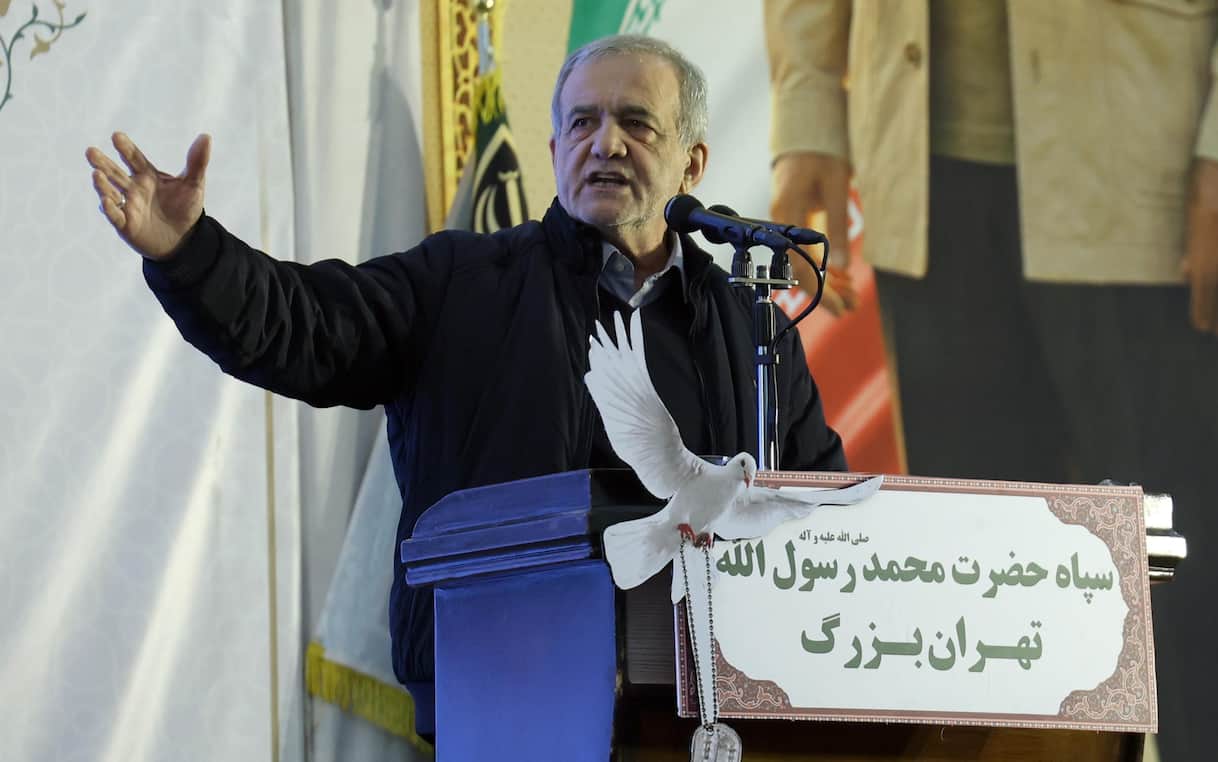
Iran’s President Offers Conditional Apology Amidst Escalating Regional Tensions
Tehran is signaling a complex stance amidst heightened regional conflict, with Iranian President Masoud Pezeshkian offering apologies for recent strikes on neighboring countries while simultaneously asserting Iran’s refusal to yield to pressure from the United States and Israel. This comes as attacks continue to reverberate across the Gulf region, including a reported fatality in Dubai. The conditional nature of the apology – linked to a cessation of attacks *against* Iran – underscores the delicate balance between de-escalation and continued defiance characterizing the current situation. The backdrop to these developments is a broader history of tensions, exacerbated by former U.S. President Donald Trump’s call for Iran’s “capitulation without conditions,” a demand Pezeshkian firmly rejected.
Pezeshkian’s address, broadcast on Iranian state television, included an explicit statement that Iran will not target neighboring countries unless provoked. This declaration follows a period of escalating military action, beginning on February 28th, which saw Iranian forces utilizing drones and missiles against targets in the region. While Iran maintains these strikes were aimed solely at interests or bases belonging to the United States, neighboring nations have disputed this claim, asserting that their sovereign territory was directly targeted. The president’s apology, appears to be an attempt to manage regional fallout while simultaneously reaffirming Iran’s commitment to its strategic objectives. This complex messaging reflects internal divisions within the Iranian leadership regarding the optimal path forward.
The situation remains fluid, with reports indicating continued attacks despite Pezeshkian’s stated intentions. The United Arab Emirates reportedly intercepted numerous missiles and drones and tragically, a civilian of Asian origin was killed in Dubai when debris from an intercepted missile struck their vehicle. The Dubai airport temporarily suspended operations as a precautionary measure. Further incidents were reported in Bahrain, where an Iranian attack caused a fire in the capital, Manama, damaging homes and other structures, and in Qatar, where explosions were heard in Doha. Saudi Arabia also reported that a missile aimed at one of its air bases fell in an uninhabited area. These events highlight the ongoing risk of escalation and the potential for further civilian casualties.
Internal Divisions and a Hardline Counterpoint
While Pezeshkian’s address initially suggested a potential shift towards de-escalation, this interpretation has been quickly challenged by hardline elements within the Iranian establishment. Gholamhossein Mohseni Ejei, the head of the Iranian judiciary and a prominent figure within the interim ruling council, asserted that there is “evidence” some regional countries have “placed themselves at the disposal of the enemy,” and “heavy attacks against these targets will continue.” This statement directly contradicts the conditional apology offered by Pezeshkian and signals a willingness to pursue further military action against perceived collaborators. Mohammad Bagher Ghalibaf, the powerful speaker of the Iranian parliament, further reinforced this hardline stance, declaring that states hosting American bases in the region “will not enjoy peace.” Recent reports indicate a clear divergence in opinion within the Iranian leadership regarding the future course of the conflict.
This internal discord underscores the complex political dynamics at play within Iran. The conditional apology can be viewed as a diplomatic maneuver aimed at mitigating international pressure and potentially averting further escalation, while the hardline rhetoric reflects a determination to resist perceived foreign interference and maintain Iran’s regional influence. The conflicting messages suggest a struggle for control over the narrative and the direction of Iran’s foreign policy. Analysts suggest that the president’s initial statement may have been a calculated attempt to buy time, perhaps in anticipation of dwindling munitions supplies, as the conflict extends beyond initial expectations.
Regional Impact and International Response
The recent attacks have significantly heightened tensions across the Middle East, raising concerns about a wider regional conflict. The involvement of multiple actors, including Iran, Israel, the United States, and various regional powers, creates a volatile and unpredictable environment. The targeting of civilian infrastructure, such as airports, and the tragic loss of life in Dubai, underscore the human cost of the escalating conflict. The situation demands a concerted diplomatic effort to de-escalate tensions and prevent further bloodshed. The potential for miscalculation and unintended consequences remains high, making it crucial for all parties to exercise restraint and prioritize dialogue.
The international community has largely condemned the attacks and called for restraint. Still, a unified response has been hampered by differing geopolitical interests and perspectives. The United States has reaffirmed its commitment to supporting its regional allies, while also emphasizing the require for a diplomatic solution. European powers have urged Iran to cease its destabilizing activities and return to negotiations on the nuclear deal. The role of other key players, such as China and Russia, remains uncertain, but their involvement could be crucial in mediating a peaceful resolution. The ongoing conflict also raises concerns about the security of vital shipping lanes in the Persian Gulf, potentially disrupting global energy supplies.
Key Takeaways
- Conditional Apology: Iranian President Pezeshkian offered an apology for recent strikes on neighboring countries, but only on the condition that Iran itself is not attacked.
- Internal Divisions: A significant rift exists within the Iranian leadership, with hardline factions pushing for continued military action despite the president’s conciliatory rhetoric.
- Regional Escalation: Attacks continue across the Gulf region, resulting in civilian casualties and raising the risk of a wider conflict.
- International Condemnation: The international community has largely condemned the attacks, but a unified response remains elusive.
- Nuclear Deal Implications: The escalating tensions could further complicate efforts to revive the Iran nuclear deal, potentially leading to a more dangerous situation.
As of March 7, 2026, the situation remains highly volatile. The next key development to watch will be the response from regional governments to Pezeshkian’s conditional apology and the potential for further military action by Iran or its adversaries. Continued monitoring of diplomatic efforts and military movements will be crucial in assessing the trajectory of the conflict. We encourage readers to share their thoughts and perspectives on this critical issue in the comments below.
Keep reading