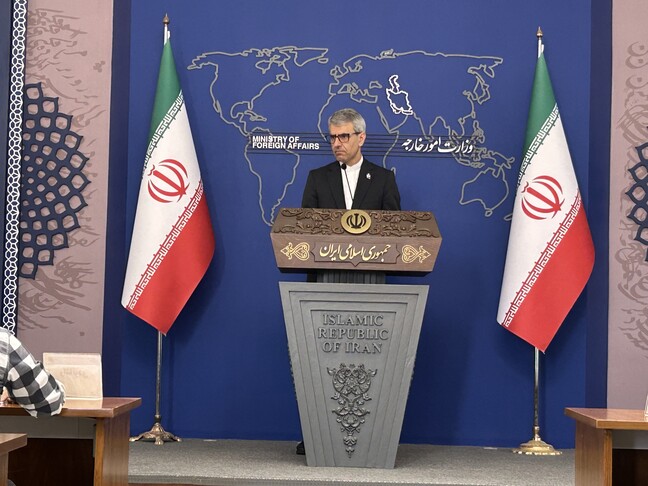
Iran will not fulfill its obligations under the 2015 nuclear deal, formally known as the Joint Comprehensive Plan of Action (JCPOA), as long as the United States continues to maintain its current sanctions policy. Esmaeil Baqaei, spokesperson for the Iranian Ministry of Foreign Affairs, confirmed this stance during a recent press briefing, emphasizing that Tehran views the ongoing economic pressure from Washington as fundamentally incompatible with the original terms of the agreement.
The declaration highlights the deepening stalemate surrounding the future of Iran’s nuclear program. While the JCPOA was intended to limit Iran’s nuclear activities in exchange for the lifting of international sanctions, the U.S. withdrawal from the deal in 2018 under the Trump administration fundamentally altered the diplomatic landscape. Since then, Iran has progressively stepped back from its commitments, including limits on uranium enrichment and the installation of advanced centrifuges, according to reports from the International Atomic Energy Agency (IAEA).
The Diplomatic Impasse Over Sanctions
Baqaei’s remarks underscore a consistent Iranian demand: the restoration of the deal is contingent upon the removal of what Tehran describes as “coercive economic measures.” The United States, however, maintains that Iran must first return to full compliance with its nuclear obligations before any sanctions relief can be negotiated. This circular logic has stalled meaningful progress for several years, leaving the 2015 framework largely hollowed out.
The economic impact of these sanctions remains a primary driver of Iranian domestic and foreign policy. Since the U.S. “maximum pressure” campaign began in 2018, Iran has faced severe restrictions on its oil exports and access to the global financial system. According to the Congressional Research Service, these sanctions target key sectors of the Iranian economy, including energy, shipping, and shipbuilding, which the U.S. government argues are used to fund regional proxies and nuclear development.
IAEA Oversight and Enrichment Levels
While the diplomatic rhetoric remains rigid, the technical reality of Iran’s nuclear program continues to evolve. The IAEA, the United Nations nuclear watchdog, provides the only verified data regarding Iran’s current enrichment levels. In its most recent reports, the agency has documented that Iran is enriching uranium to levels of up to 60% purity, a significant departure from the 3.67% cap established by the 2015 agreement. Such levels are technically close to the 90% threshold required for weapons-grade material, though Iran maintains its program is strictly for peaceful, civilian purposes.
The IAEA Board of Governors continues to monitor these developments closely. The lack of cooperation from Tehran regarding the installation of surveillance cameras and the accreditation of inspectors has led to repeated formal censures from the IAEA board. These tensions suggest that the window for a return to the original JCPOA framework is narrowing, as the technical knowledge gained by Iranian scientists during this period of non-compliance is considered irreversible by many international analysts.
Regional Security and Policy Shifts
The refusal to adhere to the memorandum also reflects broader shifts in Tehran’s regional security strategy. Iranian officials have frequently linked the nuclear issue to their country’s broader geopolitical goals in the Middle East. By maintaining a hardline stance on the JCPOA, the Iranian government aims to demonstrate domestic resilience against external pressure while signaling to regional adversaries that its nuclear capabilities are a non-negotiable component of its national defense.
Washington’s approach, meanwhile, has moved toward a policy of containment. Recent updates from the U.S. Department of State indicate that the administration continues to prioritize multilateral efforts to limit Iran’s ballistic missile development and regional influence alongside the nuclear file. This multi-pronged approach has made the prospect of a simple “return to the deal” increasingly unlikely, as the scope of required negotiations has expanded far beyond the original 2015 document.
Looking Ahead
The next major checkpoint in this ongoing dispute is the upcoming quarterly meeting of the IAEA Board of Governors, where member states are expected to review the latest reports on Iran’s nuclear activities. These sessions often serve as a barometer for international pressure on Tehran and can lead to further diplomatic resolutions or calls for renewed negotiations. As of now, there are no scheduled direct talks between Washington and Tehran that would suggest a breakthrough in the current impasse.
For observers of international relations, the situation remains a critical study in the difficulty of reviving lapsed multilateral treaties in an era of heightened geopolitical competition. The status quo, defined by mutual distrust and the absence of a verified monitoring framework, persists with no clear end in sight. We invite our readers to share their perspectives on these developments in the comments section below as we continue to track the official updates from the IAEA and the foreign ministries involved.
Worth a look