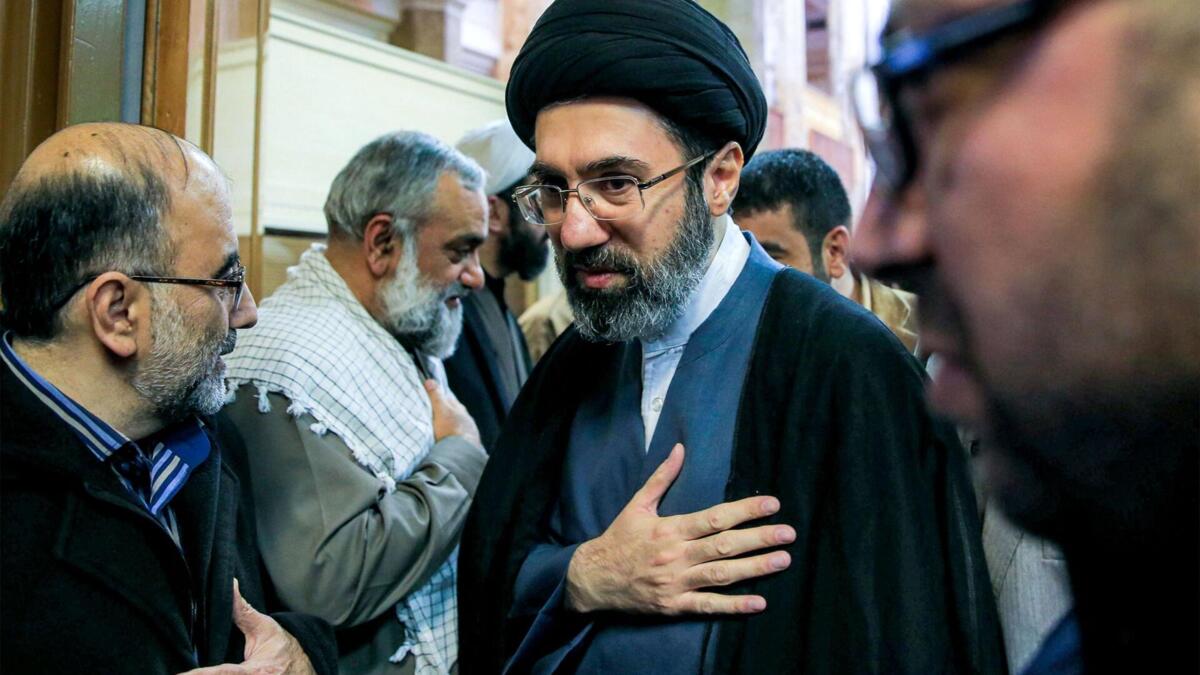
The recent death of Iran’s Supreme Leader, Ayatollah Ali Khamenei, has ushered in a new era for the Islamic Republic, with his son, Mojtaba Khamenei, swiftly assuming the mantle of power. While the transition occurred amidst heightened tensions with the United States and Israel, and following a period of domestic unrest, scrutiny is now focusing on the vast, and largely concealed, financial empire allegedly built by the new Supreme Leader. Reports suggest a network of overseas properties, investments, and bank accounts, raising questions about the source of this wealth and its implications for Iran’s future trajectory.
Mojtaba Khamenei, 56, has long been considered a potential successor to his father, but his ascent comes at a particularly volatile moment. The opening days of the U.S.-Israel onslaught on Iran, as described by Bloomberg, saw the death of Ayatollah Khamenei, alongside family members, dramatically accelerating the succession process. This occurred against a backdrop of the deadliest protests Iran has experienced in decades, fueled by economic hardship and social grievances. The new Supreme Leader now faces the daunting task of navigating these internal challenges while confronting external pressures from adversaries like the United States and Israel.
Investigations, notably a year-long probe by Bloomberg, reveal a significant overseas real estate network directed by Mojtaba Khamenei through intermediaries. This network, built over at least a decade, appears to have been funded, in part, by the sale of Iranian petroleum. The scale of these holdings is substantial, with properties in London, Dubai, Frankfurt, and Mallorca, among other locations. The estimated value of luxury real estate in the United Kingdom alone is reported to be around €116 million, according to sources who requested anonymity, fearing retribution. This accumulation of wealth stands in stark contrast to the economic struggles faced by many Iranians.
A Discreet Empire: Properties and Intermediaries
The properties linked to Mojtaba Khamenei are not registered in his name, but rather through a network of shell companies and intermediaries. A key figure in this network is Ali Ansari, an Iranian banker identified as having facilitated many of the transactions. Ansari was sanctioned by the United Kingdom in October 2023, over suspicions of funding the Islamic Revolutionary Guard Corps (IRGC), a powerful branch of the Iranian armed forces that directly answers to the Supreme Leader. Iran International reported on this connection, highlighting the opaque nature of the financial dealings.
Among the properties identified are several luxury homes on “Billionaire’s Row” – The Bishops Avenue – in north London. These mansions, often unoccupied, are guarded by private security. Notably, two of these properties in Kensington offer a direct view of the Israeli embassy, located approximately 50 meters away. Further assets include a mansion in Dubai, often referred to as the “Beverly Hills of Dubai,” and holdings in hotels across Europe, including properties in Frankfurt and Mallorca. The Bloomberg investigation details how this network stretches from Tehran to Dubai and Frankfurt, demonstrating the breadth of Khamenei’s financial reach.
“The Power Behind the Vestments”
Mojtaba Khamenei’s influence extends beyond his financial holdings. Born in 1969, during the reign of the Shah, he has operated largely behind the scenes, never holding a formal government position or delivering public speeches. However, documents from the U.S. State Department, published by WikiLeaks in the late 2000s, reportedly described him as “the power behind the vestes” – a key influencer operating through his father. These documents suggested he was a staunch guardian of his father’s interests, even allegedly monitoring his phone calls. Bloomberg details this history, painting a picture of a man who has long wielded significant, albeit unseen, power.
By 2008, he was already viewed as a “capable and energetic leader and manager” by those close to his father, positioning him as a potential successor. Reports from within Iran suggest a more hardline stance, with some attributing him to the violence during recent protests. His role in suppressing dissent and consolidating power remains a subject of intense speculation, particularly as he navigates the challenges of leading a nation grappling with economic hardship and political instability.
The Impact of the Recent Conflict
The recent conflict with the United States and Israel has significantly altered the political landscape in Iran. The death of Ayatollah Ali Khamenei and the subsequent injuries sustained by Mojtaba Khamenei – reportedly to his legs and arm – during the initial attack, have accelerated his ascension to power. While his current condition and whereabouts remain largely unknown, Yousef Pezeshkian, son of the Iranian president, stated that he is “safe and sound.” This lack of transparency surrounding his health and location only adds to the uncertainty surrounding his leadership.
The timing of this transition is critical. Iran is facing mounting economic sanctions, widespread social unrest, and escalating regional tensions. The new Supreme Leader must address these challenges while simultaneously navigating the complex political dynamics within Iran and the broader Middle East. The extent to which his personal wealth and financial network will influence his decision-making remains to be seen.
Implications for Iran and the Region
The revelation of Mojtaba Khamenei’s extensive financial holdings raises serious questions about corruption and the concentration of wealth within the Iranian elite. This disparity between the opulent lifestyles of those in power and the economic struggles of ordinary Iranians could further fuel social unrest and undermine the legitimacy of the regime. The allegations of illicit financial activity similarly have implications for Iran’s international relations, potentially leading to further sanctions and diplomatic isolation.
the close ties between Khamenei’s network and the IRGC, as evidenced by the sanctions against Ali Ansari, suggest a potential for the misuse of funds to support destabilizing activities in the region. The IRGC has been accused of supporting proxy groups and engaging in terrorist activities, and the flow of funds through Khamenei’s network could exacerbate these concerns. The international community will be closely watching how the new Supreme Leader manages these challenges and whether he takes steps to address the concerns surrounding his financial dealings.
The situation remains fluid, and the full extent of Mojtaba Khamenei’s influence and financial empire is still being uncovered. As he consolidates his power, the world will be watching to see how he navigates the complex challenges facing Iran and the region. The coming months will be crucial in determining the future of Iran and its role in the global arena.
The next significant development to watch for will be any public appearance or official statement from Mojtaba Khamenei, which would provide further insight into his leadership style and policy priorities. Stay tuned to World Today Journal for continued coverage of this developing story.
What are your thoughts on the new leadership in Iran? Share your comments below and share this article with your network.
Keep reading