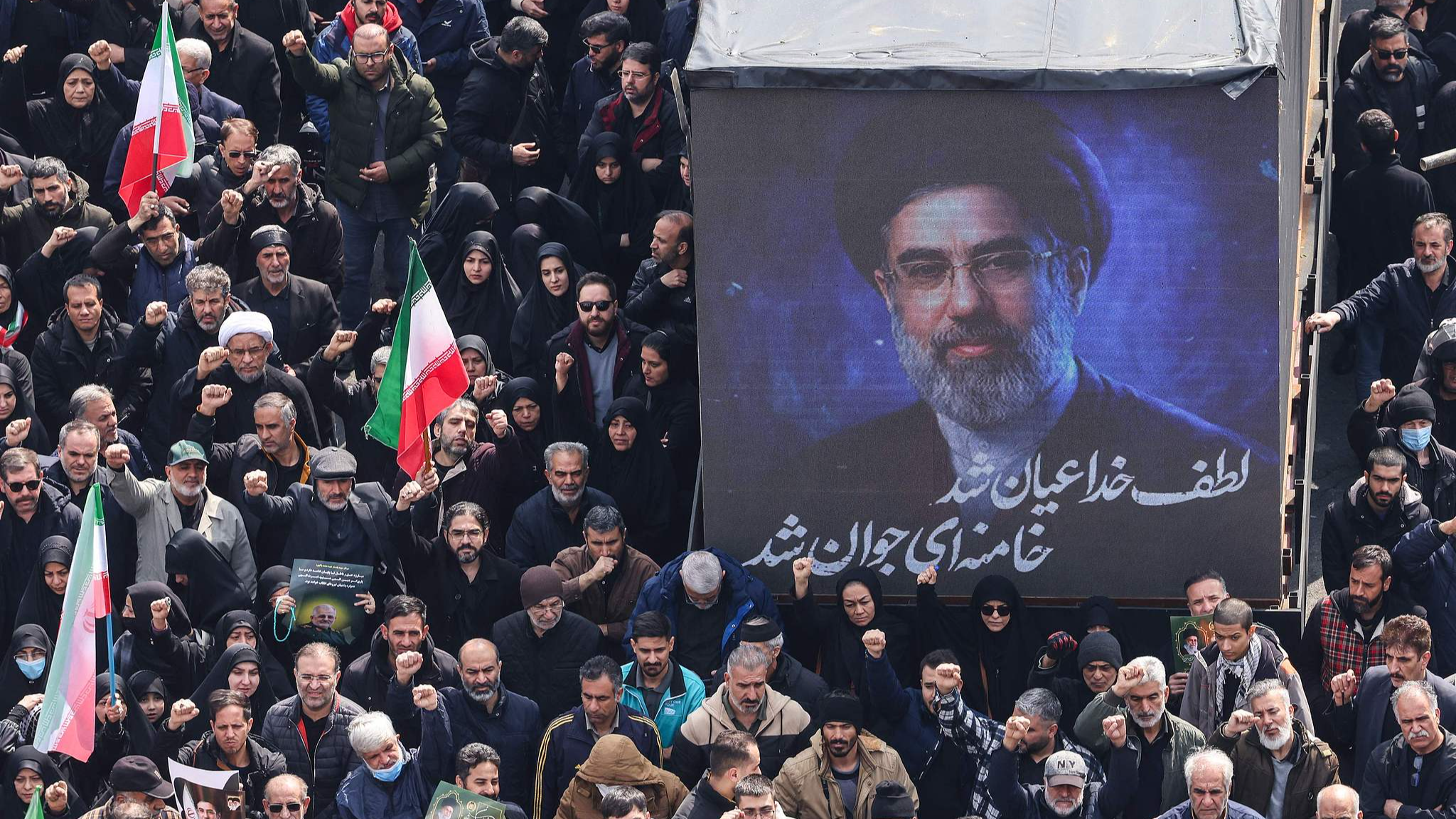
The geopolitical landscape of the Middle East shifted dramatically in late February with the assassination of Iran’s Supreme Leader, Ali Khamenei, and the subsequent appointment of his son, Mujtaba Khamenei. Now, the new Supreme Leader has issued a stark warning, vowing to continue attacks on US military bases in the region and maintain a firm stance on the closure of the vital Strait of Hormuz. This escalation of rhetoric comes as the conflict initiated on February 28 continues to disrupt global oil markets and raise concerns about wider regional instability. The situation demands careful monitoring as it unfolds, with potential ramifications for international security and global energy supplies.
Mujtaba Khamenei’s first public message since assuming office, broadcast on Iranian state television, signals a continuation of the aggressive policies pursued under his father’s leadership. He accused the United States and Israel of waging war against Iran and asserted that the closure of the Strait of Hormuz – a critical waterway for global oil transport – would remain in effect until that conflict ceases. While acknowledging the possibility of altering this policy based on “interests,” his initial statement leaves little room for immediate de-escalation. This firm position underscores Iran’s defiance in the face of international pressure and its commitment to challenging perceived adversaries.
The new Supreme Leader’s address also included a call for the disruption of US military presence in neighboring countries, alleging that these bases are used to harm Iranian citizens. He specifically urged these nations to close these facilities, framing US security assurances as “lies.” This rhetoric is likely to further strain relations between Iran and countries hosting US forces, potentially exacerbating regional tensions. Khamenei also expressed gratitude for the support of Lebanon’s Hezbollah and the “resistance front in Iraq,” highlighting Iran’s network of regional allies and its commitment to supporting groups aligned against its adversaries. He further threatened to demand compensation for war damages, potentially seizing assets if demands are not met.
The Assassination and Succession
The current crisis was triggered by the assassination of Ali Khamenei on February 28, an event attributed to a joint US-Israeli operation, though official confirmation from either nation remains elusive. The swift appointment of Mujtaba Khamenei, facilitated by a vote of the Assembly of Experts, has raised questions about the future direction of Iran’s policies. The Assembly of Experts, a body of clerics responsible for selecting the Supreme Leader, confirmed his appointment in a manner mirroring public dissemination, suggesting a desire for transparency, though some analysts suggest it was a calculated move to solidify legitimacy. Mujtaba Khamenei, previously seen as a key gatekeeper to his father, now inherits the immense power and responsibility of leading the Islamic Republic.
Impact on Global Oil Markets and Shipping
The conflict’s most immediate and visible impact has been on the global oil market. The International Energy Agency (IEA) has described the situation as causing the “largest disruption in history” to oil supplies. According to the IEA’s March 2026 report, the conflict has already affected approximately 7.5% of global supplies, with an estimated reduction of 8 million barrels per day this month, totaling around 250 million barrels. Brent crude prices surged back above $100 per barrel on Thursday, March 12, 2026, following attacks on tankers in Iraqi territorial waters and the evacuation of a major export terminal in Oman.
The closure, or near-closure, of the Strait of Hormuz – through which approximately 20 million barrels of crude and products passed in 2025 – is a particularly significant concern. Flows through the strait have reportedly collapsed by more than 90%, forcing regional producers, including Saudi Arabia and the United Arab Emirates, to seek alternative export routes. Despite these efforts, production has been curtailed by a combined 10 million barrels per day. In response to the crisis, IEA member states agreed on Wednesday, March 11, 2026, to withdraw an unprecedented 400 million barrels from emergency reserves in an attempt to mitigate the market impact. However, the IEA also noted that high prices, flight cancellations, and broader economic uncertainty have slowed global consumption growth to 640,000 barrels per day, the lowest projection since April 2025.
Regional Alliances and Potential for Escalation
Mujtaba Khamenei’s explicit endorsement of groups like Hezbollah in Lebanon and the “resistance front in Iraq” signals a continued reliance on regional proxies to advance Iran’s interests. He characterized these groups as “our best friends,” suggesting a deepening of these alliances. This support network allows Iran to project power beyond its borders without direct military intervention, complicating efforts to contain the conflict. The new Supreme Leader’s rhetoric regarding the “Zionist entity” also indicates a continued commitment to opposing Israel, a key element of Iran’s foreign policy.
The situation is further complicated by Iran’s allegations regarding the presence of US military and financial bases in neighboring countries. Khamenei accused these nations of allowing their territory to be used for aggression against Iran and urged them to close these facilities. This claim, while not independently verified, underscores Iran’s perception of encirclement and its determination to challenge US influence in the region. Gulf states have consistently maintained that they do not permit their territory to be used for military strikes against Iran, a position that underscores the delicate balancing act they face in navigating the escalating tensions.
The Threat to Maritime Security
The closure of the Strait of Hormuz represents a significant threat to global maritime security. This narrow waterway is a chokepoint for oil tankers and other commercial vessels, and its disruption has far-reaching consequences for international trade. The potential for further attacks on shipping in the Gulf region remains high, raising the risk of a broader conflict involving multiple actors. Naval forces from the United States and its allies have increased their presence in the area to deter aggression and protect vital shipping lanes, but the situation remains volatile.
The economic consequences of prolonged disruption to oil supplies are substantial. Higher energy prices contribute to inflation, slow economic growth, and exacerbate existing geopolitical tensions. The IEA’s assessment of a 25% slowdown in global consumption growth reflects the impact of these factors, highlighting the interconnectedness of the global economy and the vulnerability of energy markets to geopolitical shocks.
Looking Ahead
The coming weeks will be critical in determining the trajectory of this conflict. The international community is closely monitoring Iran’s actions and seeking diplomatic solutions to de-escalate tensions. However, the firm stance adopted by Mujtaba Khamenei suggests that a swift resolution is unlikely. The potential for miscalculation and unintended escalation remains high, particularly given the complex web of alliances and rivalries in the region. The next key development to watch will be Iran’s response to any potential diplomatic overtures and its continued actions regarding the Strait of Hormuz.
The situation remains fluid and unpredictable. Continued monitoring of developments in the region, coupled with a commitment to diplomatic engagement, will be essential to prevent further escalation and mitigate the risks to global security and economic stability. The international community must prioritize efforts to de-escalate tensions and find a peaceful resolution to this increasingly dangerous crisis.
Key Takeaways:
- Mujtaba Khamenei has vowed to continue attacks on US bases and maintain the closure of the Strait of Hormuz.
- The conflict has caused significant disruption to global oil markets, with prices surging and supplies dwindling.
- Iran’s reliance on regional proxies, such as Hezbollah and groups in Iraq, complicates efforts to contain the conflict.
- The closure of the Strait of Hormuz poses a serious threat to global maritime security and international trade.
We will continue to provide updates on this developing story as new information becomes available. Please share your thoughts and perspectives in the comments below.
Related reading