
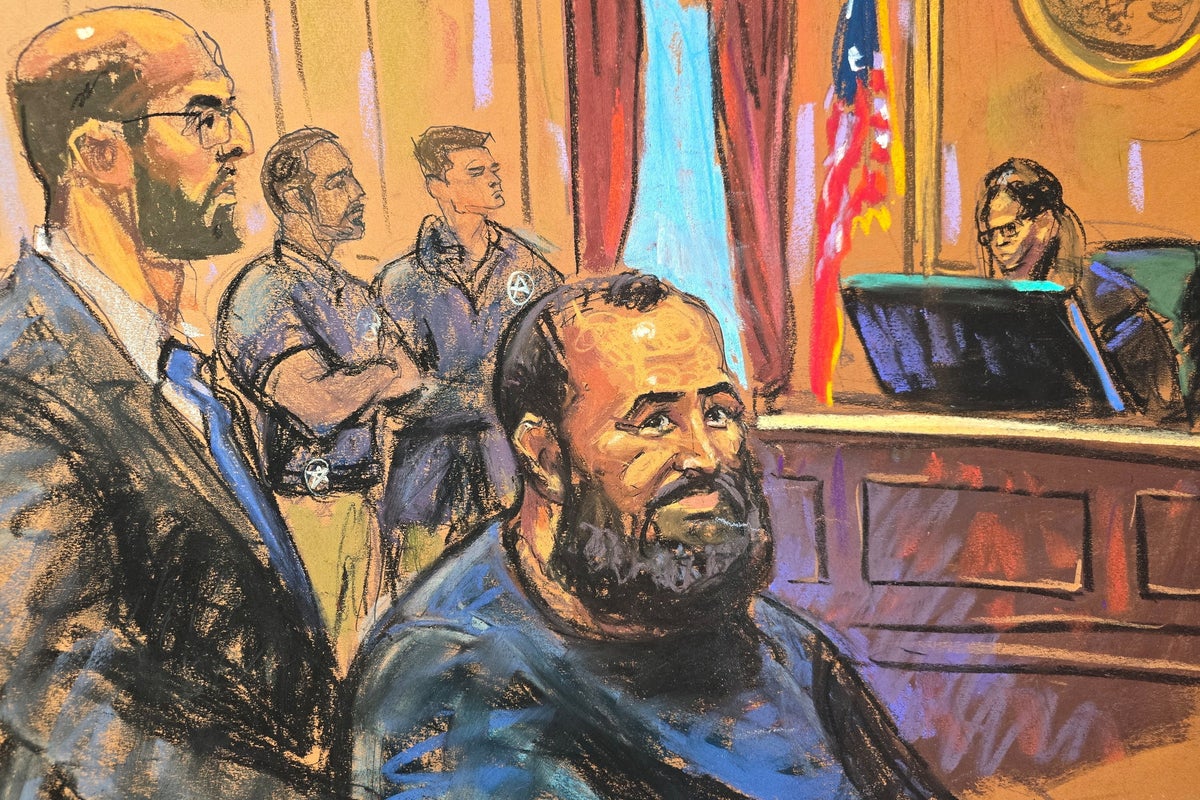
A plot to target Jewish institutions in the United States has been thwarted following the arrest of an Iraqi national who, according to federal prosecutors, attempted to recruit an undercover operative to carry out attacks. Mohammad Baqer Saad Dawood Al-Saadi now faces severe federal charges after allegedly coordinating plans to strike a New York synagogue and other Jewish sites.
The case, which underscores the ongoing vigilance of U.S. Counterterrorism efforts, centers on a sophisticated sting operation. Prosecutors allege that Al-Saadi believed he was communicating with a like-minded recruit, when in reality, he was providing incriminating details and instructions to an undercover FBI officer. The Mohammad Baqer Saad Dawood Al-Saadi synagogue plot highlights the persistent threat of foreign-linked operatives attempting to incite violence on American soil.
During a recent court appearance in the Southern District of New York, the defendant drew attention not only for the gravity of the charges but for his demeanor. Video footage from the proceedings showed Al-Saadi smiling during the hearing, a detail that has sparked significant discussion regarding the nature of the accused’s attitude toward the allegations of plotting mass violence.
The Undercover Operation and Targeted Sites
The investigation into Al-Saadi began as part of a broader effort to monitor individuals linked to foreign terrorist organizations. According to court documents, Al-Saadi engaged in detailed discussions with an undercover FBI agent, whom he believed was a potential collaborator. During these exchanges, Al-Saadi reportedly expressed a desire to target Jewish populations and specifically identified synagogues in New York as viable targets for attack.
The recruitment process involved discussing the logistics of the attacks, including the selection of targets and the methods to be used. The undercover operative worked to establish trust with Al-Saadi, who allegedly viewed the agent as a tool for executing his vision of violence. This “sting” approach is a common tactic used by federal law enforcement to gather admissible evidence of intent and conspiracy before a plot can move from the planning stage to execution.
Federal authorities emphasize that the intervention prevented a potentially catastrophic event. By embedding an officer within the communication chain, the FBI was able to document Al-Saadi’s intent in real-time, ensuring that the plot was neutralized before any weapons were procured or specific timelines for the attacks were finalized.
Legal Charges and the Role of Foreign Influence
Al-Saadi has been charged with conspiracy to provide material support to a foreign terrorist organization. This specific charge is often utilized in cases where individuals are suspected of acting on behalf of, or in alignment with, groups designated by the U.S. Government as terrorist entities. Prosecutors have pointed toward connections with the Islamic Revolutionary Guard Corps-Quds Force (IRGC-QF), an arm of the Iranian military known for orchestrating proxy conflicts and asymmetric warfare globally.

The U.S. Department of Justice typically pursues these charges because they allow law enforcement to intervene based on the act of providing support—whether that be funding, personnel, or tactical planning—rather than waiting for a violent act to occur. In Al-Saadi’s case, the attempt to recruit an operative to carry out killings constitutes “material support” under federal law.
The involvement of the IRGC-QF is a critical component of the investigation. The Quds Force has been sanctioned by the U.S. Treasury and designated as a foreign terrorist organization due to its history of supporting militant groups and attempting to destabilize regional rivals. The allegation that Al-Saadi was acting as a conduit for such interests elevates the case from a domestic hate crime to a matter of national security and international espionage.
Key Takeaways: The Al-Saadi Case
- The Accused: Mohammad Baqer Saad Dawood Al-Saadi, an Iraqi national.
- The Plot: Attempted recruitment of an undercover FBI agent to attack a New York synagogue and other Jewish sites.
- The Charge: Conspiracy to provide material support to a foreign terrorist organization.
- The Connection: Alleged ties to the IRGC-Quds Force, an Iranian-backed entity.
- The Outcome: The plot was neutralized via a federal sting operation before any physical attacks took place.
Analyzing the Court Appearance and Defendant Demeanor
The visual record of Al-Saadi’s appearance in court has become a focal point of the narrative surrounding the case. While defendants are entitled to a presumption of innocence, the act of smiling while being accused of plotting a massacre is often interpreted by the public and victims’ advocates as a sign of defiance or a lack of remorse. Legal analysts note, however, that demeanor in court is rarely used as a primary piece of evidence for conviction, though it can influence sentencing if the defendant is found guilty.
The proceedings took place in the Southern District of New York (SDNY), a jurisdiction known for handling high-profile terrorism and national security cases. The court’s focus remains on the evidentiary trail—the recorded conversations, encrypted messages, and the testimony of the undercover officer—rather than the defendant’s facial expressions. Still, the contrast between the horror of the alleged plot and Al-Saadi’s apparent composure has intensified the scrutiny of the case.
Broader Implications for National Security
This case is not an isolated incident but part of a documented trend of increased threats against Jewish institutions in the United States. The intersection of geopolitical tensions in the Middle East and domestic extremism has created a volatile environment. Law enforcement agencies, including the FBI and the Department of Homeland Security, have repeatedly warned that foreign adversaries may attempt to exploit existing social divisions within the U.S. To incite violence.

The use of “lone wolf” style recruiters, like Al-Saadi, allows foreign intelligence services to maintain plausible deniability. By encouraging individuals to act independently or in minor, disconnected cells, organizations like the IRGC-QF can attempt to sow chaos without triggering a direct state-on-state military conflict. The success of the undercover operation in this instance demonstrates the efficacy of proactive intelligence gathering.
For the Jewish community in New York and across the country, such plots reinforce the need for heightened security at synagogues and community centers. Many institutions have increased their reliance on private security and coordination with local police departments to mitigate the risk of targeted attacks.
What Happens Next in the Legal Process?
Al-Saadi remains in federal custody as the legal process unfolds. The next phase of the case will involve the discovery process, where the defense team will be granted access to the evidence gathered by the FBI, including the recordings of the conversations between Al-Saadi and the undercover agent.
If the case proceeds to trial, the prosecution will likely rely heavily on the testimony of the undercover officer and digital forensics. The defense may attempt to argue entrapment, a common strategy in sting operations, by claiming that the government induced the defendant to commit a crime he would not have otherwise pursued. However, the threshold for proving entrapment is high. the government must only prove that the defendant was “predisposed” to commit the crime.
The legal community will be watching closely to see if further co-conspirators are identified or if more links to foreign intelligence services are uncovered during the pre-trial motions. The outcome of this case will likely serve as another benchmark for how the U.S. Handles the intersection of foreign state-sponsored terrorism and domestic targets.
The next scheduled court action will involve a status conference to determine the timeline for trial or the possibility of a plea agreement. Official updates regarding the case are typically released through the U.S. Attorney’s Office for the Southern District of New York.
World Today Journal encourages readers to share this report and join the conversation in the comments section below regarding the balance between national security and civil liberties in counterterrorism operations.