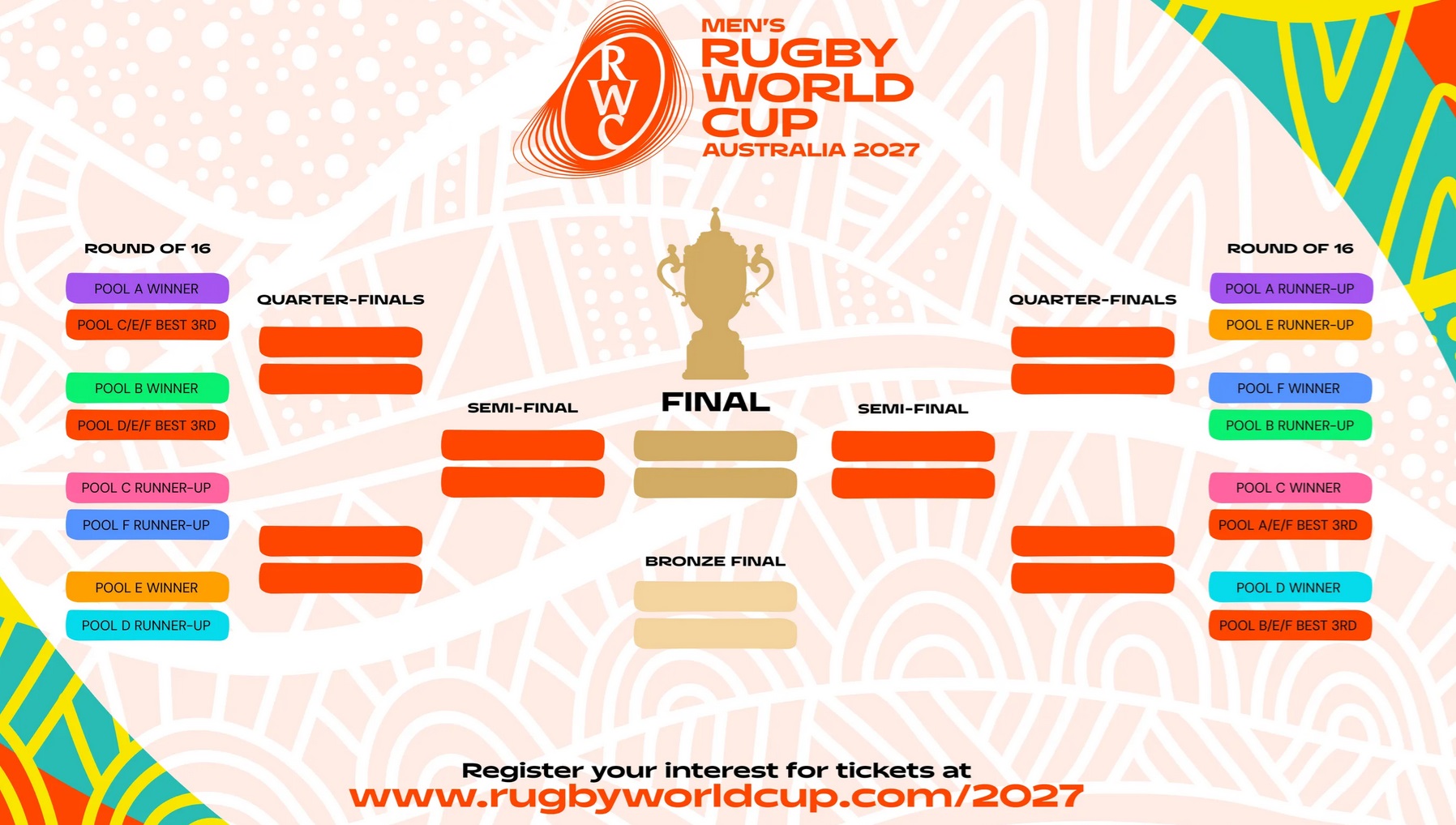
Ireland‘s Road to the 2027 Rugby World Cup: Navigating a new Tournament Landscape
The 2027 Rugby World Cup in Australia promises a thrilling, yet complex, challenge for Ireland. A meaningful shift in tournament structure – the removal of protective seeding for pool winners – dramatically alters the landscape adn demands a new strategic approach from Andy Farrell’s squad. This article breaks down what this means for Ireland’s chances, potential pathways, and what you, as a fan, need to know.
The New Format: A Double-Edged Sword
World Rugby’s decision to eliminate protective seeding is the key change. Previously, pool winners enjoyed a theoretically easier route to the semi-finals. Now,pool winners and runners-up are mixed in the Round of 16. This creates both opportunities and risks.
Here’s how it impacts Ireland:
* Pool winners: Face a runner-up in the Round of 16, but crucially avoid another pool winner until the semi-final.
* Pool runners-up: Will encounter another pool winner instantly in the Round of 16, presenting a tougher initial challenge.
This seemingly small structural change could be decisive.Landing in a challenging pool might actually benefit Ireland in the long run, offering a clearer path to the latter stages.
The Favorable Pools: E & F
Experts agree that Pools E and F present the most advantageous knockout pathways. Avoiding a clash with another top seed until the semi-finals could be game-changing for Ireland’s tournament aspirations. As one analyst noted,”The winners of Pools E and F have the most favourable knockout pathway. For Ireland, avoiding another top seed until the semi-final could be game-changing.”
Hypothetical Pool alignments
To illustrate the potential scenarios, here’s a projection of how the remaining pools could shape up:
* Pool B: New Zealand, Argentina, Japan, Uruguay
* pool C: South Africa, Scotland, Samoa, Romania
* Pool D: France, Wales, Fiji, Chile
* Pool E: England, Italy, Tonga, Namibia
* Pool F: Remaining Band 1 side, Portugal, USA, Hong Kong China
These alignments create compelling matchups – like France versus Fiji and South Africa versus Scotland – while also distributing Tier Two nations across competitive pools.
What This Means for Ireland’s Path
Ireland’s success hinges on the draw. If placed in Pool A alongside hosts Australia, they’ll likely face a third-place finisher in the Round of 16, followed by a quarter-final clash against a rugby powerhouse like South Africa or France. However,a draw into Pool E or F could significantly open the door to a semi-final appearance.
You need to understand that Ireland can no longer solely focus on conquering the quarter-finals. Winning the World Cup now requires stringing together four consecutive knockout victories – Round of 16, quarter-final, semi-final, and final. This demands unprecedented depth,composure,and consistency.
Ticketing and Travel Data for Irish Supporters
The 2027 World Cup will be hosted across seven australian cities: perth, Sydney, Melbourne, Brisbane, Adelaide, Newcastle, and Townsville. Irish fans are already making travel plans.
Here are key dates:
* Presale tickets: open in February 2026.
* General applications: Open in May 2026.
If Ireland lands in Pool A, expect a significant Irish presence in Perth and Sydney, where the Irish diaspora is strongest.
Opportunity and Jeopardy: A Final Assessment
The 2027 Rugby World Cup presents both opportunity and jeopardy for Ireland. The removal of protective seeding has raised the stakes, but the expanded format provides Farrell’s squad with a genuine chance to build knockout momentum.
Ireland’s destiny will be persistent on December 3, 2025, in Sydney, during the pool draw. For the first time,the “quarter-final curse” might not be the primary concern. Instead, the question becomes: does Ireland possess the resilience to navigate four elimination games in six weeks and finally lift the Webb Ellis Cup?
This tournament isn’t just about avoiding tough opponents; it’s about Ireland’s ability to thrive under
Keep reading