Suicide Bombing in Islamabad Signals Escalating Security Concerns in Pakistan
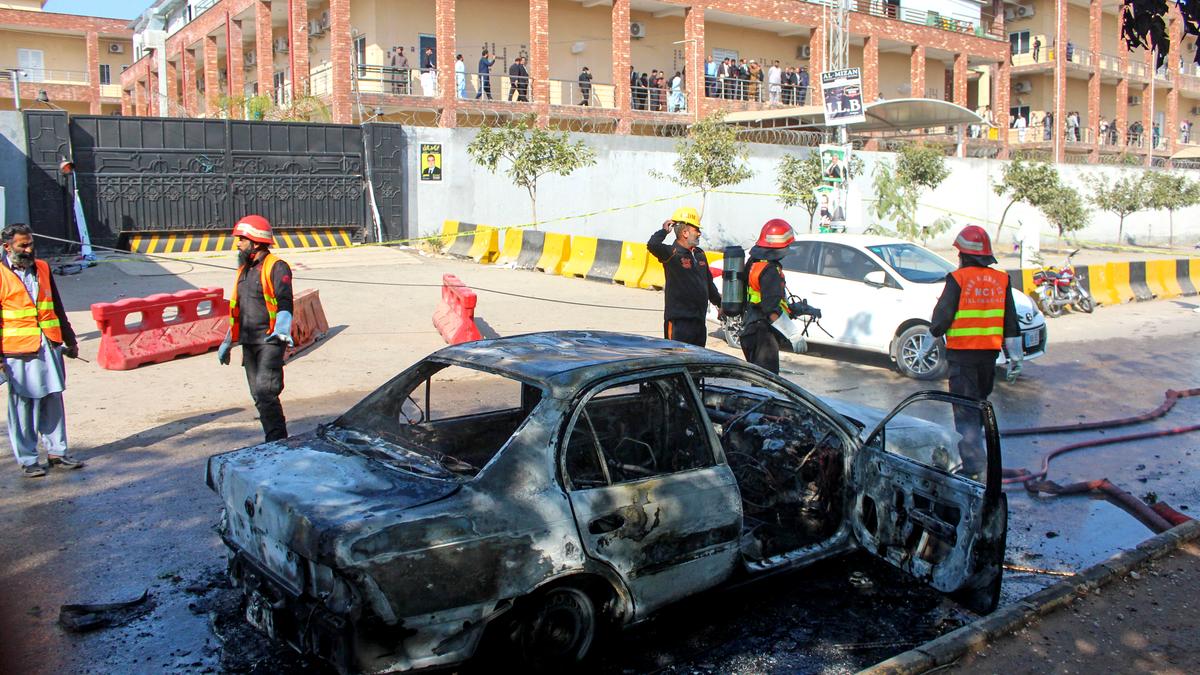
(Image: blast site in Islamabad on November 11,2025.Photo Credit: AFP)
A devastating suicide bombing rocked Islamabad, Pakistan, on Tuesday, November 11, 2025, claiming the lives of at least 12 people and injuring 27 others. This rare attack within the nationS capital marks a significant escalation in militant activity and raises serious questions about regional security. The Pakistani Taliban (TTP) has claimed duty, targeting what they deem “un-Islamic laws” enforced by the Pakistani legal system.
This incident isn’t isolated.it comes less than 24 hours after a car explosion in Delhi, India, killed at least eight, and amidst a broader resurgence of violence within Pakistan, particularly along its border with Afghanistan. Let’s break down the key aspects of this developing situation.
The attack & Immediate Aftermath
The blast occurred near district court buildings, causing widespread panic and leaving a scene of destruction – shattered glass and charred vehicles. Witnesses described a “massive blast” and chaotic scenes as people fled for safety.
* Lawyers and officials were the primary targets, according to the TTP’s statement.
* Paramilitary troops quickly cordoned off the area, initiating a thorough investigation.
* the attack site is located in a sensitive area, housing not only court buildings but also several government offices.
Interior Minister Mohsin Naqvi confirmed the casualty count and detailed that the bomber detonated explosives near a police vehicle. This suggests a purposeful attempt to maximize impact and target security forces. The last suicide attack in Islamabad occurred in December 2022, highlighting the concerning shift in the security landscape.
TTP’s Motives and Escalating Threats
The TTP’s claim of responsibility explicitly links the attack to their demand for the implementation of Islamic law in Pakistan. This isn’t a new demand, but the brazenness of targeting the capital suggests a heightened willingness to challenge the state.
Their statement threatens further attacks until their demands are met, indicating a potential for continued instability. This attack underscores the complex interplay between religious extremism, political grievances, and regional geopolitics within Pakistan.
the Afghanistan Connection & Cross-Border Tensions
Pakistan’s government is increasingly pointing fingers at Afghanistan, alleging that militant groups, including the TTP, are being sheltered on Afghan soil. This accusation is not new, but recent events have significantly heightened tensions.
* A recent clash between Pakistani and Afghan forces in October resulted in over 70 deaths on both sides, marking the worst fighting in years.
* Pakistani security forces are currently engaged in battling militants in the northwest Khyber Pakhtunkhwa province, near the Afghan border.
* Minister Naqvi directly implicated an Afghan national in a separate attack in Wana, further fueling accusations of Afghan involvement.
Negotiations for a ceasefire between the two countries have stalled,with both sides blaming the other for the impasse. Defense Minister Khawaja Asif has stated that the Islamabad bombing renders further negotiations with the current Afghan government “futile.” This suggests a hardening of Pakistan’s stance and a potential for further escalation.
Regional Implications & The Path Forward
The coordinated nature of these attacks – the bombing in Islamabad following the Delhi explosion – raises concerns about a potential regional destabilization effort. While a direct link hasn’t been established, the timing is undeniably concerning.
Pakistan faces a critical juncture. Addressing the resurgence of militant violence requires a multi-pronged approach:
- strengthened border Security: Enhanced surveillance and control along the porous border with Afghanistan are crucial.
- Counter-Terrorism Operations: Continued and intensified operations against militant groups within Pakistan are necessary.
- Diplomatic Pressure: Pakistan must continue to exert diplomatic pressure on Afghanistan to address the issue of militant safe havens.
- Internal Reforms: Addressing the root causes of extremism through social and economic reforms is vital for long-term stability.
The Islamabad bombing serves as a stark “wake-up call,” as stated by Pakistan’s Defense Minister. The country’s ability to effectively address these escalating security challenges will have significant implications not only for its own stability but also for the broader regional landscape. The situation demands a swift, decisive, and comprehensive response.
**Published – November 11, 2025 07:15
Keep reading