
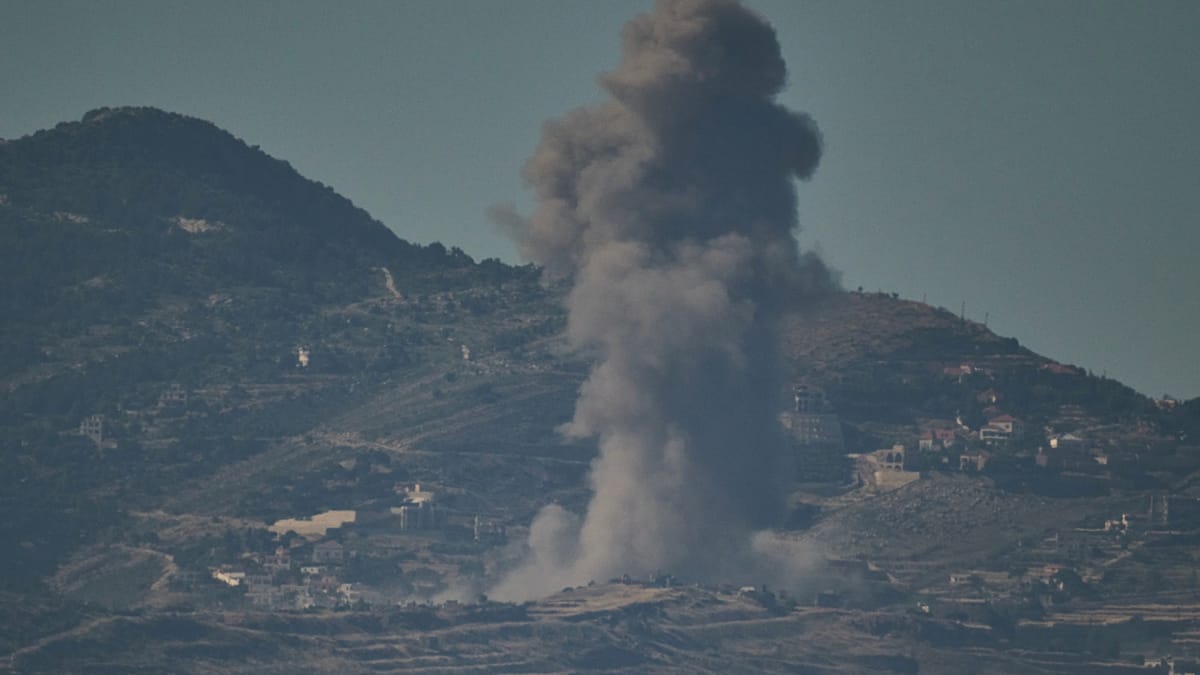
Lebanese health officials reported that at least five people were killed in a wave of fresh Israeli airstrikes on Wednesday, a development occurring less than 24 hours after U.S. and international officials signaled that a ceasefire agreement between Israel and the militant group Hezbollah had been reached. The strikes, which hit various locations across Lebanon, have introduced significant volatility into a fragile diplomatic landscape that many hoped would lead to a cessation of hostilities.
According to the Lebanese Ministry of Public Health, the casualties occurred as Israeli military operations continued despite the public announcement of an accord. The Israeli military stated that its forces were responding to threats, noting that the strikes targeted specific militant infrastructure that it claimed posed an immediate risk to its personnel and territory. This escalation highlights the precarious nature of the current regional security environment, where tactical military maneuvers continue to challenge high-level diplomatic commitments.
The Diplomatic Context: A Fragile Ceasefire
The conflict between Israel and Hezbollah has seen intense periods of escalation throughout 2024, leading to extensive displacement and infrastructure damage in southern Lebanon and northern Israel. On Tuesday, U.S. President Joe Biden announced that a ceasefire deal had been reached, intended to halt the fighting and allow civilians to return to their homes on both sides of the border. This official statement from the White House underscored that the agreement was mediated by the United States and France, aiming to provide a framework for long-term stability in the region.

However, the transition from diplomatic agreement to operational reality has proven difficult. Military analysts note that in high-intensity conflicts involving non-state actors like Hezbollah, communication delays and localized tactical decisions often lead to friction during the initial hours of a truce. The Israeli government, led by Prime Minister Benjamin Netanyahu, has maintained that it reserves the right to act in self-defense should any party violate the terms of the agreement, a position that remains a central point of contention for international observers monitoring the situation.
Regional Impact and Humanitarian Toll
The human cost of the ongoing violence remains a primary concern for international aid organizations. Since the intensification of the conflict in September, thousands of individuals have been displaced, and medical facilities in Lebanon have reported being stretched to their limits. The United Nations has repeatedly called for a durable end to the hostilities, citing the severe impact on children and vulnerable populations who lack access to basic necessities due to the destruction of supply routes.

Economic experts warn that the continued instability poses a significant threat to the broader Middle East economy. The disruption of trade routes and the uncertainty surrounding regional security have already affected investor confidence in neighboring markets. As the situation remains fluid, the primary challenge for the international community is ensuring that the ceasefire mechanisms—which include monitoring by international forces—are empowered to enforce compliance and prevent further cycles of violence that could draw other regional powers into the fray.
What Happens Next: Monitoring the Truce
The immediate focus for diplomats and military planners is the stabilization of the ceasefire terms. The agreement stipulates that the Lebanese Armed Forces will be responsible for security in the southern region of the country, acting as a buffer to ensure that militant groups are not operating near the Israeli border. Officials from the U.S. State Department have indicated that they will be working closely with both the Lebanese government and the Israeli cabinet to address any violations of the agreement in real-time.
Observers are looking toward the next scheduled update from the U.S.-led monitoring committee, which is tasked with investigating reports of ceasefire breaches. For residents in the affected areas, the near-term future remains uncertain, as the history of such agreements in the region shows that implementation is often subject to local tensions and the willingness of all parties to adhere to the agreed-upon protocols. The international community continues to monitor these developments closely, with further diplomatic discussions expected in the coming days as the situation on the ground evolves.
We encourage our readers to share their thoughts on these developments in the comments section below or join the conversation on our social media platforms to stay informed as more verified updates become available.