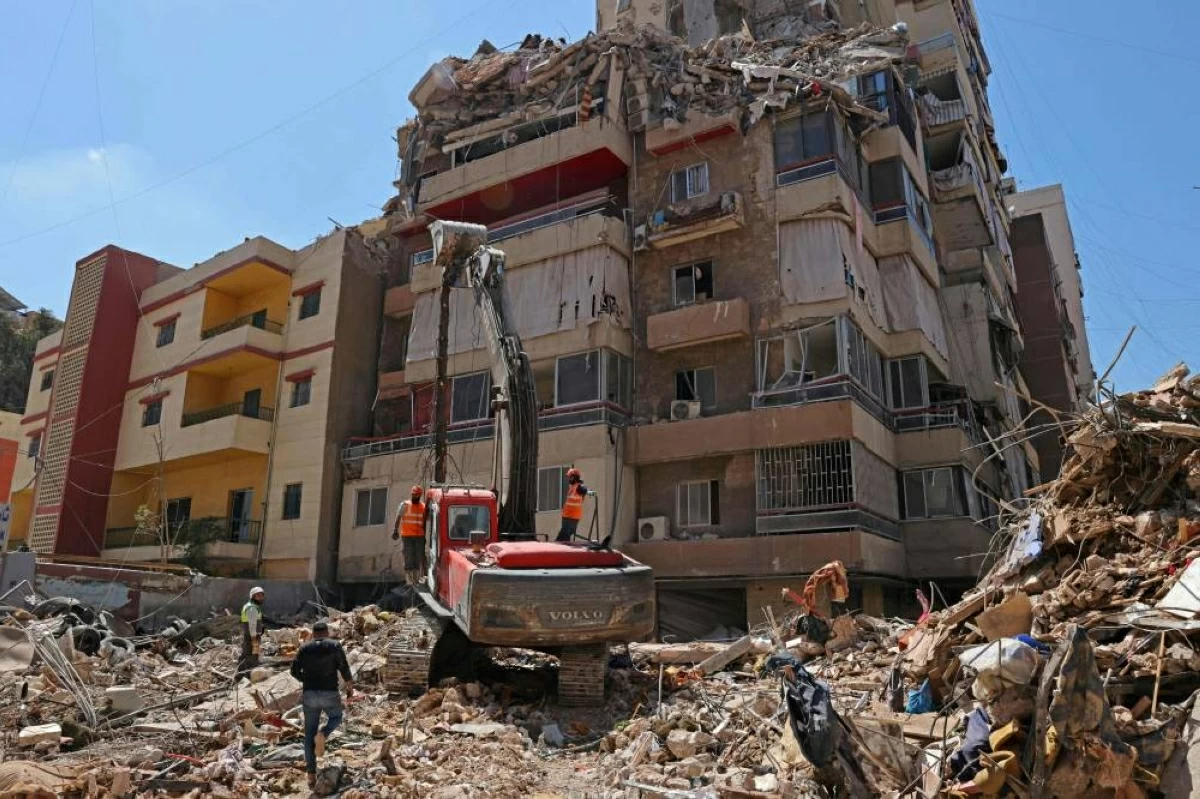
The precarious stability of southern Lebanon has been further undermined this week as the Israeli military issued new forced displacement orders and carried out strikes, challenging a United States-brokered ceasefire that has been in place since April 17.
The recent escalation suggests a deepening volatility in the region, as Israel continues to target areas in southern Lebanon despite the truce intended to halt hostilities between the Israeli military and the armed group Hezbollah. The developments have raised urgent questions regarding the viability of the current diplomatic framework and the safety of civilians caught in the crossfire.
These movements come amid a complex security environment where military leadership in Israel has signaled a willingness to operate beyond previously established boundaries to eliminate perceived threats, even as domestic political pressure mounts over the handling of the northern front.
Forced Displacement Orders and the Nabatieh District
On Sunday, May 3, the Israeli military intensified its pressure on civilian populations in southern Lebanon by issuing new evacuation warnings. These orders target residents in more than 10 villages and towns, with a specific focus on areas within the district of Nabatieh that lie north of the Litani River.
The directives were communicated via social media by Avichay Adraee, the Israeli military’s Arabic-language spokesman. In a post on X, Adraee instructed residents to leave their homes immediately, stating, “For your safety, you must evacuate your homes immediately and move away from the villages and towns by at least 1,000 metres [0.6 miles] into open areas.”

The impact of these orders extends beyond the specific towns named in the warnings. According to reports from Lebanon’s state-run National News Agency, the Israeli military has conducted a series of strikes across southern Lebanon, including targets in towns that were not explicitly mentioned in the displacement orders. This pattern of activity indicates that the military operations are not limited to the immediate zones of evacuation, creating a wider atmosphere of instability for the local population.
The displacement of civilians in these regions is particularly significant because some of the targeted areas lie beyond Israel’s current zone of occupation, signaling a broader operational reach into Lebanese territory.
The “Yellow Line” and Military Escalation
The current military posture is underscored by a shift in the operational rhetoric from the Israeli high command. Eyal Zamir, Israel’s military chief of staff, has explicitly threatened to conduct operations “beyond the Yellow Line”—the demarcation marking the area of Israeli control.
During a visit to Israeli troops, Zamir emphasized that the military would not be constrained by these boundaries if it deemed necessary to protect its interests. “Any threat, anywhere, against our communities or our forces – including beyond the Yellow Line and north of the Litani – will be eliminated,” Zamir stated, as reported by Al Jazeera.
The Litani River has long served as a critical geopolitical and military marker in the conflict between Israel, and Hezbollah. By explicitly stating that targets north of the river are subject to elimination, the Israeli military is signaling a willingness to disregard the traditional buffers that have historically shaped the conflict’s geography. This approach places the ceasefire in direct tension with the military’s stated objective of eliminating threats regardless of their location.
A Fragile Truce Under Pressure
The ceasefire, brokered by the United States on April 17, was designed to provide a sustainable halt to the violence. However, the continued strikes and the issuance of evacuation orders suggest that the agreement is struggling to hold. The fragility of this truce is not only a result of military frictions but is also tied to the internal political dynamics within Israel.
Analysis suggests that the handling of the fight against Hezbollah is becoming a point of political contention. According to The Times of Israel, anger over how the conflict in the north has been managed could potentially put Prime Minister Benjamin Netanyahu’s support in northern Israel at risk. This domestic pressure may be influencing the military’s aggressive posture, as the government seeks to demonstrate a decisive capability to secure the border and protect northern communities.
For the residents of southern Lebanon, the gap between the diplomatic language of a “ceasefire” and the reality of airstrikes and displacement orders has created a state of perpetual uncertainty. The insistence on 1,000-meter evacuation zones into “open areas” further complicates the humanitarian situation, as civilians are forced to abandon their homes with little guarantee of safety or a clear timeline for return.
As the international community monitors the situation, the focus remains on whether the United States can reinforce the April 17 agreement or if the “Yellow Line” will effectively cease to exist as a boundary for military engagement.
The next critical checkpoint for the region will be the official response from the Lebanese government and Hezbollah regarding the breach of the ceasefire terms, as well as any further diplomatic interventions by the United States to prevent a full-scale return to hostilities.
We invite our readers to share their perspectives on the stability of the current ceasefire in the comments below.
Keep reading
- UK’s Ofgem to Charge AI Data Centers to Curb Speculative Grid Capacity Requests
- Japan’s Disaster Response Failures Exposed After Kumamoto Earthquake
- Why Nighttime Heat Is Rising Faster Than Daytime Highs in US Cities (daybreakwire.com)
- Netanyahu plays it safe in a Washington that’s cooled on Israel (archyde.com)