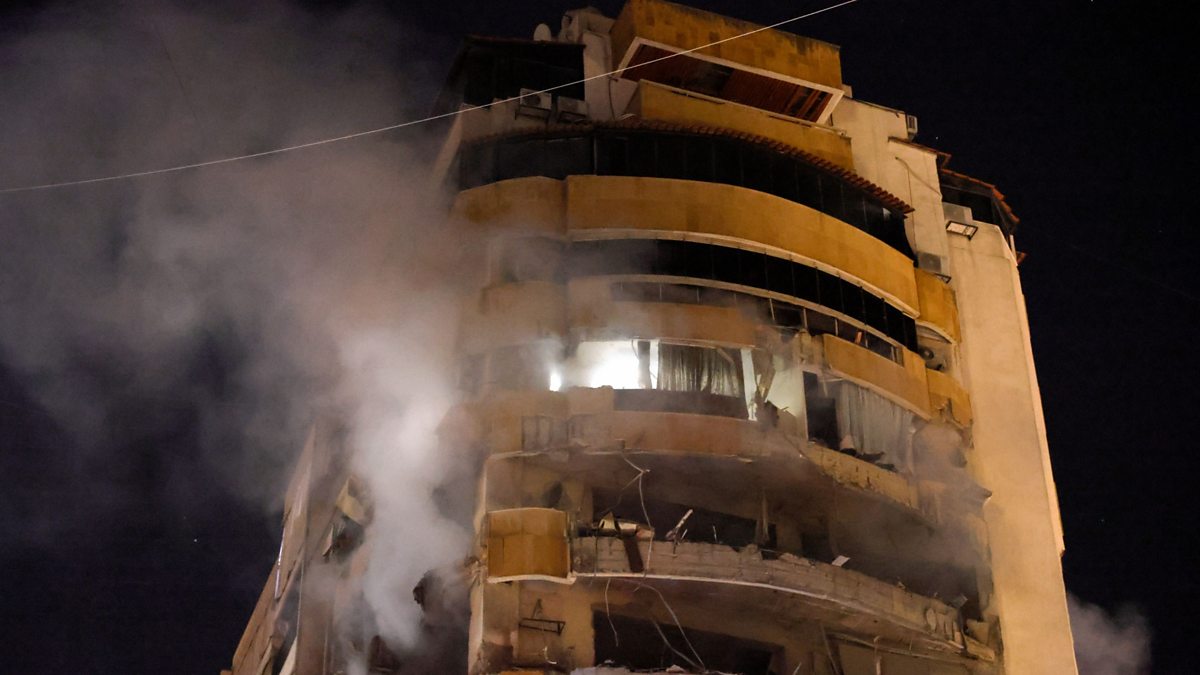
Beirut, Lebanon – Escalating tensions between Israel and Hezbollah have resulted in deadly Israeli strikes targeting central Beirut, alongside intensified fighting and mass evacuation orders in southern Lebanon. The conflict, which has been simmering for months, is rapidly intensifying, raising fears of a wider regional war. The recent strikes represent a significant escalation, extending the conflict beyond the typical border regions and directly impacting the Lebanese capital.
The situation on the ground is increasingly dire, with over a million people reportedly displaced from their homes in Lebanon since hostilities significantly increased in recent weeks, according to reports. The BBC has documented the experiences of residents in Lebanese border towns who have defied evacuation orders, expressing both defiance and apprehension about a potential prolonged Israeli occupation. The escalating violence is placing immense strain on Lebanon’s already fragile infrastructure and humanitarian resources.
Israel’s Offensive and Hezbollah’s Response
Israeli officials have stated that the recent operations are “limited” ground incursions into Lebanon, aimed at dismantling Hezbollah infrastructure and neutralizing threats. According to the BBC, the Israel Defense Forces (IDF) are pushing deeper into southern Lebanon as Hezbollah continues to launch retaliatory attacks targeting northern Israel. These attacks include rocket and drone strikes, prompting widespread disruption and fear among Israeli communities.
Hezbollah, the Iran-backed militant group and political party, has vowed to continue its attacks until Israel ceases its military operations in Gaza and withdraws from disputed territories. The group’s leadership has repeatedly warned of further escalation if its demands are not met. The conflict is deeply rooted in decades of animosity and regional power struggles, with Hezbollah playing a significant role in Lebanese politics and maintaining a substantial military arsenal.
Impact on Civilians and Humanitarian Concerns
The recent strikes in Beirut have resulted in multiple fatalities and injuries, exacerbating the already dire humanitarian situation in Lebanon. The country is grappling with a severe economic crisis, political instability, and the lingering effects of the 2020 Beirut port explosion. The renewed conflict is further straining Lebanon’s resources and hindering efforts to provide essential services to its population.
The mass displacement of civilians is creating a humanitarian crisis, with hundreds of thousands of people seeking shelter in schools, public buildings, and with relatives. Aid organizations are struggling to meet the growing needs of the displaced population, providing food, water, medical care, and shelter. The ongoing violence is also disrupting agricultural activities, raising concerns about food security in the region.
International Reactions and Diplomatic Efforts
The international community has expressed deep concern over the escalating violence and called for restraint from both sides. The United States, the European Union, and the United Nations have urged Israel and Hezbollah to de-escalate the situation and engage in diplomatic efforts to find a peaceful resolution. However, these calls have so far gone largely unheeded.
Iran, a key ally of Hezbollah, has condemned the Israeli strikes and vowed to avenge the death of its security chief, Ali Larijani, who was reportedly killed in an Israeli strike. The Washington Post reports that people in Iran are living in fear of potential strikes from both the US and Israel, as well as facing repression from the Islamic regime. This adds another layer of complexity to the regional dynamics.
Beyond Lebanon: Regional Implications
The conflict between Israel and Hezbollah has broader implications for regional stability. The escalation raises the risk of a wider conflict involving other actors, such as Syria and Iran. The conflict also has the potential to disrupt vital trade routes and energy supplies, impacting the global economy.
The situation is further complicated by the ongoing war in Gaza, which has already created a humanitarian catastrophe and heightened tensions across the Middle East. The international community is facing a growing challenge in preventing the conflict from spiraling out of control and finding a sustainable solution to the Israeli-Palestinian conflict.
Sri Lanka’s Four-Day Function Week and Other Global Developments
While the focus remains on the escalating conflict in the Middle East, other significant global events are unfolding. Sri Lanka has recently introduced a four-day work week amid ongoing fuel shortages, a measure aimed at conserving energy and easing the economic burden on citizens. Researchers in Fiji have also made a surprising discovery, finding that bull sharks exhibit social behavior and form “best friends,” challenging previous assumptions about these marine predators.
In other news, a US judge has ordered the Trump administration to reinstate the jobs of over a thousand employees of Voice of America and allow the government-funded outlet to resume global broadcasting. The world remembers Shigeaki Mori, a prominent survivor of the Hiroshima atomic bomb, whose life story serves as a poignant reminder of the devastating consequences of nuclear warfare.
Key Takeaways
- Israeli strikes on Beirut and intensified fighting in southern Lebanon mark a significant escalation in the conflict with Hezbollah.
- Over a million people have been displaced in Lebanon, creating a growing humanitarian crisis.
- International efforts to de-escalate the situation have so far been unsuccessful.
- The conflict has broader implications for regional stability and the global economy.
The situation remains fluid and unpredictable. The next key development to watch will be the outcome of ongoing diplomatic efforts, particularly any potential mediation attempts by regional or international actors. Further escalation appears likely if a ceasefire is not reached soon. We will continue to monitor the situation closely and provide updates as they become available.
Do you have thoughts on the escalating conflict? Share your perspective in the comments below, and please share this article with your networks to raise awareness of this critical situation.
Keep reading