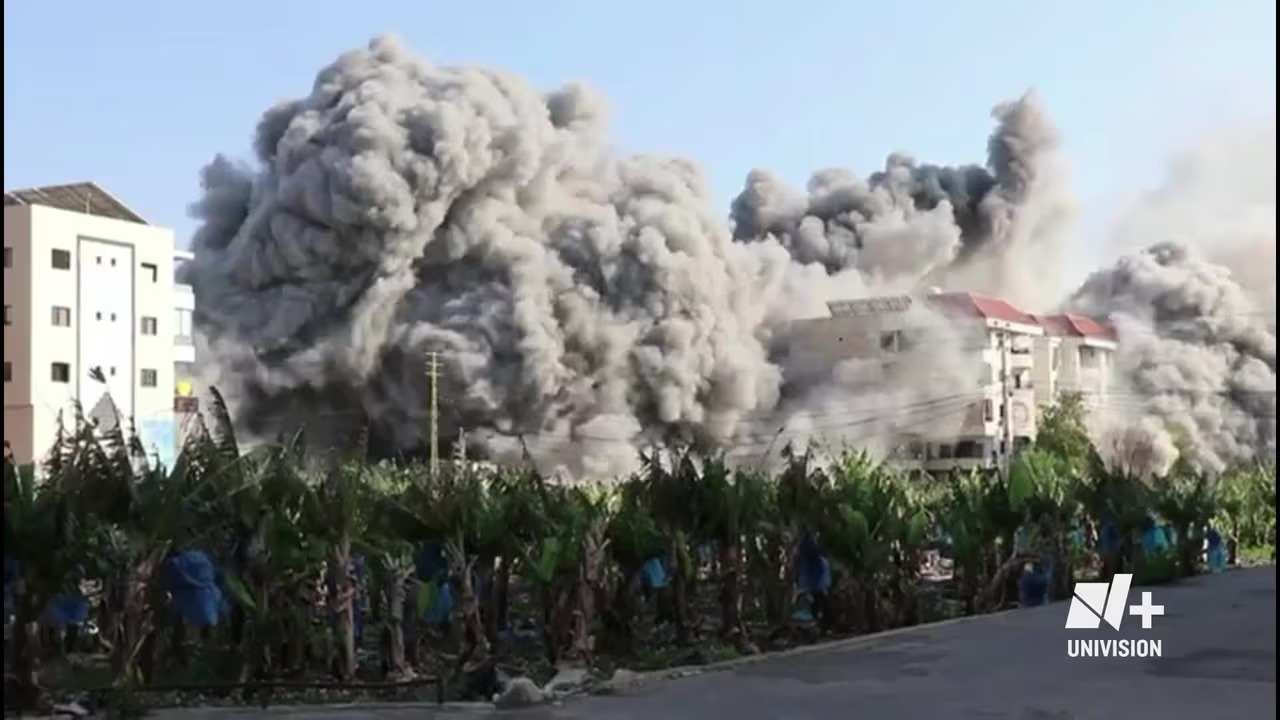
Tyre, Lebanon – A missile strike in the Lebanese city of Tyre, captured in a video released by the Agence France-Presse (AFP), underscores the escalating conflict between Israel and Hezbollah, a conflict increasingly intertwined with regional tensions stemming from events in Iran. The incident is part of a broader pattern of exchanges that have intensified in recent days, raising concerns about a potential wider conflagration. Although initial reports suggested a high number of casualties, verifying precise figures remains challenging amidst the ongoing hostilities.
The situation in southern Lebanon has turn into increasingly volatile following a series of retaliatory strikes. These actions are rooted in the broader geopolitical landscape, specifically Iran’s recent confrontations with Israel. The recent exchange of fire between the two nations, including an alleged Israeli strike on an Iranian consulate in Damascus on April 1st, has significantly heightened tensions. Hezbollah, a Lebanese Shia Islamist political party and militant group, has vowed to retaliate for the Damascus strike, leading to a surge in cross-border attacks. The current escalation represents a dangerous turn in a long-standing, often proxy, conflict between Israel, and Iran.
Escalation of Hostilities and Regional Implications
The video released by AFP depicts a direct hit on a building in Tyre, a coastal city in southern Lebanon. While the exact nature of the targeted building and the identities of those inside remain unconfirmed, the strike highlights the direct impact of the conflict on civilian areas. The exchange of fire has prompted concerns about the safety of civilians on both sides of the border. According to reports from the Lebanese Ministry of Health, approximately 300 people have been killed in Israeli bombardments this week, though independent verification of this figure is ongoing. Al Jazeera reports on the situation, framing it within the context of Israel potentially reshaping Lebanon.
The conflict is not occurring in isolation. The recent strikes on Iranian soil, including the reported attack on a petroleum depot in Tehran, as reported by Univision, demonstrate a widening scope of operations. The New Yorker describes the situation as “The Iran War Spreads to Lebanon,” highlighting the interconnectedness of these events. The United States has repeatedly warned Iran against escalating tensions in the region, and has expressed concern over Hezbollah’s activities. The potential for miscalculation and unintended consequences remains a significant risk.
Hezbollah’s Response and Israel’s Stance
Hezbollah has claimed responsibility for numerous attacks on Israeli military positions and infrastructure in recent days, stating that these actions are in response to the strike in Damascus and ongoing Israeli aggression. The group has vowed to continue its attacks until Israel ceases its operations. Israel, for its part, maintains that its actions are aimed at defending its borders and preventing Hezbollah from acquiring advanced weaponry. Israeli officials have repeatedly warned that they will not tolerate Hezbollah’s presence along the border and reserve the right to take whatever measures are necessary to ensure their security. PBS News reports that Hezbollah and Israel have reignited conflict following the strikes in Iran.
The current escalation raises questions about the potential for a full-scale war between Israel and Hezbollah. While both sides have expressed a desire to avoid a wider conflict, the risk of miscalculation and escalation remains high. The involvement of Iran adds another layer of complexity to the situation, as any direct confrontation between Israel and Iran could have devastating consequences for the region. Diplomatic efforts to de-escalate the situation are ongoing, but their success remains uncertain.
Impact on Civilians and Humanitarian Concerns
The ongoing conflict is having a devastating impact on civilians in southern Lebanon. Thousands of people have been displaced from their homes, and many have lost their livelihoods. The destruction of infrastructure, including homes, schools, and hospitals, is exacerbating the humanitarian crisis. International organizations are working to provide assistance to those affected, but access to the area remains challenging due to the ongoing hostilities. The Lebanese government has appealed for international aid to help address the growing humanitarian needs.
The situation is further complicated by the presence of unexploded ordnance, which poses a serious threat to civilians. Landmines and other explosive remnants of war are scattered throughout the region, and You’ll see concerns that they could cause further casualties. Efforts to clear these explosives are hampered by the ongoing conflict and the lack of resources. The long-term consequences of the conflict for civilians in southern Lebanon are likely to be significant.
The Role of International Actors
Several international actors are involved in efforts to de-escalate the conflict and address the humanitarian crisis. The United States has been working to mediate between Israel and Hezbollah, urging both sides to exercise restraint. The United Nations has called for a ceasefire and has deployed a peacekeeping force to southern Lebanon to monitor the situation. However, the effectiveness of these efforts has been limited by the deep-seated mistrust between the parties and the complex geopolitical dynamics at play.
Other countries in the region, including Egypt and Qatar, have similarly been involved in mediation efforts. These countries have close ties to both Israel and Hezbollah and may be able to play a constructive role in finding a peaceful resolution to the conflict. However, the challenges are significant, and there is no guarantee of success. The international community faces a delicate balancing act in seeking to de-escalate the situation while also upholding the security concerns of all parties involved.
The situation remains fluid and unpredictable. Further escalation is possible, and the risk of a wider conflict remains high. The coming days and weeks will be critical in determining the future of the region. Continued diplomatic efforts, coupled with a commitment to protecting civilians, are essential to prevent a further deterioration of the situation.
Next Steps: The United Nations Security Council is scheduled to meet on March 12th to discuss the escalating tensions in Lebanon. The outcome of this meeting could have a significant impact on the future course of the conflict. World Today Journal will continue to monitor the situation closely and provide updates as they become available. We encourage readers to share their thoughts and perspectives in the comments section below.
Keep reading