A Critical Juncture: Germany’s Annalena Baerbock Urges Decisive Action for Israeli-Palestinian Peace
The decades-long Israeli-Palestinian conflict stands at a pivotal moment,demanding immediate and resolute action. German Foreign Minister Annalena Baerbock recently addressed the United Nations, delivering a stark assessment of the current situation and a powerful call for a lasting resolution. Her message? The status quo is unsustainable, and a two-state solution remains the only viable path to peace, security, and dignity for both Israelis and Palestinians.
This isn’t simply a matter of political rhetoric. It’s a recognition of the escalating human cost and the erosion of essential principles. Let’s break down the key takeaways from Baerbock’s address and what they mean for the future of the region.
The weight of Recent History: Gaza, the West Bank, and the October 7th Attacks
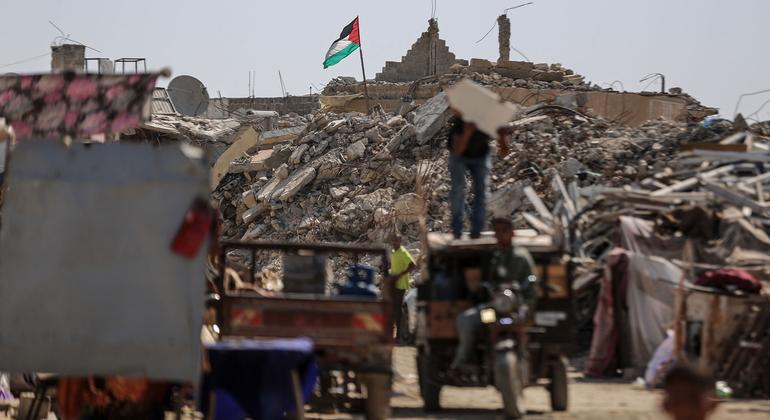
The atrocities committed by Hamas on October 7th, 2023, marked a horrific turning point. This act ignited a conflict that has brought immense devastation to Gaza,with thousands killed,countless injured,and an entire population displaced. You’ve likely seen the heartbreaking images – communities shattered, infrastructure ruined, and basic necessities scarce.
However, the suffering isn’t confined to Gaza. Baerbock rightly pointed out that the West Bank continues to experience escalating violence, settlement expansion, and demolitions. These actions actively undermine the possibility of a viable Palestinian state.
Here’s a rapid overview of the challenges:
* Gaza: Humanitarian crisis,widespread destruction,and a desperate need for sustained aid.
* West Bank: Increasing settler violence, illegal settlement expansion, and the erosion of palestinian self-governance.
* Overall: A cycle of violence fueled by occupation, terror, and the absence of a credible peace process.
The Core Principle: Two States for Lasting Peace
Baerbock was unequivocal: “Israelis and Palestinians will only live in lasting peace, security, and dignity when they live side by side in two sovereign and autonomous states.” This isn’t a new idea, but it’s a crucial reminder. The international community, through declarations like the New York Declaration and UN Security Council Resolution 2803, has repeatedly affirmed this as the ultimate goal.
But acknowledging the goal isn’t enough. As Baerbock emphasized, “these are only words on paper if we do not deliver.” The path forward requires a fundamental shift in approach.
The key is to understand this: The conflict cannot be resolved through:
* Illegal occupation
* De jure or de facto annexation
* Forced displacement
* recurrent terror
* Permanent war
The Urgent Need for a Consolidated ceasefire and Humanitarian access
While a fragile truce is currently in place, it’s not enough. Baerbock stressed the need to solidify the ceasefire into a permanent end to hostilities. Tragically, even during the truce, lives are being lost – at least 67 children have been killed since it began.
Equally critical is ensuring unimpeded humanitarian access to Gaza. Aid must reach those in need safely and in full compliance with international humanitarian law. This includes supporting the vital work of the UN Relief and Works Agency for Palestine Refugees in the Near East (UNRWA).
The International Court of Justice has affirmed that allowing UNRWA to operate is not merely an act of goodwill,but a legal obligation.
Upholding International Law and the Right to self-Determination
Baerbock’s address underscored the importance of adhering to the UN Charter and international law. She reminded Member States that self-determination – the right to live in peace,security,and dignity in one’s own state – is not a privilege,but a fundamental right.
This means:
* Walking the talk: Moving beyond rhetoric and actively engaging in the peace process.
* Upholding the UN Charter: Respecting the principles of sovereignty,territorial integrity,and peaceful resolution of disputes.
* Adhering to international law: Ensuring accountability for violations and upholding the rights of all parties.
The quest for peace in the Middle East requires a strong and engaged United Nations. The General Assembly must play a meaningful role in shaping a future where both Israelis and Palestinians