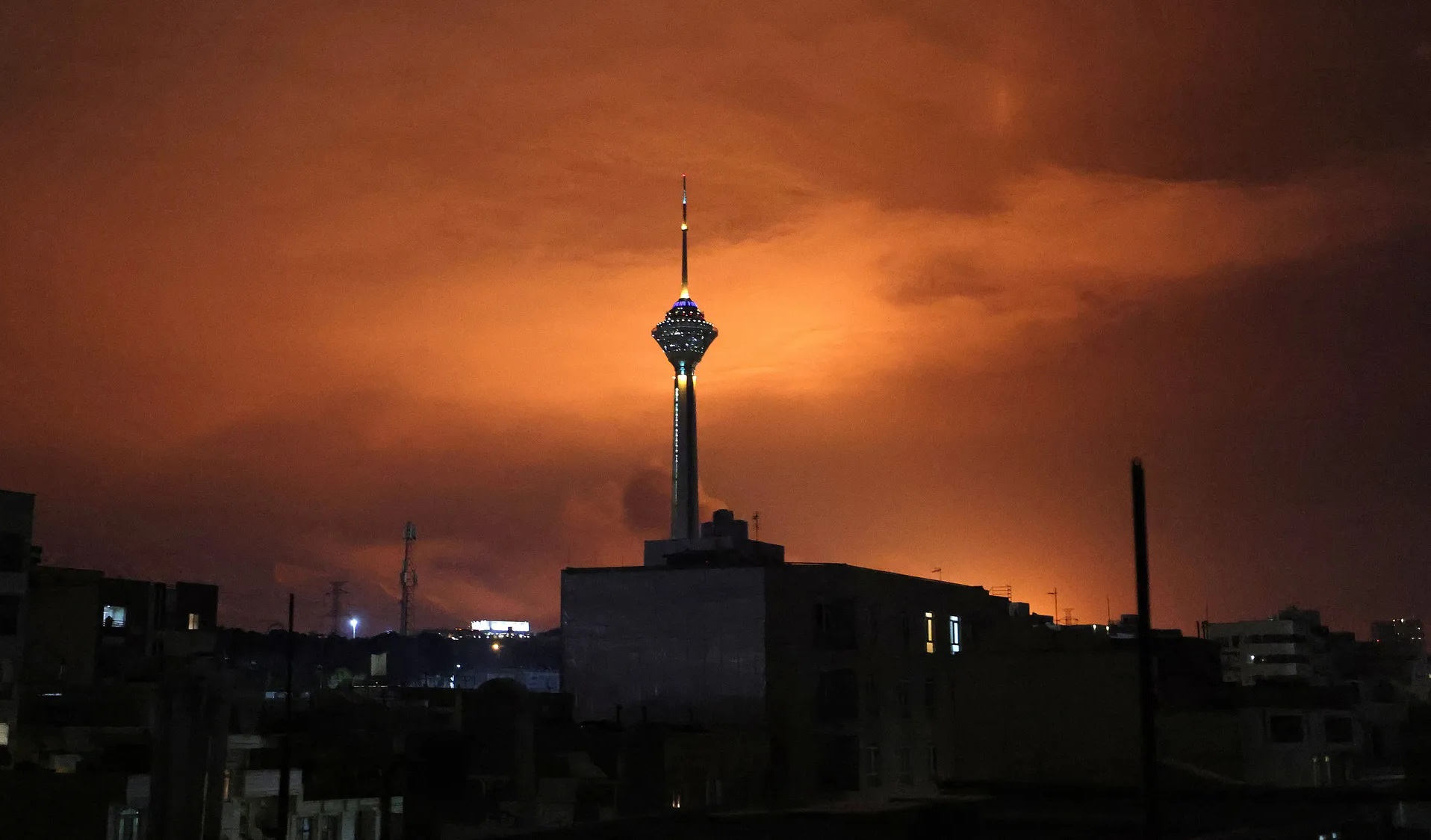
Tehran, Iran – Israel has significantly escalated its recent military actions against Iran, launching a series of strikes targeting military installations and infrastructure across the country, including sites near the capital, Tehran and the key industrial city of Isfahan. The operations, which began on Monday, represent a substantial broadening of what has been a ten-day joint offensive with the United States, according to the Israel Defense Forces (IDF).
The escalating conflict raises serious concerns about regional stability and potential for wider escalation. While the precise objectives and long-term strategy remain unclear, the strikes appear aimed at crippling Iran’s military capabilities and disrupting its support for regional proxies. The IDF stated that the attacks targeted infrastructure belonging to Iran’s “terrorist regime,” but provided limited specifics regarding the nature of the damage or casualties.
IDF Strikes Target Command Centers and Missile Facilities
The IDF announced that the initial wave of strikes focused on a command center belonging to the Quds Force, the external operations arm of Iran’s Islamic Revolutionary Guard Corps (IRGC), located in Tehran. Simultaneously, a site dedicated to the manufacturing and storage of missiles in Isfahan was also targeted. These initial strikes were followed by additional attacks around the city of Shiraz in southern Iran, the IDF confirmed. The military asserted that these operations were completed successfully.
Further intensifying the offensive, the IDF reported targeting six critical Iranian military airfields overnight, claiming to have destroyed a number of aircraft, including those belonging to the Quds Force and Iranian combat helicopters. The stated goal of these strikes is to weaken Iran’s ability to project power through its air force and to hinder its efforts to arm allies in the region. This aligns with longstanding concerns from Israel and the United States regarding Iran’s regional influence and support for groups like Hezbollah in Lebanon and Hamas in Gaza.
Expanding Targets: Infrastructure and Military Sites
The scope of the attacks extended beyond command centers and missile facilities. According to reports, infrastructure linked to Iran’s internal security forces and the Basij paramilitary organization were also targeted. Specifically, the IDF identified the regional headquarters of the Basij command, the headquarters of the internal security forces in Isfahan, and another facility used by the IRGC and Basij forces as being hit. These strikes suggest a broader effort to disrupt the Iranian regime’s internal security apparatus.
The attacks on Isfahan, a major industrial hub and home to Iran’s nuclear research facilities, are particularly sensitive. While the IDF has not directly confirmed targeting nuclear sites, the proximity of the strikes to such facilities raises concerns about potential escalation and the risk of miscalculation. Isfahan is also a significant center for Iranian aerospace and defense industries.
Recent Developments and International Reactions
On February 28, 2026, Iranian media reported explosions in several cities across the country, attributed to the ongoing U.S.-Israeli offensive. Initial reports indicated that the attacks centered on the capital, Tehran, specifically targeting areas around Palestine Square, home to the residence of Supreme Leader Ali Khamenei, and the nearby street of Vosal, close to the judiciary building. South Tehran’s Pasteur Street, housing the presidential building, was also reportedly targeted. Iranian officials confirmed that President Masoud Pezhshkian and the head of the judiciary, Gholam-Hossein Mohseni-Ejei, were unharmed. Sources indicated that Khamenei had been moved to a secure location prior to the attacks.
The strikes come amidst heightened tensions in the region, fueled by Iran’s nuclear program and its support for proxy groups. The United States has consistently expressed its support for Israel’s right to defend itself, while also urging restraint and de-escalation. The international community has largely remained divided, with some countries calling for a ceasefire and a return to diplomatic negotiations.
Iran’s Response and Regional Implications
As of March 10, 2026, Iran has not officially confirmed the extent of the damage caused by the Israeli strikes. However, reports from Iranian state media suggest that the attacks have caused significant disruption and damage to infrastructure. On March 5, 2026, reports indicated that Iran launched eight rocket barrages towards Israel, marking the sixth day of the ongoing conflict. Images circulating online showed columns of smoke rising from the city of Tehran following the strikes.
The potential for further escalation remains high. Iran has repeatedly warned that it will retaliate against any attacks on its territory, and the recent strikes are likely to prompt a response. The involvement of the United States adds another layer of complexity to the situation, raising the risk of a wider regional conflict. The coming days will be critical in determining whether the current escalation can be contained or whether it will spiral into a full-scale war.
Key Takeaways
- Israel has launched a significant escalation of military operations against Iran, targeting military infrastructure across the country.
- The attacks appear aimed at weakening Iran’s military capabilities and disrupting its regional influence.
- The involvement of the United States adds a complex dimension to the conflict, raising the risk of wider escalation.
- The international community is divided on how to respond to the escalating tensions.
- The potential for further retaliation from Iran remains high, increasing the risk of a regional war.
The situation remains fluid and highly volatile. World Today Journal will continue to monitor developments closely and provide updates as they become available. The next key development to watch for is the official response from the Iranian government and any potential retaliatory actions. Readers are encouraged to share their thoughts and perspectives in the comments section below.
Worth a look
- Four Dead in English Channel Crossing Attempt During Busy Coast Guard Day
- What is Ubuntu? The African Philosophy of “I Am Because You Are
- Russian Missile Strikes Across Ukraine Kill 13 and Prompt Polish Jets (archyworldys.com)
- Russian Strikes Kill Dozens in Ukraine; Poland Scrambles Fighter Jets (world-today-news.com)