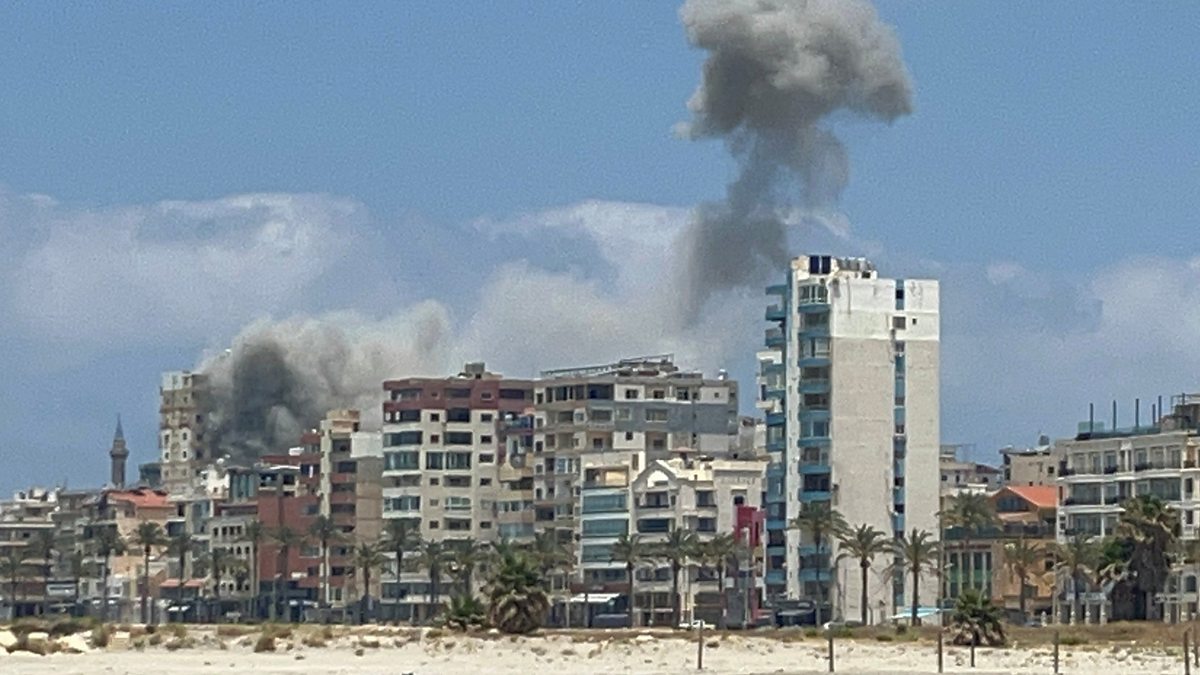
The Israeli military has launched a series of airstrikes on the southern Lebanese city of Tyre, marking a significant escalation in regional hostilities just one day after Iranian officials publicly called for a cessation of attacks in Lebanon. The strikes have prompted thousands of residents to flee the coastal city, according to reports from humanitarian observers and local officials on the ground.
This development follows a period of heightened diplomatic tension, during which Iranian authorities urged an end to military operations within Lebanese territory. The Israeli government has maintained that its actions are necessary to dismantle infrastructure used by militant groups, specifically citing security threats originating from southern Lebanon. As of current reporting, there has been no official statement from the Israel Defense Forces (IDF) regarding the specific strategic objectives of the latest sorties in the Tyre district, though such operations are typically framed as efforts to neutralize cross-border capabilities.
Regional Security and the Escalation in Southern Lebanon
The city of Tyre, a historic center in southern Lebanon, has become a focal point for displacement as civilians move toward safer areas in the north. According to the United Nations High Commissioner for Refugees (UNHCR), the humanitarian situation in southern Lebanon remains volatile, with thousands of families currently lacking access to essential services and shelter. The intensification of strikes underscores the failure of recent diplomatic efforts to establish a lasting ceasefire or de-escalation framework between the involved parties.

International observers note that the timing of these strikes, coming shortly after high-level statements from Tehran, highlights the proxy nature of the ongoing conflict. While Iran has called for restraint, the persistence of military engagement suggests that local commanders and regional stakeholders remain locked in a cycle of retaliatory fire that defies external pressure for a diplomatic resolution.
Broader Global Instability
The situation in Lebanon is part of a wider pattern of global unrest currently monitored by international human rights organizations. In western Afghanistan, medical sources have confirmed that Taliban security forces killed two individuals who were participating in a demonstration against the detention of women for alleged violations of strict religious dress codes. The incident highlights the ongoing suppression of public dissent under the current administration in Kabul, which has faced repeated criticism from the Office of the United Nations High Commissioner for Human Rights regarding the systematic erosion of women’s rights.

Meanwhile, in Honduras, legislative efforts are underway to address the country’s high rate of femicide. The government recently approved a series of legal reforms aimed at strengthening the prosecution of gender-based violence, a move praised by regional advocacy groups as a necessary step toward addressing a crisis that has claimed thousands of lives over the past decade. These reforms include enhanced sentencing guidelines and the establishment of specialized judicial units to handle cases of domestic violence.
Disaster Recovery and Human Rights Concerns
In the Philippines, rescue operations are ongoing in the aftermath of a major earthquake that struck the Mindanao region. Emergency services are currently working to reach isolated communities that have been cut off from power and communication lines. The National Disaster Risk Reduction and Management Council has reported that search and rescue teams are prioritizing access to mountain villages where infrastructure damage is most severe.
Adding to the global list of crises, a recent investigative report has uncovered a network of exploitation targeting Iraqi migrants in Libya. The findings detail instances where hundreds of individuals were kidnapped and subjected to threats of forced organ removal by criminal syndicates operating in the region. The report has prompted calls for an international inquiry into the protection of migrants and refugees passing through Libyan territory, a route frequently used by those attempting to reach Europe.
Local Wildlife Management
In a separate development in Japan, wildlife officials successfully captured a bear that had been roaming a residential city for several days. The animal’s presence had caused widespread concern, leading to the temporary closure of multiple schools as a precaution. Local authorities confirmed that the bear was safely relocated to a mountainous area, and no injuries were reported during the operation. The incident serves as a reminder of the increasing intersection between human urban development and natural habitats in the region.

The situation in southern Lebanon remains fluid, with further updates expected as humanitarian corridors are evaluated. Readers are encouraged to monitor local news broadcasts and official government statements for real-time safety advisories in the affected areas. We invite our readers to share their perspectives on these global events in the comments section below.