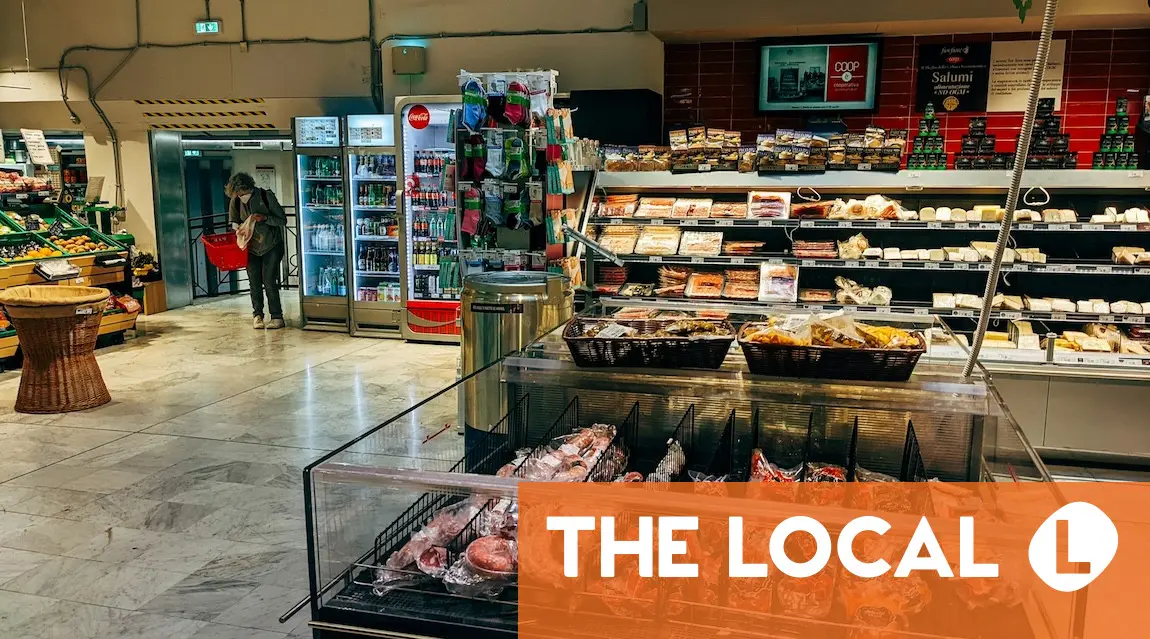
Soaring Grocery Bills: Italy Faces a Cost-of-Living Crunch
For Italian households, a simple trip to the supermarket has become increasingly fraught with financial anxiety. Food prices across the country have risen sharply in recent years, squeezing household budgets and forcing families to build difficult choices. Even as Italy has long been celebrated for its culinary traditions and fresh, local ingredients, the escalating cost of groceries is threatening to erode that accessibility, impacting both consumers and the nation’s food culture. The situation is complex, with regional disparities and specific products experiencing particularly dramatic price increases.
Data from Istat, Italy’s national statistics institute, reveals a significant surge in grocery prices. Since 2021, the cost of food has increased by 25 percent, a rate considerably higher than the overall consumer price index. This increase translates to a substantial financial burden for Italian families, with consumer groups estimating an average additional cost of €1,900 per year. The rising costs are prompting a significant shift in consumer behavior, with roughly one in three households now reducing their food expenditures, according to Assoutenti.
The impact of these price hikes is particularly noticeable when looking at historical spending patterns. A decade ago, in 2016, a single person in Italy spent approximately €290 per month on groceries, allocating around €58 to meat, €70 to fruits and vegetables and €9 to coffee and tea, as reported by Istat. However, by 2024, that monthly expenditure had climbed to approximately €338.50 – a 16 percent increase. This demonstrates that even with careful budgeting, the cost of simply putting food on the table is outpacing inflation and straining household finances.
Regional Disparities in Food Costs
The burden of rising food prices isn’t felt equally across Italy. A comparative analysis conducted by Codacons, examining 18 Italian cities using data from the national Prices and Tariffs Observatory, highlights significant regional variations. The study found that cities in northern Italy, particularly Milan and Bolzano, consistently exhibit the highest grocery costs, while those in the south, such as Naples, Bari, and Catanzaro, offer comparatively lower prices. This disparity reflects differences in transportation costs, local production, and market dynamics.
The price differences are stark. For example, a cappuccino in Bolzano averages €2.29, while the same beverage can be found for approximately €1.29 less in Rome. Similarly, a kilogram of tomatoes costs €2.72 in Naples, but a significantly higher €3.87 in Turin, and nearly double that amount – around €4.58 – in Bolzano. A liter of milk illustrates a similar trend, costing €1.22 in Milan, €1.11 in Bari, and €1.16 in Florence. These variations underscore the importance of location when considering the overall cost of living in Italy.
Specific Products Facing the Biggest Price Increases
While overall grocery prices are on the rise, certain products have experienced particularly dramatic increases. Analysis by Federconsumatori, based on Italy’s consumer price index (L’Indice Nazionale dei prezzi al consumo per l’Intera Collettività – NIC), reveals that beef products, rice, coffee, and chocolate have seen the most substantial price hikes. Conversely, the prices of olive oil, vegetables, and some fruits have remained relatively stable or even declined.
Looking at specific examples, the price of rice has increased significantly since 2021. In 2021, a kilogram of rice in Catanzaro, Calabria, cost around €1.90. By 2025, that same kilogram cost €2.39 – an increase of over 25 percent. Consumers in Rome have also felt the pinch, with beef prices rising by 26.6 percent and chocolate prices soaring by 44.8 percent between late 2021 and late 2025. Perhaps the most striking increase has been in the price of coffee, which has more than doubled, jumping from €9.54 per kilogram in 2021 to €17.31 per kilogram in 2025 – an increase of over 80 percent.
Underlying Factors and Government Response
The surge in food prices is a multifaceted issue, influenced by a combination of global and local factors. Supply chain disruptions, exacerbated by geopolitical events and climate change, have played a significant role. Increased energy costs, impacting transportation and production, have also contributed to the rising prices. The ongoing conflict in Ukraine has disrupted agricultural production and trade, impacting the availability and cost of key commodities.
In response to growing concerns, consumer rights groups, including Codacons, have called for investigations into potential price gouging by large-scale retailers in the agri-food supply chain. The national antitrust authority has launched a probe into these concerns, aiming to ensure fair competition and protect consumers. The investigation is ongoing, and its findings could lead to regulatory changes or enforcement actions.
Italy’s Consumer Price Index: A Closer Look
Italy’s Consumer Price Index (CPI) provides a detailed overview of price changes across various categories, including food. As of December 2025, the Italy Consumer Price Index: Food stood at 133.30, a slight decrease from 133.40 the previous month, but an increase of 2.38 percent compared to December 2024, according to data from YCharts and Eurostat. This indicates that while there may be some short-term fluctuations, the overall trend remains upward. The index uses a base year of 2015, providing a benchmark for tracking price changes over time.
The data reveals that certain food items are experiencing more significant price increases than others. Beef, rice, coffee, and chocolate are among the products driving the overall increase in the food CPI. However, the index also shows that prices for some fruits and vegetables are either declining or remaining stable, offering some relief to consumers. The CPI is a crucial tool for policymakers and economists in monitoring inflation and assessing the economic well-being of Italian households.
The situation remains fluid, and continued monitoring of the CPI and other economic indicators is essential. The next release of the CPI data is scheduled for February 25, 2026, providing an updated snapshot of the evolving food price landscape in Italy. Consumers are encouraged to stay informed about price trends and to explore strategies for managing their grocery budgets during these challenging times.
As Italian families navigate these economic headwinds, the future of food affordability remains a key concern. The ongoing antitrust investigation and the release of updated economic data will be crucial in shaping the response to this evolving crisis. We encourage our readers to share their experiences and perspectives on the rising cost of groceries in the comments below.
Worth a look