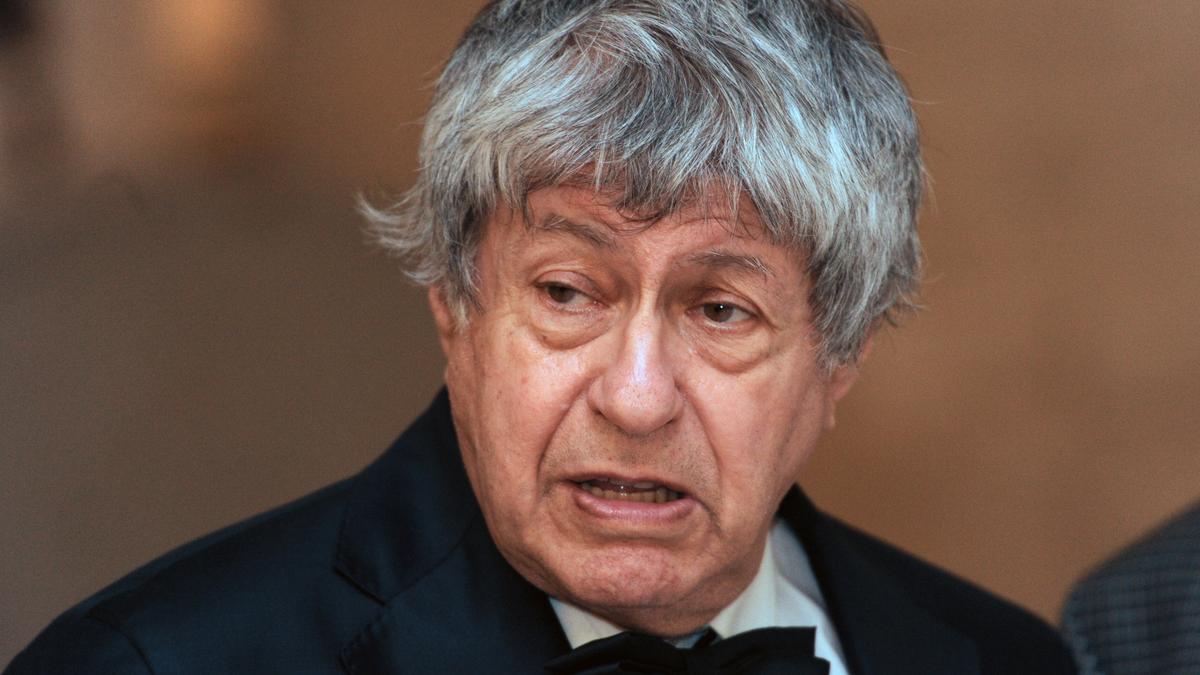
Ivan Klíma, Witness to a Century of Totalitarianism, Dies at 94
Ivan Klíma, one of the Czech Republic‘s most critically important and internationally acclaimed authors, has died at the age of 94. His passing, announced by his son michal to the Czech CTK news agency on Saturday, October 4th, 2025, marks the end of an era for Czech literature and a profound loss for those who valued his unflinching exploration of 20th-century totalitarianism. Klíma died peacefully at home following a long illness.
For over six decades, Klíma’s prolific output – encompassing novels, plays, short stories, essays, and even children’s books – resonated globally, translated into more than 30 languages. But his work was never merely literary; it was a testament to survival, a critical examination of power, and a deeply human response to the horrors he witnessed.His writing consistently grappled with the ethical dilemmas faced by individuals under oppressive regimes, earning him recognition as a vital voice of conscience.
A Life forged in Crisis:
Born Ivan Kauders in Prague on September 14, 1931, Klíma’s early life was irrevocably shaped by the escalating political turmoil of Europe. His jewish family endured the unimaginable ordeal of Theresienstadt concentration camp during World War II, a harrowing experience that instilled in him a lifelong awareness of the fragility of freedom and the dangers of unchecked ideology. Remarkably, the entire family survived, a fact Klíma often cited as his most vivid and defining experience – a stark reminder that “There’s only life or death. Nothing else matters.”
the post-war arrival of Communism in czechoslovakia initially offered a glimmer of hope to Klíma and many others who had suffered persecution.Though, this optimism quickly dissolved as the new regime revealed its own brand of totalitarian control. Klíma found himself among a generation of brilliant Czech writers – including Milan Kundera, Pavel Kohout, and Ludvík Vaculík – who initially embraced communist ideals only to become disillusioned by its brutality and suppression of dissent.
From Party Member to Dissident Voice:
Klíma joined the Communist Party in 1953,a period coinciding with his father’s imprisonment for political reasons. This internal conflict – the desire for a better future weighed against the growing realization of the regime’s failings – became a recurring theme in his work. His growing criticism of the system led to his expulsion from the party in 1967, a pivotal moment that foreshadowed the crackdown to come.
The Soviet-led invasion of Czechoslovakia in 1968, crushing the progressive “Prague Spring” reforms, effectively silenced Klíma’s voice in his homeland. His writings were banned, forcing him into the underground literary scene. This period solidified his commitment to challenging authoritarianism, even at great personal risk.
As Klíma explained in a 2010 interview with Czech public radio, his work consistently addressed “the craziness of the 20th century… the totalitarian ideologies which were responsible for unbelievable crimes.” He emphasized the paradox of these atrocities occurring within nations boasting rich cultural traditions.
A Master of Moral Complexity:
Klíma’s literary breakthrough came with “Judge on Trial” (published in German in Switzerland in 1979), a masterpiece that explores the agonizing moral dilemma of a judge forced to uphold capital punishment in a society that demands it. The novel, and much of his subsequent work, is characterized by its multi-layered narratives and its unflinching portrayal of individuals caught within the machinery of the state. He masterfully depicted the psychological toll of living under constant surveillance and the erosion of individual agency.
Other notable works include “Love and Garbage,” “My Golden Trades,” and “The Spirit of Prague and Other Essays,” each offering a unique viewpoint on the complexities of Czech history and the human condition. Interestingly, Klíma also demonstrated a lighter side, writing playful children’s books, including screenplays for episodes featuring the beloved Czech cartoon character, the Little mole.
International Support and Post-Revolution Recognition:
Despite the challenges of publishing in Czechoslovakia, Klíma’s talent attracted the attention of international literary figures. Crucially, he benefited from the unwavering support of American author Philip Roth, who repeatedly visited Czechoslovakia in the 1970s to champion Klíma, Kundera, and other banned writers, facilitating the publication of their works in the United States.This transatlantic connection proved vital in ensuring Klíma’s voice reached a wider audience.
The Velvet Revolution of 1989, led by Václav Havel, finally