The traditional concept of the “second brain”—meticulous note-taking and manual knowledge management—is facing a fundamental disruption. As artificial intelligence evolves from a simple coding assistant to a sophisticated organizational tool, the way high-level executives and entrepreneurs interact with information is shifting. The focus is moving away from the act of recording data and toward the strategic application of intelligence.
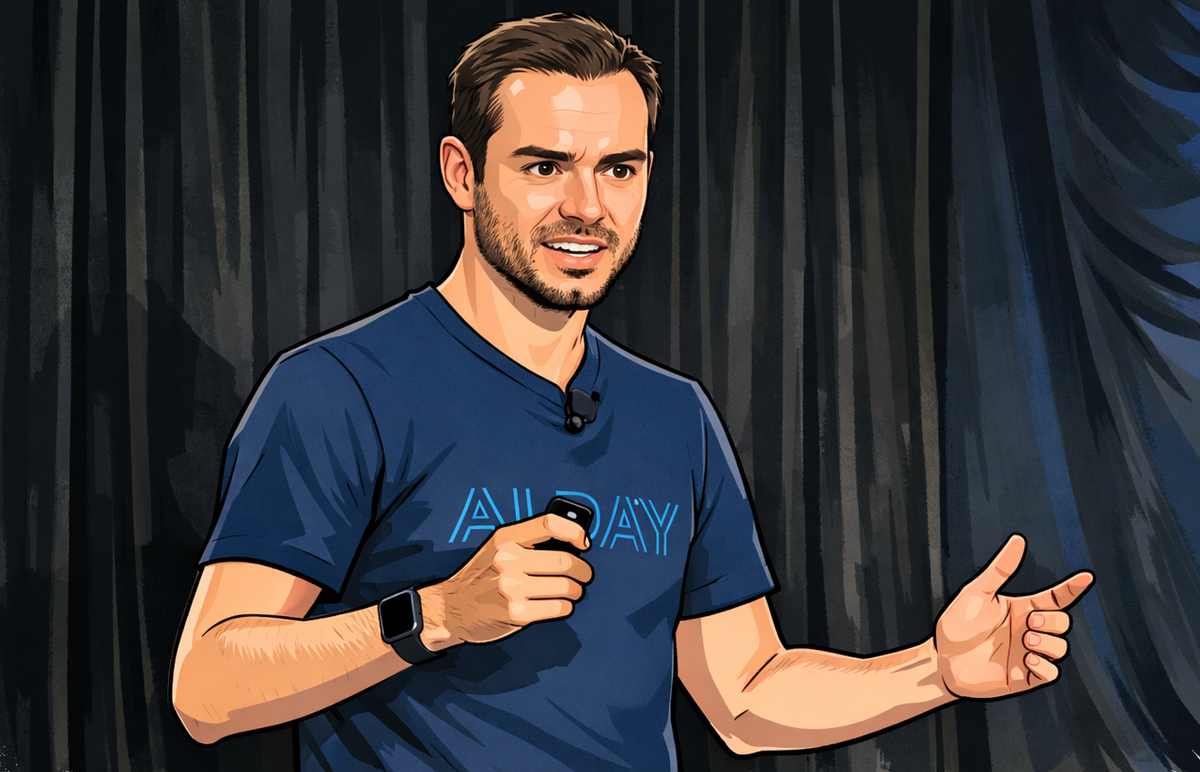
This shift is most evident in the recent strategic pivot by Jack Dorsey, the co-founder of Twitter and current CEO of Block. Dorsey is moving beyond using Large Language Models (LLMs) for mere technical tasks, instead leveraging AI to restructure the very nature of corporate intelligence and hierarchy. His approach suggests that the most “intelligent” way to manage information is no longer through manual documentation, but through AI-driven coordination and alignment.
For those attempting to build a “second brain,” the lesson is clear: the value is no longer in the storage of information, but in the ability of AI to synthesize, organize, and execute based on that information. When AI can effectively navigate massive codebases and complex corporate structures, the manual burden of “noting” begins to vanish.
From Corporate Hierarchy to AI Intelligence
The practical application of this philosophy is currently unfolding at Block. In a significant structural shift, Jack Dorsey has overseen the layoff of approximately 4,000 employees from a total workforce of 10,000 according to reports from April 2026. While such moves are often framed as cost-cutting measures, Dorsey has explicitly stated that Here’s a permanent restructuring designed to replace middle management with AI.
In a joint essay titled “From Hierarchy to Intelligence,” published with Roelof Botha of Sequoia Capital, Dorsey argues that corporate hierarchies were originally created to solve a specific problem: the difficulty of transmitting information within an organization too large for a single person to oversee. He contends that AI is now capable of solving this problem, effectively acting as the connective tissue for coordination, product decisions, and internal alignment.
This transition marks a departure from the “second brain” methodology of the past decade, which relied on tools like Notion or Obsidian to create a personal archive. In Dorsey’s vision, the “intelligence” is not a static archive but a dynamic system. By removing the middle layer of human management and replacing it with AI, the organization itself becomes a living, breathing second brain that processes information in real-time without the friction of manual reporting.
The Catalyst: Evolution of LLM Capabilities
The decision to move toward an AI-driven structure was not arbitrary. Dorsey noted that this shift was triggered by observations made in December 2025 regarding the evolving capabilities of specific AI models. Specifically, he highlighted the performance of Anthropic’s Opus 4.6 and OpenAI’s Codex 5.3 as detailed in recent industry analysis.
The critical breakthrough was the ability of these tools to operate effectively across large-scale codebases. When an AI can understand the entirety of a company’s technical infrastructure and operational logic, the need for a human “middle manager” to translate goals into tasks diminishes. The AI becomes the primary interface for “internal alignment,” meaning the “notes” that used to live in emails, slide decks, and meeting minutes are now integrated directly into the AI’s operational context.
This represents a paradigm shift in knowledge work. If the “second brain” was previously about capturing information, the new era is about integrating information into a system that can act upon it. For the modern professional, this means the goal is no longer to be a great note-taker, but to be a great orchestrator of AI systems.
Impact on the Future of Work and Management
The implications of Dorsey’s strategy extend beyond Block. By targeting middle management as the most “at-risk” category in the AI revolution, he is redefining the value of professional expertise. The role of a manager—historically centered on information relay and oversight—is being subsumed by the efficiency of LLMs.
This shift creates a new blueprint for how “smart people” manage their professional lives. Instead of spending hours organizing a personal knowledge base, the focus shifts to:
- System Design: Building the prompts and frameworks that allow AI to manage the “second brain” of an organization.
- Strategic Alignment: Defining the high-level goals that the AI then coordinates across the technical and operational layers.
- Rapid Iteration: Using AI to bypass the traditional “information loop” of management, moving directly from idea to execution.
For the global workforce, this means the competitive advantage is shifting from those who can remember or organize the most information to those who can most effectively direct the intelligence that manages that information.
Key Takeaways: The AI-Driven Knowledge Shift
- End of Manual Archiving: The focus is shifting from manual note-taking to AI-driven synthesis and coordination.
- Structural Displacement: Middle management is increasingly viewed as an information bottleneck that can be replaced by AI alignment tools.
- Technical Thresholds: The ability of models like Opus 4.6 and Codex 5.3 to handle large-scale data is the primary driver for this transition.
- New Competency: The “second brain” is evolving from a personal library into an operational intelligence system.
As Block continues its transition toward a leaner, AI-coordinated structure, the industry will be watching to see if this “intelligence-over-hierarchy” model can maintain stability and innovation at scale. The next critical checkpoint will be the long-term operational results of the 4,000-person reduction and the subsequent efficacy of the AI-managed alignment system.
Do you believe AI can truly replace the nuance of human middle management, or is the “second brain” still a personal responsibility? Share your thoughts in the comments below.
Keep reading